We may earn a commission from qualifying purchases. Product links on this page are affiliate links, at no extra cost to you; see our Affiliate Disclosure.
Cat litter is a daily purchase, and the label can say a lot of things. This guide covers the main types of litter, how to set up litter boxes, and how the word “organic” is used on litter, then compares five litters by ingredients and bag size.Disclaimer: This article is general information, not veterinary or medical advice. Ask your veterinarian about your cat’s health, and ask your doctor about toxoplasmosis if you are pregnant or have a weakened immune system.

Key Specs Compared
Numbers match the reviews below (tap to jump).
| # | Form | Size |
|---|---|---|
| 1 | Wheat | 25 Pound |
| 2 | Corn fiber | 18 Lbs |
| 3 | Clay with activated charcoal | 18.5 lb (Pack of 2) |
| 4 | Bentonite clay | 18 lb |
| 5 | Ponderosa pine pellets | 12 lb |
– = not stated by the maker · Specs and certifications as stated by the listing, not tested or verified by us; check the listing before you buy
Litter box safety
- Scoop the litter box daily.[4] Toxoplasma from cat feces is not infectious until 1 to 5 days after it is shed, so daily cleaning lowers the risk.[5]
- If you are pregnant, have someone else change the litter box. If you must clean it, wear disposable gloves and wash your hands with soap and warm water afterwards.[5]
- Wash the box with hot water and avoid strong chemicals, since some cats are sensitive to dirty boxes.[4]
Types of Cat Litter
- Clumping Litter – Clumping litter is clay mixed with sodium bentonite, which swells and binds into a clump when it gets wet. The clump can be scooped out, and the rest of the litter stays in the box.
- Non-Clumping Litter – Non-clumping litter is mostly clay with calcium bentonite, which absorbs liquid but does not form a clump. You cannot scoop out the waste alone, so the whole box has to be emptied and cleaned.
- Plant-based Litter – Litter made from plant or recycled materials such as walnut shells, corn, wheat, pine and paper is often sold as natural litter.
Setting Up and Using Litter Boxes
- Number of Litter Boxes – Provide one litter box for each cat, plus one extra.[3]
- Placement of Litter Boxes – Cats like a quiet spot that is not cornered, where they can see people or other animals approaching and leave quickly. The box should be easy to reach at all times.[3] Keep it away from noisy areas and food.
- Quantity of Litter – Cats usually prefer one to two inches of litter in the box.[3]
- Size of the Box – A box should be at least one and a half times the length of the cat from nose to tail tip, which means many store-bought boxes are too small.[4]
What to Look for in Cat Litter
- Odor Control – A litter that absorbs well helps, but scooping daily matters just as much.[4]
- Clumping or Non-Clumping – Many cats prefer clumping, unscented litter.[3] For a cat with a history of urinary problems, unscented clumping litter may be preferred, so ask your veterinarian.[4]
- Size and Texture – Soft litter is easier on a cat’s paws. Medium-sized grains tend to stay in the box instead of spreading around the house.
What the Research Says
The USDA organic seal is used on agricultural products such as food, and honey, mushrooms and pet food can be certified.[1] None of the five litters here is sold with a USDA organic claim in its product details, so the ingredient list matters more than the word “natural” or “eco”. Under the FTC’s Green Guides, a “biodegradable” claim without qualification should only be made if the entire product fully breaks down within one year.[2] Veterinary guidelines recommend scooping daily, a box at least one and a half times the cat’s length, and unscented clumping litter for cats with a history of urinary problems.[4]How We Chose These Products
We do not test products. We compare product details: litter material, clumping or not, scent, bag size and weight, and dust level. Brands don’t pay to be included, though we may earn a commission from purchases.Our Cat Litter Picks
These five litters use wheat, corn fibers, clay and pine. None is a certified organic product, so read the ingredients in each box.1
sWheat Scoop® Multi-Cat Litter Natural wheat clumping cat litter, 25lb


Currently unavailable
- sWheat Scoop Natural Wheat Multi-Cat Litter is a clumping litter made from domestically sourced wheat, sold in a 25 lb bag.
- It has no added dyes, perfumes or chemicals, and it is lightweight.
- Odor-neutralizing enzymes work on urine and ammonia smells.
- The litter is made for multi-cat homes and homes with several litter boxes.
- It is a plant-based litter made from farm-grown, renewable resources.
- The bag measures 23 x 13.5 x 5.25 inches and weighs 25 pounds.
2
Arm & Hammer® Naturals Clumping Litter Multi-cat clumping litter, 18lb bag


Currently unavailable
- Arm & Hammer Naturals Clumping Litter is a multi-cat litter in an 18 lb bag.
- It is made with natural corn fibers, a plant-based clumping agent, plant extracts and baking soda, plus mineral oil for dust control.
- The litter clumps into small, light clumps that are easy to scoop.
- It is lighter than traditional clay litter, so it is easier to carry and pour.
- Baking soda is used for odor control in homes with several cats.
- The bag measures 13.5 x 8 x 5.5 inches and weighs about 18 pounds.
3
Fresh Step® Simply Unscented Litter Unscented multi-cat clumping litter, two-pack


Currently unavailable
- Fresh Step Advanced Simply Unscented Multi Cat Litter comes as a 2-pack of 18.5 lb boxes, 37 lb in all.
- It is a clay litter with activated charcoal and Ammonia Block Technology, and it is made for 15 days of odor control.
- The formula has no added dyes or fragrances.
- The litter forms tight clumps that scoop out cleanly, and the formula is low dust.
- It is compatible with most automatic litter boxes.
- The gray and white granules come in boxes measuring 12.25 x 11.3 x 10.6 inches.
4
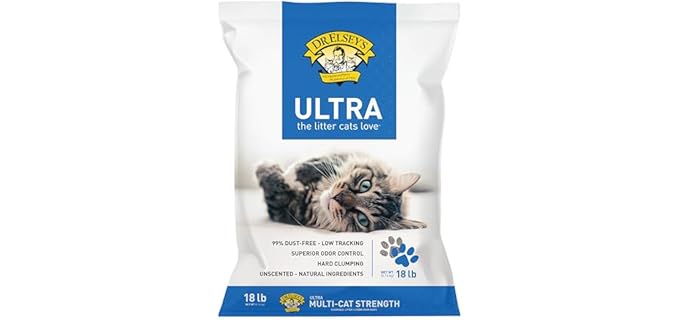
Dr. Elsey's® Ultra Unscented Litter Unscented clumping clay cat litter, 18lb


Currently unavailable
- Dr. Elsey’s Ultra Unscented Clumping Litter is an 18 lb bag of 100% bentonite clay.
- The medium-grain clay forms hard clumps that stay intact when you scoop.
- The formula is low dust and unscented.
- It works for one cat or several, and the medium grain helps keep the litter in the box.
- Precious Cat makes it.
- The bag measures 15 x 10 x 4 inches and weighs about 17.6 pounds.
5
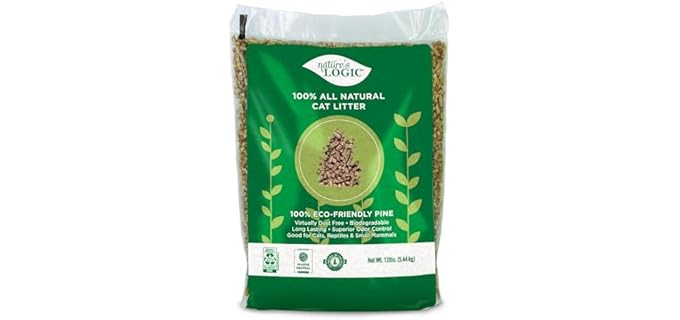
Nature's Logic® Pine Pellet Litter Natural unscented pine cat litter, 12lb


Currently unavailable
- Nature’s Logic Pine Pellet Cat Litter is a 12 lb bag of 100% natural ponderosa pine pellets.
- The pellets are unscented, dust-free and biodegradable, and silica free.
- The litter is highly absorbent and controls odor for a long time.
- It is sold as safe for cats, kittens and small mammals.
- The bag measures 4 x 13 x 22.5 inches.
Index Table: Cat Litter Compared
| No. | Product | Image | Features | Brand |
|---|---|---|---|---|
| 1 | sWheat Scoop Multi-Cat Litter - Natural wheat clumping cat litter, 25lb |  |
| sWheat Scoop |
| 2 | Arm & Hammer Naturals Clumping Litter - Multi-cat clumping litter, 18lb bag |  |
| Arm & Hammer |
| 3 | Fresh Step Simply Unscented Litter - Unscented multi-cat clumping litter, two-pack |  |
| Fresh Step |
| 4 | Dr. Elsey's Ultra Unscented Litter - Unscented clumping clay cat litter, 18lb |  | Dr. Elsey's | |
| 5 | Nature's Logic Pine Pellet Litter - Natural unscented pine cat litter, 12lb |  | Nature's Logic |
Sources
- USDA Agricultural Marketing Service. Organic Labeling Standards. Accessed October 25, 2026.
- Federal Trade Commission, 16 CFR 260.8. Degradable claims (Green Guides). Accessed October 25, 2026.
- ASPCA. Litter Box Problems. Accessed October 25, 2026.
- American Animal Hospital Association and American Association of Feline Practitioners. General Litter Box Considerations. Accessed October 25, 2026.
- U.S. Food and Drug Administration. Toxoplasma Prevention Before You Become Pregnant. Accessed October 25, 2026.
Update History
- Oct 2026: Rewrote the guide text and product notes, replaced the litter box guidance with veterinary and ASPCA recommendations, added toxoplasmosis safety advice, set the Key Specs to material and bag size, and replaced the sources (USDA AMS, FTC Green Guides, ASPCA, AAHA/AAFP, FDA)
- May 2021: First published