As an Amazon Associate I earn from qualifying purchases. Product links on this page are affiliate links, at no extra cost to you; see our Affiliate Disclosure.
Basmati is a long-grain, aromatic rice grown mainly in India and Pakistan. This guide covers white versus brown basmati, what to read on the label, how rice and arsenic fit together, and compares five organic basmati rices by type, size and certification.Disclaimer: This article is general information, not medical or nutrition advice. If you have a medical condition, are pregnant, or are feeding an infant, talk to your doctor or a registered dietitian about how much rice is right for you.

Key Specs Compared
Numbers match the reviews below (tap to jump).
| # | Form | Size | Stated certifications | Gluten-free |
|---|---|---|---|---|
| 1 | Brown basmati | 5 lb (80 oz) | USDA Organic, Non-GMO, Kosher | Not stated |
| 2 | White basmati | 10 lb (160 oz) | USDA Organic, Non-GMO, Kosher | Not stated |
| 3 | White basmati | 2 lb (32 oz) | USDA Organic, Kosher | Yes |
| 4 | White basmati (traditional) | 20 lb (320 oz) | USDA Organic | Not stated |
| 5 | White basmati | 5 lb (80 oz) | USDA Organic | Not stated |
– = not stated on the Amazon listing · Specs and certifications as stated by the listing, not tested or verified by us; check the listing before you buy
Basmati rice label basics
- Check the Nutrition Facts label for serving size, calories and fiber.[1]
- Look for the USDA Organic seal if you want organic rice. Products labeled organic must be overseen by a USDA-authorized certifying agent.[2]
- Rice absorbs arsenic more readily than other crops, and organically grown rice takes up arsenic the same way as conventional rice.[3][4]
- Cooking rice like pasta, in plenty of water that you drain, can reduce inorganic arsenic by 40 to 60 percent, depending on the type of rice.[3]
White or Brown Basmati
- White Basmati – The outer layers of the grain are removed to make white rice. Organic Tattva, both Royal rices and 365 are white basmati.[4]
- Brown Basmati – Brown rice keeps the outer layers. Food to Live is brown basmati. Brown rice has about 80 percent more inorganic arsenic than white rice of the same type on average, and brown basmati from California, India or Pakistan has about a third less than other brown rices.[4]
- Aroma and Texture – Basmati has a nutty fragrance and cooks into long, separate, non-sticky grains.
- Cooking – White basmati cooks in about 15 to 20 minutes, and brown takes longer. Store dry rice in an airtight container. For a quick whole-grain breakfast instead, see our organic oatmeal picks.
Rice and Arsenic
- Rice in a Balanced Diet – Rice tends to absorb arsenic more readily than other crops, but the FDA says people can eat rice as part of a well-balanced diet, and it advises a varied and nutritious diet.[3]
- Organic Is Not Lower in Arsenic – Rice grown organically takes up arsenic the same way as conventional rice, so organic is not a way to cut arsenic.[4]
- Origin – In Consumer Reports tests, white basmati from California, India and Pakistan had on average half the inorganic arsenic of most other types of rice.[4]
- Cooking Method – Cooking rice like pasta, with 6 to 10 parts water to 1 part rice, and draining the extra water cuts inorganic arsenic by 40 to 60 percent, but it also lowers folate, iron, niacin and thiamine in enriched white rice by 50 to 70 percent. Rinsing before cooking has a minimal effect on arsenic.[3]
What to Check on a Basmati Rice Label
- White or Brown – Check the type on the bag, and compare fiber per serving on the Nutrition Facts label.
- Organic Seal – Look for the USDA Organic seal, which means the rice was grown and processed under USDA organic rules.[2]
- Serving Size – Check the serving size before you compare calories or fiber.[1]
- Origin – Some bags state where the rice was grown, which matters if you want to compare arsenic by origin.
- Bag Size – These picks range from 2 lb (32 oz) to 20 lb (320 oz), so compare price per ounce, and buy a size you will use up.
What the Research Says
The FDA says rice tends to absorb arsenic more readily than other crops, and that cooking rice in extra water and draining it reduces inorganic arsenic, with rinsing having a minimal effect.[3] Consumer Reports analyzed 697 rice samples, combining its own tests with FDA data, and found that white basmati from California, India and Pakistan was lower in inorganic arsenic than most other rice, and that brown rice had more inorganic arsenic than white.[4] Organic certification covers how rice is grown and processed, not its arsenic level or nutrition.[2][4]How We Chose These Products
We do not test products. We compare product details: organic certification, type, size and availability.[2] Products that are out of stock stay as they are. Brands don’t pay to be included, though we may earn a commission from purchases.Our Organic Basmati Rice Picks
These five organic basmati rices range from a 2 lb (32 oz) bag to a 20 lb (320 oz) bag. Food to Live is brown basmati, and the other four are white. All five are USDA Organic. With every purchase through the links on this page, we may earn a commission, at no extra cost to you.1
Food to Live® Brown Basmati Rice Organic long-grain brown basmati rice, 5 lb (80 oz)


- Food to Live Organic Brown Basmati Rice is a 5 lb (80 oz) bag of raw, whole long-grain rice.
- It is USDA Organic, non-GMO, kosher and vegan.
- As brown basmati, it keeps the outer layers that white rice has removed.
2
Organic Tattva® Basmati Rice USDA Organic long-grain white basmati, 10 lb (160 oz)


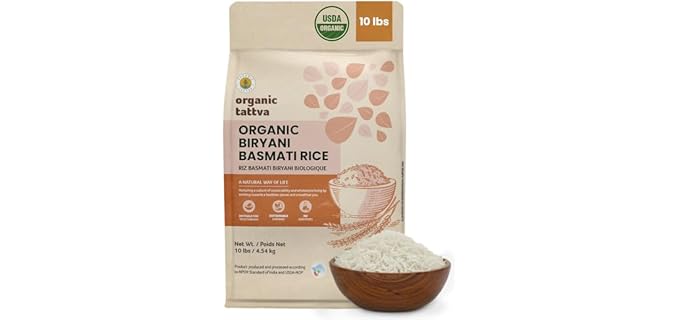
- Organic Tattva Long Grain Basmati Rice is a 10 lb (160 oz) vacuum-sealed bag of white basmati.
- It is USDA Organic, non-GMO, vegan and kosher, with no additives, and it is a product of India.
- The grains cook up fluffy and separate, which suits biryani, pilafs and curries.
3
Royal® Organic Basmati Rice Long-grain white organic basmati rice, 2 lb (32 oz)


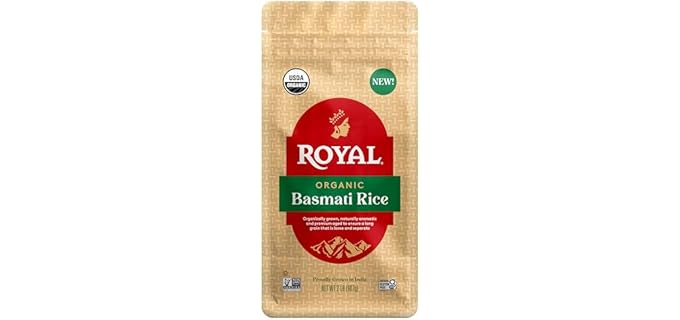
- Royal Organic Basmati Rice is a 2 lb (32 oz) bag of long-grain white basmati, aged for a non-sticky texture.
- It is USDA Organic, vegan, gluten-free and kosher.
- It cooks on the stovetop in about 15 minutes, and it suits biryani, pilafs and curries.
4
Royal® Traditional Basmati Rice Organic traditional basmati rice, 20 lb (320 oz) bag


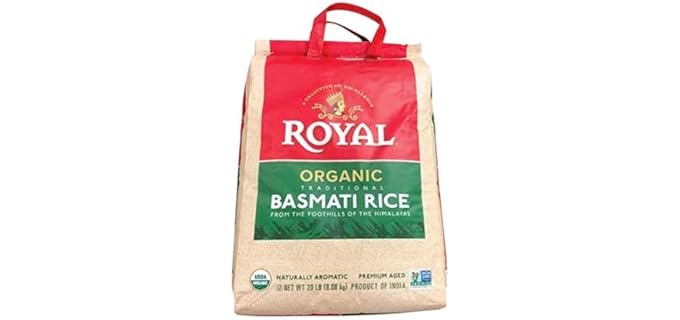
- Royal Traditional Basmati Rice is a 20 lb (320 oz) bag of organic traditional basmati.
- It is USDA Organic.
- It is the largest bag on this page, so it suits a household that cooks rice often.
5
365 Whole Foods® White Basmati Rice Organic white basmati rice, 5 lb (80 oz) bag


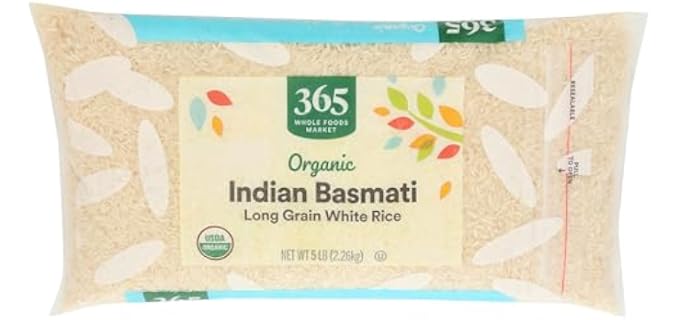
- 365 by Whole Foods Market Organic White Basmati Rice is a 5 lb (80 oz) bag.
- It is USDA Organic.
- It is the Whole Foods Market store brand.
Index Table: Organic Basmati Rice Compared





Sources
- U.S. Food and Drug Administration. How to Understand and Use the Nutrition Facts Label. Accessed October 26, 2026.
- USDA Agricultural Marketing Service. Organic Labeling Standards. Accessed October 26, 2026.
- U.S. Food and Drug Administration. What You Can Do to Limit Exposure to Arsenic. Accessed October 26, 2026.
- Consumer Reports. How Much Arsenic Is in Your Rice? (Which Rice Has the Least Arsenic?). Accessed October 26, 2026.
Update History
- Oct 2026: Rewrote the guide text and product notes, removed the whole grain, fiber and gluten-free claims that the sources did not support, added white versus brown, arsenic and cooking guidance with sources, corrected the Royal Traditional and Organic Tattva details, set the Key Specs to type, size and certification, and replaced the sources (FDA, USDA AMS, Consumer Reports)
- Oct 2026: Added Organic Tattva Long Grain Basmati Rice, Royal Organic Basmati Rice, Royal Traditional Basmati Rice and 365 by Whole Foods Market Organic White Basmati Rice
- Mar 2021: First published
Views: 0


