We may earn a commission from qualifying purchases. Product links on this page are affiliate links, at no extra cost to you; see our Affiliate Disclosure.
Kelp is a brown seaweed that is dried and ground into a powder with a salty, savory taste. It is also one of the richest natural sources of iodine. This guide covers how much iodine you need, why too much is a problem, what to check on a kelp label, and how two organic kelp powders compare.General information, not medical advice. Talk to your doctor or pharmacist before you start a supplement, especially if you are pregnant, take medicine or are buying for a child.

Key Specs Compared
Numbers match the reviews below (tap to jump).
| # | Form | Size | Stated certifications | Gluten-free |
|---|---|---|---|---|
| 1 | Powder | 2 lb (about 907 servings) | Organic (certification not stated), Non-GMO | Yes |
| 2 | Powder | 16 Ounce | USDA Organic, Non-GMO, Kosher | Not stated |
– = not stated by the maker · Specs and certifications as stated by the listing, not tested or verified by us; check the listing before you buy
Kelp and iodine safety
- The adult upper limit for iodine is 1,100 mcg a day from all sources combined, which includes food, drinks and supplements.[1]
- Getting too much iodine can cause goiter, an enlarged thyroid gland, along with thyroid inflammation.[1]
- Iodine supplements can interact with antithyroid medicines such as methimazole, and potassium iodide can raise blood potassium to an unsafe level when taken with ACE inhibitors or potassium-sparing diuretics.[1]
- If you are pregnant, breastfeeding or have a thyroid condition, ask your health care provider before you use kelp.
What Iodine Does
- Thyroid Hormones – The body uses iodine to make thyroid hormones, which control metabolism and support bone and brain development in pregnancy and infancy.[1]
- Daily Needs – Adults need 150 mcg a day, pregnant women need 220 mcg and breastfeeding women need 290 mcg.[1]
- Food Sources – Fish, seaweed, shrimp, dairy products, eggs and iodized salt are the main sources, and most people in the United States get enough from food.[1]
- Who Falls Short – People who do not use iodized salt, pregnant women, and people who eat few or no dairy products, seafood or eggs are more likely to fall short.[1]
Kelp as an Iodine Supplement
- Kelp Supplements – Kelp is a seaweed, and kelp supplements are one of the ways people take iodine.[1]
- Amount Per Serving – The amount of iodine in kelp depends on the species and the product. Check the Supplement Facts panel for the iodine amount before you buy.
- Low Iodine Diets – People preparing for radioactive iodine treatment are told to avoid kelp products, along with seaweed and iodized salt.[1]
What to Check on a Kelp Powder Label
- Organic Seal – Look for the USDA Organic seal if you want a certified organic product.[3]
- Single Ingredient – A pure kelp powder has one ingredient. Check the label for fillers either way.
- Serving Size – Kelp powder servings can be as small as a gram. A 2 lb bag holds hundreds of servings at that size.
- Rules for Supplements – The FDA does not approve supplements before they are sold, and makers are responsible for the safety and labeling of their own products.[2]
- Cooking Use – Kelp powder has a savory, salty flavor. It mixes into smoothies, soups, salad dressings and rice dishes.
What the Research Says
The NIH says most people in the United States get enough iodine from foods and drinks, and that iodine deficiency is uncommon in the United States and Canada. It also says the upper limits apply to all sources together, so a kelp powder on top of iodized salt, seafood and a multivitamin adds up.[1]How We Chose These Products
We do not test products. We compare product details: form, amount per container, stated certifications, ingredients and availability.[2][3] Brands don’t pay to be included, though we may earn a commission from purchases.Our Organic Kelp Powder Picks
These two products are organic kelp powders. With every purchase through the links on this page, we may earn a commission, at no extra cost to you.1
Micro Ingredients® Organic Kelp Powder Whole-plant organic kelp powder, 2 lb


Currently unavailable
- Micro Ingredients Organic Kelp Powder is a 2 lb pouch of whole-plant sea kelp powder with a single ingredient.
- Half a scoop is about 1 g, and the pouch holds up to 907 servings.
- It is non-GMO, vegan, third-party lab tested and free of soy, dairy, gluten and tree nuts, but a USDA Organic seal is not confirmed, so check the pouch.
2
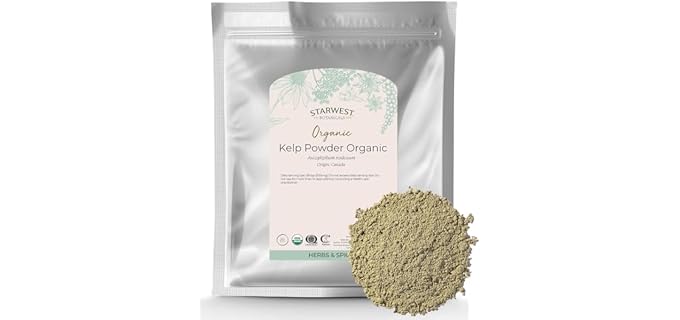
Starwest Botanicals® Organic Kelp Powder Organic dried kelp powder (Ascophyllum nodosum), 16 oz


Currently unavailable
- Starwest Botanicals Organic Kelp Powder is a 16 oz bag of dried Ascophyllum nodosum kelp.
- It is USDA Certified Organic, kosher and non-GMO.
- It has a savory, salty flavor and mixes into soups, salad dressings, smoothies and rice dishes.
Index Table: Organic Kelp Powder
| No. | Product | Image | Features | Brand |
|---|---|---|---|---|
| 1 | Micro Ingredients Organic Kelp Powder - Whole-plant organic kelp powder, 2 lb |  |
| Micro Ingredients |
| 2 | Starwest Botanicals Organic Kelp Powder - Organic dried kelp powder (Ascophyllum nodosum), 16 oz |  |
| Starwest Botanicals |
Sources
- NIH Office of Dietary Supplements. Iodine: Fact Sheet for Consumers. Accessed October 27, 2026.
- NIH Office of Dietary Supplements. Dietary Supplements: What You Need to Know. Accessed October 27, 2026.
- USDA Agricultural Marketing Service. Organic Labeling Standards. Accessed October 27, 2026.
Update History
- Oct 2026: Rewrote the guide text and product notes around the NIH iodine fact sheet, added the 1,100 mcg upper limit, the medicine cautions and the label checks, removed unsupported claims and unrelated sources, and replaced the sources (NIH, USDA)
- Oct 2026: Removed Pure Synergy Barley Grass Juice Powder, which is not kelp, and Maine Coast Icelandic Kelp Blend, which holds about three times the adult upper limit for iodine per serving
- Dec 2019: First published