As an Amazon Associate I earn from qualifying purchases. Product links on this page are affiliate links, at no extra cost to you; see our Affiliate Disclosure.
Japanese cuisines are incomplete without Nori sheets. This edible form of seaweed is used to roll sushi to add a distinct flavor to the fish. Nori has become popular well beyond Japan, as a sushi wrap and as a snack. Plain nori is a single ingredient: red seaweed pressed and dried into thin sheets, sold raw or roasted. Below is what to know about iodine and heavy metals, and four organic picks.Disclaimer: This article is general information, not medical or safety advice.

Key Specs Compared
Numbers match the reviews below (tap to jump).
| # | Form | Size | Stated certifications | Gluten-free |
|---|---|---|---|---|
| 1 | Sheets (raw) | 50 Sheets | USDA Organic, Ecocert, Kosher | Not stated |
| 2 | Sheets (roasted) | 50 Sheets | USDA Organic | Not stated |
| 3 | Sheets (roasted) | 50 Sheets | USDA Organic, Non-GMO | Not stated |
| 4 | Sheets (raw) | 50 Sheets | USDA Organic (per listing), Non-GMO, Kosher | Not stated |
– = not stated on the Amazon listing · Specs and certifications as stated by the listing, not tested or verified by us; check the listing before you buy
Nori tips
- Iodine – Seaweed is a natural source of iodine, which the thyroid needs. It isn’t a treatment for thyroid disease, and too much iodine can cause thyroid problems such as goiter and thyroid inflammation.[2]
- Low in calories – A sheet of nori weighs only a few grams, so it adds flavor and a little protein and minerals without many calories.
How to Use Nori Sheets in Home-made Snacks
- Sushi – Rolling sushi at home costs much less than eating out. Vegetable, cooked-fish or tofu fillings are the easiest start; if you use raw fish, buy fish sold for raw eating.
- Crisp Nori – fix yourself a quick snack for untimely hunger by crisping nori sheets until they have the texture of chips. Pair it up with a tartar sauce or whichever one you like, and you’re good to go.
- Soup – Strips of nori add savory flavor to miso soup, ramen and noodle bowls.
Why You Shouldn’t Consume too Many Nori Sheets
- Nori is low in carbohydrates and calories; the main reason to go easy is iodine.
- Seaweed can take up metals such as arsenic and cadmium from seawater. Some brands, like rawnori below, say they test for heavy metals; that’s worth looking for if you eat nori often.
- Too much iodine can cause goiter, thyroid inflammation and other thyroid problems. Adults should stay under 1,100 mcg a day from all sources, including supplements.[2]
What the Research Says
Seaweed is a natural source of iodine, but the amount varies widely between products, and foods that naturally contain iodine usually don’t list it on the label.[2] Organic certification covers how the seaweed is produced and handled, not its iodine or mineral content.[1]How We Chose These Products
We don’t test products hands-on. We compared labels and listings: the USDA Organic seal [1], raw or roasted, whether the brand reports heavy-metal testing, sheet count and price per sheet. We dropped a combo pack that bundled our first pick’s nori with a coconut opener, since it duplicated that pick. On October 18, 2026 we searched FDA recall records for these brands [3][4] and found no recalls. Brands don’t pay to be included, though we may earn a commission from purchases.Our Picks: Organic Nori Sheets
1
rawnori® Raw Nori Sheets Raw organic nori, 50 sheets


- rawnori’s raw organic nori (50 sheets) comes in size 50 sheets per pack.
- It carries USDA Organic and Ecocert labeling and is also vegan.
- It comes in a resealable pouch.
- The package measures 10 x 10 x 1.5 inches and weighs 0.4 pounds.
2
One Organic® Sushi Nori Roasted organic seaweed, 50 full sheets


- One Organic’s roasted organic seaweed (50 full sheets) comes in a pack of 50 Full Sheets.
- It carries USDA Organic labeling.
- The package measures 8 x 7.5 x 0.5 inches and weighs 0.3 pounds.
- Check the package label for the full ingredient list and allergen information before you buy.
3
Little Jasmine® Roasted Seaweed USDA Organic roasted nori, 50 sheets


- Little Jasmine’s USDA Organic roasted nori (50 sheets) comes in a pack of 50 Full Sheets.
- It carries USDA Organic labeling and is also non-GMO, vegan, gluten-free and keto-friendly.[1]
- It comes in a resealable pouch.
- Made in the USA.
- It suits salad dressings and snacking.
4
Earth Circle Organics® Raw Nori Sheets Raw unroasted organic nori seaweed sheets


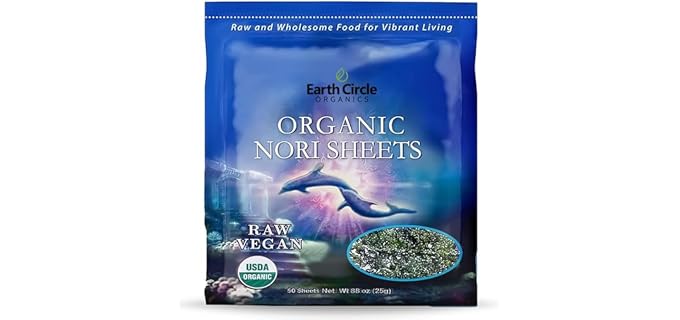
- Earth Circle Organics’ raw unroasted organic nori seaweed sheets come in a 50-count pack.
- Certifications include USDA Organic, and it is also non-GMO, vegan, paleo-friendly and keto-friendly.
- It comes in a resealable pouch.
- Use it for salad dressings and snacking.
Index Table: Organic Nori Sheets Compared
| No. | Product | Image | Features | Brand |
|---|---|---|---|---|
| 1 | rawnori Raw Nori Sheets - Raw organic nori, 50 sheets |  |
| rawnori |
| 2 | One Organic Sushi Nori - Roasted organic seaweed, 50 full sheets |  |
| One Organic |
| 3 | Little Jasmine Roasted Seaweed - USDA Organic roasted nori, 50 sheets |  |
| Little Jasmine |
| 4 | Earth Circle Organics Raw Nori Sheets - Raw unroasted organic nori seaweed sheets |  | Earth Circle Organics |
Sources
- USDA Agricultural Marketing Service. Organic Labeling Standards. Accessed October 16, 2026.
- NIH Office of Dietary Supplements. Iodine: Fact Sheet for Consumers. Accessed October 18, 2026.
- U.S. Food and Drug Administration. Recalls, Market Withdrawals, & Safety Alerts. Accessed October 16, 2026.
- U.S. Food and Drug Administration, openFDA. Food Recall Enforcement Reports (searched October 18, 2026). Accessed October 18, 2026.
Update History
- Oct 2026: Removed the CocoDrill coconut opener + rawnori combo (duplicate of our first pick); all remaining listings claim USDA Organic; replaced off-topic textile labeling guidance with food guidance; corrected the claim that seaweed helps thyroid dysfunction (excess iodine can harm the thyroid) and the ‘carbohydrates hard on the stomach’ line; added iodine and heavy-metal notes; Key Specs updated; Sources (USDA AMS, NIH ODS, FDA, openFDA)
- Jan 2022: First published
Views: 0