As an Amazon Associate I earn from qualifying purchases. Product links on this page are affiliate links, at no extra cost to you; see our Affiliate Disclosure.
Erythritol is a sugar alcohol that tastes sweet but adds almost no calories. It’s popular for baking and keto recipes, but it isn’t a free pass: recent Cleveland Clinic research links high blood levels of erythritol to blood-clotting changes and heart events, so it’s worth using in moderation.[1][2] Below: what erythritol is, what the heart research says, and three organic erythritol picks.Disclaimer: This article is general information, not medical or nutrition advice.

Key Specs Compared
Numbers match the reviews below (tap to jump).
| # | Form | Size | Stated certifications | Gluten-free |
|---|---|---|---|---|
| 1 | Granules | 16 Ounce | USDA Organic, Non-GMO Project Verified, Kosher | Yes (made without gluten) |
| 2 | Granules | 80 Ounce | USDA Organic, Non-GMO Project Verified, Kosher | Yes |
| 3 | Granules | 160 Ounce | USDA Organic, Kosher | Yes |
– = not stated on the Amazon listing · Specs and certifications as stated by the listing, not tested or verified by us; check the listing before you buy
Erythritol label basics
Why People Use Erythritol
Here’s why it’s used in place of sugar, and what it can’t do.- Very low in calories – Erythritol provides about 0 to 0.2 calories per gram, and U.S. labels count it as 0. Sugar, like other carbohydrates, counts as 4 calories per gram.[6][7]
- Little effect on blood sugar – Erythritol is a carbohydrate, but most of it is absorbed and passed out in urine unchanged, so it barely raises blood glucose. It still appears under Total Carbohydrate on the Nutrition Facts label.[7][6]
- Taste – It’s about 60% to 80% as sweet as sugar, with a slight cooling aftertaste, so recipes often need a little more of it.[7]
What Organic Means for Erythritol
Organic foods are grown and processed under USDA rules that limit synthetic pesticides and fertilizers and prohibit GMOs and irradiation.[4] Research hasn’t shown that organic foods are significantly more nutritious than conventional foods, though they tend to have lower pesticide residues.[4][8] Health claims on food labels are regulated by the FDA, and only a few are authorized.[9]Buying Considerations for Organic Erythritol
Before selecting and purchasing Erythritol for yourself, go through the given pointers to make the right choice for yourself.- FDA Status – In the US region, erythritol is used in foods under GRAS (generally recognized as safe) notices rather than FDA approval.[10]
- Organic vs conventional – All commercial erythritol is made the same way: glucose from corn or wheat starch is fermented by yeast-like fungi and then purified. It can’t be made commercially by chemical synthesis.[7][11] Organic erythritol simply starts from organic crops, so it isn’t more effective; it’s an organic farming choice.
- Check the label – For organic erythritol, look for the USDA Organic seal or the certifier’s name. Many “keto” sweetener blends mix erythritol with stevia or monk fruit, so read the ingredient list if you want erythritol alone.
- Price – Organic erythritol usually costs more than conventional. Compare the price per ounce; bulk bags are cheaper per ounce.
What the Research Says
In a 2023 study of about 4,000 U.S. and European adults, people with the highest blood erythritol levels had a higher risk of heart attack, stroke or death over three years, and erythritol made platelets clot more readily in lab tests.[1] In a small 2024 trial, 20 healthy volunteers drank either 30 g of erythritol or glucose; blood erythritol jumped more than 1,000-fold and platelet reactivity rose in every person who had erythritol, but not with glucose.[2] These studies show an association and a short-term effect, not proof that erythritol causes heart attacks, and the researchers have called for longer safety studies. Erythritol remains allowed in U.S. foods under GRAS notices.[10] If you have heart disease, diabetes or other clotting risk factors, talk to your doctor before using it often, and keep servings modest. Large amounts can also cause bloating or diarrhea. Dietary guidelines recommend limiting added sugars;[8] organic certification covers how food is grown and processed, not its nutrition.[4]How We Chose These Products
We don’t test products hands-on. We compared labels and listings: the USDA Organic seal [4], ingredients and added sugar, size, and price per ounce. We removed two picks whose listings make no organic claim. On October 18, 2026 we searched FDA recall records for these brands [12][13] and found no recalls. Brands don’t pay to be included, though we may earn a commission from purchases.Our Organic Erythritol Picks
Each pick below is labeled organic on its listing. We may earn a commission from purchases made through these links.1
NOW® Organic Erythritol Organic zero-calorie erythritol sweetener, granular


- You get 1 lb of organic zero-calorie erythritol sweetener (granular).
- Certifications include USDA Organic and Non-GMO Project Verified, and it is also vegan and vegetarian.
- It is sugar-free.
- The package measures 6 x 3 x 9.5 inches and weighs 1 pound.
- Erythritol doesn’t feed tooth-decay bacteria the way sugar does.
2
DureLife® Organic Erythritol USDA Organic plant-based erythritol, 5lb


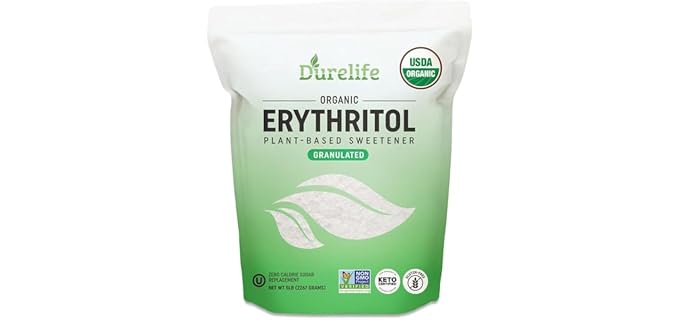
- DureLife Organic Erythritol is a USDA Organic plant-based erythritol, and it comes in a 5 lb size.
- USDA Organic and Non-GMO Project Verified labeling is on the package, and it is vegan, keto-friendly and kosher as well.[4][14]
- It is meant for baking, smoothies, coffee and tea; the package measures 8 x 2 x 11 inches and weighs 5 pounds.
- Check the package label for the full ingredient list and allergen information before you buy.
3
Z Natural Foods® Organic Erythritol Organic erythritol sweetener bulk, 10lb


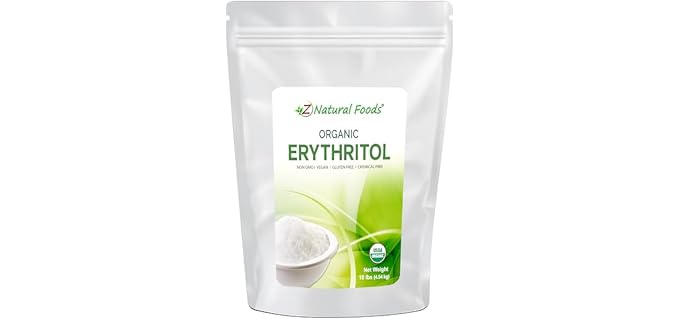
- This is an organic erythritol sweetener bulk from Z Natural Foods, in a 10 lb size.
- Certifications include USDA Organic, and it is also non-GMO, vegan, gluten-free and paleo-friendly.
- Use it for baking, cooking, smoothies and coffee.
- Check the package label for the full ingredient list and allergen information before you buy.
Index Table: Organic Erythritol Compared
| No. | Product | Image | Features | Brand |
|---|---|---|---|---|
| 1 | NOW Organic Erythritol - Organic zero-calorie erythritol sweetener, granular |  |
| NOW |
| 2 | DureLife Organic Erythritol - USDA Organic plant-based erythritol, 5lb |  | DureLife | |
| 3 | Z Natural Foods Organic Erythritol - Organic erythritol sweetener bulk, 10lb |  | Z Natural Foods |
Sources
- Witkowski M, Nemet I, Alamri H, et al. The artificial sweetener erythritol and cardiovascular event risk. Nat Med. 2023;29(3):710-718. Accessed October 18, 2026.
- Witkowski M, Wilcox J, Province V, et al. Ingestion of the non-nutritive sweetener erythritol, but not glucose, enhances platelet reactivity and thrombosis potential in healthy volunteers. Arterioscler Thromb Vasc Biol. 2024;44(9):2136-2141. Accessed October 18, 2026.
- U.S. Food and Drug Administration. How to Understand and Use the Nutrition Facts Label. Accessed October 16, 2026.
- USDA Agricultural Marketing Service. Organic Labeling Standards. Accessed October 16, 2026.
- U.S. Food and Drug Administration. Food Allergies: What You Need to Know. Accessed October 16, 2026.
- U.S. Food and Drug Administration. Food Labeling: Revision of the Nutrition and Supplement Facts Labels, Small Entity Compliance Guide (section VII.A, calorie factors for sugar alcohols). Accessed October 18, 2026.
- European Commission, Scientific Committee on Food. Opinion on Erythritol (SCF/CS/ADD/EDUL/215 Final). Accessed October 18, 2026.
- Dietary Guidelines for Americans, 2020-2025. Dietary Guidelines for Americans, 2020-2025. Accessed October 16, 2026.
- U.S. Food and Drug Administration. Label Claims for Conventional Foods and Dietary Supplements. Accessed October 16, 2026.
- U.S. Food and Drug Administration. Generally Recognized as Safe (GRAS). Accessed October 17, 2026.
- Regnat K, Mach RL, Mach-Aigner AR. Erythritol as sweetener: wherefrom and whereto?. Appl Microbiol Biotechnol. 2018;102(2):587-595. Accessed October 18, 2026.
- U.S. Food and Drug Administration. Recalls, Market Withdrawals, & Safety Alerts. Accessed October 16, 2026.
- U.S. Food and Drug Administration, openFDA. Food Recall Enforcement Reports (searched October 18, 2026). Accessed October 18, 2026.
- Non-GMO Project. Non-GMO Project Verified. Accessed October 16, 2026.
Update History
- Oct 2026: Removed So Nourished Erythritol and Anthony’s Erythritol Granules (listings make no organic claim); removed the ‘all the positives of sugar without negatives’ claim and added the 2023 and 2024 Cleveland Clinic findings on erythritol, platelets and heart events; corrected sugar’s calories (4 per gram, not 2.4); corrected the claim that conventional erythritol is made by a less effective chemical process (all erythritol is fermented); Key Specs updated; Sources (FDA, USDA AMS, Dietary Guidelines, Nature Medicine, ATVB, EU Scientific Committee on Food, Regnat 2018, openFDA)
- Mar 2021: First published
Views: 0


