As an Amazon Associate I earn from qualifying purchases. Product links on this page are affiliate links, at no extra cost to you; see our Affiliate Disclosure.
Vitamin C is an essential nutrient required for the proper functioning of the human body. Amla Fruit is a rich source of Vitamin C. It can be eaten fresh, in berry form, juice, powder, or capsule form. Please scroll down to find out more about Amla and its many benefits, as well as the best Organic Amla powders available.Disclaimer: This article is for general information and is not medical advice. Talk to your doctor or pharmacist before starting a supplement, especially if you are pregnant, nursing, take medicines or are buying for a child.

Key Specs Compared
Numbers match the reviews below (tap to jump).
| # | Form | Size | Stated certifications | Gluten-free |
|---|---|---|---|---|
| 1 | Powder | 32 Ounce | USDA Organic, Non-GMO | Yes |
| 2 | Powder | 17.6 Ounce | USDA Organic, Kosher, Halal | Yes |
| 3 | Powder | 14.1 ounce Pack | USDA Organic, Non-GMO | Yes |
| 4 | Powder | 16 Ounce | USDA Organic, Non-GMO | Yes |
| 5 | Powder | 1.25 pound | USDA Organic, Non-GMO | Yes |
– = not stated on the Amazon listing · Specs and certifications as stated by the listing, not tested or verified by us; check the listing before you buy
Amla tips
What is Amla?
- Amla – Amla, also known as Indian Gooseberry, comes with the scientific name Phyllanthus Emblica. It grows on Amla or Malacca/ Amalaki tree. It is native to India and the Middle East.
- Usage of Amla – Amla can be eaten in berry form directly or in sweet fruit preserve form called “Murabba.” You can make it into juice or use it as powder. Amla dietary supplements are also commonly available in capsule or tablet forms.
- Composition – Amla contains phytochemicals such as Gallic acid, Ellagic acid, Pyrogallol, Norsesquiterpenoids, Corilagin, Geraniin, Elaeocarpusin, and Prodelphinidins B1 and B2, plus flavonoids. It’s one of the richest common sources of vitamin C, but not the richest fruit: acerola cherry and Australia’s Kakadu plum contain more per 100 grams.[4][5]
Benefits of Amla
Amla (Indian gooseberry) is a sour fruit used in Indian cooking and Ayurveda. It contains vitamin C and plant compounds.[6] Small studies have looked at amla for blood sugar and cholesterol, but the evidence is limited, and amla isn’t a treatment for diabetes or hair loss.[1]Usage of Amla Powder
- Amla Fruit – Amla fruit can be eaten as it. Another common way of eating it, especially in India and Pakistan, is a fruit preserve called ‘Murabba.’ Amla Pickles are also commonly available.
- Amla Juice – Indian gooseberries can be juiced and drunk diluted with water. Some people also apply the juice to the hair and scalp or use it in a face mask.
- Amla Powder – Amla powder is readily available in the market. Use this powder as a dietary supplement in the face or hair pack, or add it to food.
- Amla Capsules/Tablets – Amla capsules and tablets are the easiest way to make Amla a daily part of your life. Go for a supplement that comes with an ‘Organic’ label for your safety and the well-being of the planet,
What the Research Says
Amla is rich in vitamin C and plant compounds, but there are few well-designed human studies of amla supplements.[1][6]How We Chose These Products
We don’t test products hands-on. We compared labels and listings: the USDA Organic seal [7], ingredients and added sugar, size, and price per ounce. We removed products that were out of stock, no longer listed or recalled, and we checked the brands we list against recent FDA [8] recall notices in October 2026. Brands don’t pay to be included, though we may earn a commission from purchases.Our Organic Amla Powder Picks
We kept only products whose listings make an organic claim, and all five were in stock when we checked in October 2026. We may earn a commission when you buy through these links, at no extra cost to you.1
Micro Ingredients® Organic Amla Powder Organic Indian gooseberry powder, 32 ounces (2 lb)


- Micro Ingredients Organic Amla Powder is an organic Indian gooseberry powder, and it comes in a 32 oz size.
- Certifications include USDA Organic, and it is also non-GMO, vegan and keto-friendly.
- Harvested in India.
- Use it for body and hair.
2
Organic Spice Resource® Organic Amla Powder USDA Organic amla powder, 1.1 pounds


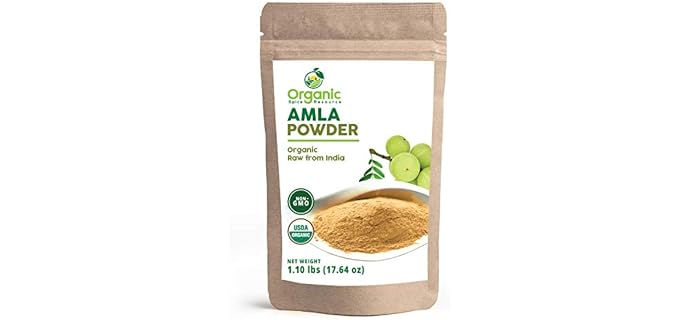
- You get 1.1 lb of USDA Organic amla powder.
- It carries USDA Organic and Halal labeling and is also non-GMO, vegan and gluten-free.
- It is raw.
- It is a single-ingredient product, and it comes in a resealable pouch.
- It suits smoothies and tea.
3
HANDPICK® Organic Amla Powder USDA Organic Indian gooseberry powder, 14oz


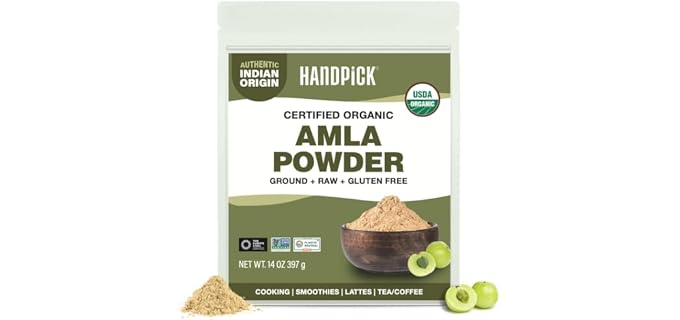
- Overview – Handpick Organic Amla Powder is a USDA Organic Indian gooseberry powder, and it comes in a 14 oz size.
- Certifications – It carries USDA Organic labeling and is also non-GMO and gluten-free.[7]
- Ingredients – It is raw.
- Free from – It comes in a resealable pouch.
- Uses – It suits smoothies and tea.
4
U.S. Wellness Naturals® Organic Amla Powder USDA Organic amalaki powder, 1 pound


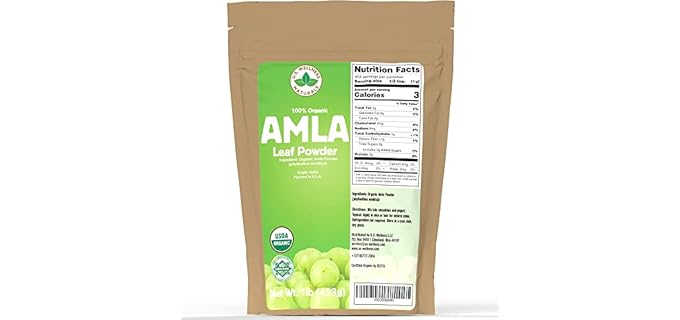
- This is a USDA Organic amalaki powder from U.S. Wellness Naturals, in a 1 lb size.
- Certifications include USDA Organic, and it is also non-GMO, vegan and gluten-free.
- It is raw.
- It is a single-ingredient product, and it comes in a resealable pouch.
- Use it for smoothies and tea.
5
Jiva Organics® Organic Amla Powder Lab-tested organic amla powder, 20 ounces


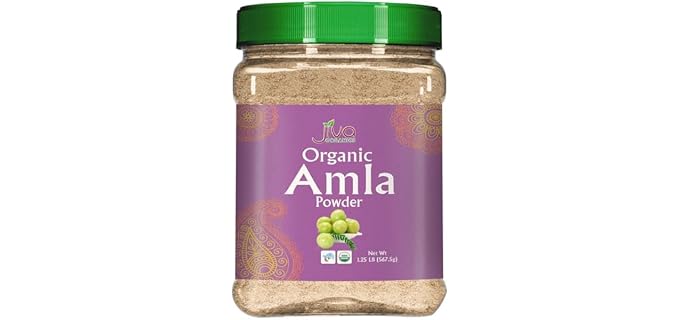
- Jiva Organics Organic Amla Powder is a lab-tested organic amla powder, and it comes in a 1.25 lb size.
- It carries USDA Organic labeling and is also non-GMO and gluten-free.
- It is raw.
- It is additive-free, and it comes in a resealable pouch.
- A product of India.
Index Table: Organic Amla Powder
| No. | Product | Image | Features | Brand |
|---|---|---|---|---|
| 1 | Micro Ingredients Organic Amla Powder - Organic Indian gooseberry powder, 32 ounces (2 lb) |  |
| Micro Ingredients |
| 2 | Organic Spice Resource Organic Amla Powder - USDA Organic amla powder, 1.1 pounds |  | Organic Spice Resource | |
| 3 | HANDPICK Organic Amla Powder - USDA Organic Indian gooseberry powder, 14oz |  | HANDPICK | |
| 4 | U.S. Wellness Naturals Organic Amla Powder - USDA Organic amalaki powder, 1 pound |  | U.S. Wellness Naturals | |
| 5 | Jiva Organics Organic Amla Powder - Lab-tested organic amla powder, 20 ounces |  | Jiva Organics |
Sources
- NIH Office of Dietary Supplements. Dietary Supplements: What You Need to Know. Accessed October 16, 2026.
- U.S. Food and Drug Administration. Dietary Supplements. Accessed October 16, 2026.
- U.S. Food and Drug Administration. Lead in Food and Foodwares. Accessed October 16, 2026.
- USDA FoodData Central. Acerola (West Indian cherry), raw. Accessed October 17, 2026.
- Doseděl M, et al. Vitamin C: Sources, Physiological Role, Kinetics, Deficiency, Use, Toxicity, and Determination. Nutrients, 2021. Accessed October 17, 2026.
- NIH Office of Dietary Supplements. Vitamin C Fact Sheet for Consumers. Accessed October 16, 2026.
- USDA Agricultural Marketing Service. Organic Labeling Standards. Accessed October 16, 2026.
- U.S. Food and Drug Administration. Recalls, Market Withdrawals, & Safety Alerts. Accessed October 16, 2026.
Update History
- Oct 2026: No products removed (all five make an organic claim and are in stock); corrected the claim that amla has the most vitamin C of any fruit (acerola and Kakadu plum have more); fixed the Micro Ingredients size (32 oz) and organic status; added the HANDPICK allergen note; Key Specs updated; added Sources (NIH ODS, FDA, USDA AMS, USDA FoodData Central, peer-reviewed review)
- Feb 2020: First published
Views: 0


