We may earn a commission from qualifying purchases. Product links on this page are affiliate links, at no extra cost to you; see our Affiliate Disclosure.
Yacon syrup is a dark, caramel-tasting sweetener pressed from the root of the Andean yacon plant. Much of its sugar is fructooligosaccharides (FOS), a fiber that is not digested in the small intestine and feeds bacteria in the large intestine. This guide covers what the research found, how much is tolerated, what to check on the label, and five organic yacon syrups.General information, not medical or nutrition advice. Talk to your doctor before you use it to manage weight or blood sugar.

Key Specs Compared
Numbers match the reviews below (tap to jump).
| # | Form | Size | Stated certifications | Gluten-free |
|---|---|---|---|---|
| 1 | Syrup | 8.8 Ounce | Certified organic (per ingredients) | Not stated |
| 2 | Syrup | 8 Fl Oz | USDA Organic, Non-GMO | Yes |
| 3 | Syrup | 9.5 Fl Oz | USDA Organic | Not stated |
| 4 | Syrup | 169 Fl Oz (bulk) | USDA Organic, Non-GMO | Yes |
| 5 | Syrup | 8.8 Fl Oz (Pack of 3) | USDA Organic | Not stated |
– = not stated by the maker · Specs and certifications as stated by the listing, not tested or verified by us; check the listing before you buy
Yacon syrup label basics
- Yacon syrup is a sweetener, and the FDA counts sugars from syrups and honey as added sugars.[3]
- The Dietary Guidelines for Americans recommend limiting added sugars to less than 10 percent of calories a day, which is 50 grams on a 2,000 calorie diet.[3]
- The trial tested 0.14 and 0.29 g of FOS per kg of body weight a day, and 0.14 g per kg was the recommended amount with no undesirable digestive effects.[1]
- Look for the USDA Organic seal, because the FDA has no formal definition of “natural.”[4][5]
What to Look for When Buying Yacon Syrup
- Ingredient List – The ingredient list should be yacon syrup alone. Check for added sugar, sweeteners or flavors.
- Organic Seal – A product can carry the USDA organic seal only if it is certified, and a product that is not certified can name only its certified organic ingredients as organic on the information panel.[5]
- “Natural” – The FDA has not made rules to define “natural,” and its policy is that nothing artificial or synthetic has been added to the food.[4]
- Packaging – Most jars hold 8 to 9.5 oz in glass or food-grade bottles, and a few are multi-packs or bulk containers, so check the price per ounce.
What Yacon Syrup Contains
- The Plant – Yacon is a perennial plant of the family Asteraceae native to the Andean regions of South America, and it is an abundant source of fructooligosaccharides.[2]
- FOS – FOS intake favors the growth of health-promoting bacteria in the gut, and the short chain fatty acids from FOS fermentation take part in regulating the immune response, glucose and lipid metabolism.[2]
- Still a Sweetener – It is a sugar source in your diet, so count it toward your added sugar limit.[3]
What the Research Shows
- The Trial – In a 120-day double-blind placebo-controlled trial of obese, slightly dyslipidemic pre-menopausal women, yacon syrup lowered body weight, waist circumference and body mass index, and lowered fasting insulin and insulin resistance.[1]
- Digestion – Yacon syrup increased the frequency of defecation and the feeling of fullness. The recommended daily amount with no undesirable gastrointestinal effects was 0.14 g of FOS per kg of body weight.[1]
- What It Did Not Change – Fasting glucose and blood lipids were not affected, and the only positive effect on blood fats was on LDL cholesterol.[1]
- Reviews – A review of preclinical and clinical trials says most of the studies it reviewed concluded that yacon roots may be used as a dietary supplement to prevent and treat chronic diseases.[2]
What the Research Says
The 2009 trial found weight, waist and fasting insulin dropped in obese women who took yacon syrup for 120 days, and that a 0.14 g per kg FOS dose was tolerated without digestive side effects.[1] The 2016 review says most of the studies it covered concluded that yacon roots may be used as a dietary supplement.[2]How We Chose These Products
We do not test products. We compare product details: ingredients, stated certifications, size and price per ounce.[5] Brands don’t pay to be included, though we may earn a commission from purchases.Our Organic Yacon Syrup Picks
We found five organic yacon syrups, so this guide has five picks. With every purchase through the links on this page, we may earn a commission, at no extra cost to you.1
Peruvian Naturals® Organic Yacon Syrup Natural Peruvian yacon root syrup sweetener


Currently unavailable
- Peruvian Naturals Organic Yacon Syrup is an 8.8 oz bottle of Peruvian yacon root syrup, and the product text gives 13 calories and 4 g net carbs per serving.
- The box shows a certified organic ingredient, and the product is keto-friendly.
- It goes into coffee, tea, pancakes and baked goods.
2
Zint® Organic Yacon Syrup Pure yacon root syrup natural sweetener


Currently unavailable
- Zint Organic Yacon Syrup is an 8 fl oz bottle of 100% pure yacon root syrup.
- It is non-GMO and paleo-friendly, and the Key Specs show USDA Organic.
- The product text names yacon as the only ingredient but gives no serving or calorie figures, so check the Nutrition Facts panel.
3
Global Family Farms® Yacon Syrup Organic yacon syrup, 9.5oz glass bottle


Currently unavailable
- Global Family Farms Yacon Syrup is a 9.5 fl oz glass bottle of 100% organic yacon syrup grown in eastern Nepal.
- The tubers are pressed for juice that is gently heated into a golden-brown syrup, and it is high in FOS.
- Shake the bottle before use, because a soluble fiber can rise to the top.
4
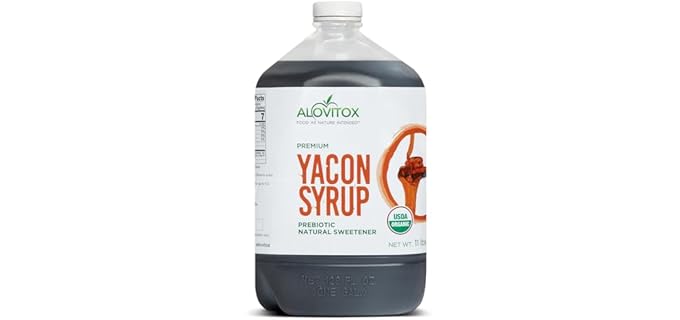
Alovitox® Yacon Syrup USDA Organic yacon root syrup sweetener


Currently unavailable
- Alovitox Yacon Syrup is a 169 fl oz bulk container of USDA Organic yacon root syrup sourced from small organic producers in the Andes.
- It is non-GMO and packed in glass jars.
- It is a bulk size, so check the unit price and plan to store it.
5
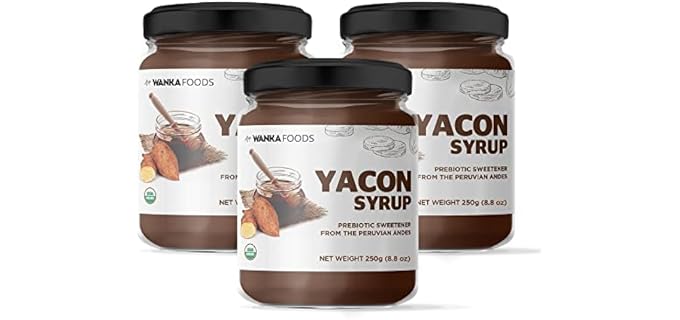
Wanka Foods® Organic Yacon Syrup Plant-based Peruvian yacon syrup sweetener


Currently unavailable
- Wanka Foods Organic Yacon Syrup is a 3-pack of 8.8 fl oz bottles of USDA Organic syrup from Peruvian yacon root.
- It has no artificial colors, flavors, preservatives or added sweeteners.
- It goes into coffee, tea, smoothies, oatmeal, yogurt and baked goods.
Index Table: Organic Yacon Syrup Compared
| No. | Product | Image | Features | Brand |
|---|---|---|---|---|
| 1 | Peruvian Naturals Organic Yacon Syrup - Natural Peruvian yacon root syrup sweetener |  |
| Peruvian Naturals |
| 2 | Zint Organic Yacon Syrup - Pure yacon root syrup natural sweetener |  |
| Zint |
| 3 | Global Family Farms Yacon Syrup - Organic yacon syrup, 9.5oz glass bottle |  |
| Global Family Farms |
| 4 | Alovitox Yacon Syrup - USDA Organic yacon root syrup sweetener |  | Alovitox | |
| 5 | Wanka Foods Organic Yacon Syrup - Plant-based Peruvian yacon syrup sweetener |  | Wanka Foods |
Sources
- Genta S, Cabrera W, Habib N, Pons J, Carillo IM, Grau A, Sánchez S. Yacon syrup: beneficial effects on obesity and insulin resistance in humans. Clinical Nutrition, 2009. Accessed October 27, 2026.
- Caetano BF, de Moura NA, Almeida AP, Dias MC, Sivieri K, Barbisan LF. Yacon (Smallanthus sonchifolius) as a Food Supplement: Health-Promoting Benefits of Fructooligosaccharides. Nutrients, 2016. Accessed October 27, 2026.
- U.S. Food and Drug Administration. Added Sugars on the Nutrition Facts Label. Accessed October 27, 2026.
- U.S. Food and Drug Administration. Use of the Term Natural on Food Labeling. Accessed October 27, 2026.
- USDA Agricultural Marketing Service. Organic Labeling Standards. Accessed October 27, 2026.
Update History
- Oct 2026: Rewrote the guide text and product notes around the 2009 yacon syrup trial, the 2016 yacon review and the FDA added sugars and natural labeling pages, added what to look for, what yacon contains and what the research shows, removed unsupported claims, and replaced the sources (Clinical Nutrition, Nutrients, FDA, USDA)
- Oct 2026: No products removed (all five product texts claim organic); corrected ‘without the calories’; added a FOS digestive-upset caution; corrected Key Specs sizes and certifications
- Apr 2021: First published


