As an Amazon Associate I earn from qualifying purchases. Product links on this page are affiliate links, at no extra cost to you; see our Affiliate Disclosure.
Kombucha is a fizzy drink made by fermenting sweet tea with a culture of yeast and bacteria, called a SCOBY. Fermentation leaves a small amount of alcohol, and at 0.5% alcohol by volume or more, kombucha is legally an alcohol beverage.[1] This guide covers who should skip kombucha, home-brew safety and how to tell when a batch has gone bad, then compares three organic picks: a ready-to-drink kombucha and two products for brewing your own.Disclaimer: This article is general information, not medical or nutrition advice. If you are pregnant, breastfeeding, have a weakened immune system or take medication, talk to your doctor before drinking kombucha.

Key Specs Compared
Numbers match the reviews below (tap to jump).
| # | Form | Size | Stated certifications |
|---|---|---|---|
| 1 | Loose leaf tea (for brewing) | 2.96 Ounce (84 g) | USDA Organic |
| 2 | SCOBY + starter tea | 12 Fl Oz starter tea | USDA Organic, Kosher |
| 3 | Ready-to-drink kombucha | 8.5 Fl Oz (Pack of 24) | Certified organic ingredients |
– = not stated on the Amazon listing · Specs and certifications as stated by the listing, not tested or verified by us; check the listing before you buy
Good to know
- The FDA has cited 400 milligrams of caffeine a day as an amount not generally associated with negative effects for most healthy adults. Kombucha is brewed with tea, so it contains some caffeine.[5]
- Young children, pregnant women and people with weakened immune systems should not drink kombucha, store-bought or homemade.[3]
- Home-brewed kombucha can grow harmful germs if the equipment is not clean, and its acid has leached lead from ceramic containers. Brew in glass.[2][3]
- Research on kombucha’s health effects is limited.[2]
Store-Bought vs Home-Brewed Kombucha
- Store-Bought – Commercial kombucha is made under controlled conditions and monitored for alcohol content.[1] Many are sold raw, so they contain live cultures, so check the label if that matters to you.
- Home-Brewed – It costs less, but you control the hygiene and the alcohol level is unpredictable. Use clean glass jars and tested instructions, and never use a ceramic pot.[2][3]
- Organic Label – USDA Organic covers how the tea and ingredients are grown and processed, not alcohol, sugar or safety.[4]
How to Tell if Kombucha Has Gone Bad
- Mold – Fuzzy, dry spots, often green, black or white, on the surface are mold. Throw out the whole batch and the SCOBY. A smooth, jelly-like new layer is normal.
- Smell and Color – Odd coloring or a smell like nail polish can mean a home batch is contaminated.[2] If it smells rotten or tastes off, don’t drink it, and if you feel sick after drinking kombucha, stop and talk to a doctor.
What the Research Says
Poison Control reports there are no scientific studies to support the many health claims made for kombucha, and it connects home-brewed kombucha with adverse events, including lead poisoning from ceramic brewing containers.[3] Cleveland Clinic says research on kombucha is limited, and it warns that homemade batches can pick up lead from some containers and can be contaminated.[2] Federal rules treat kombucha at or above 0.5% alcohol by volume as an alcohol beverage.[1] Organic certification covers how food is grown and processed, not its nutrition.[4]How We Chose These Products
We do not test products. We compare product details: USDA Organic certification, ingredients, sweetener, size and use.[4] We removed a kombucha tea blend without an organic claim and a kombucha-flavored tea bag that is not fermented kombucha. Brands don’t pay to be included, though we may earn a commission from purchases.Our Organic Kombucha Picks
These three picks are organic. One is a ready-to-drink kombucha, and the other two are for home brewing. With every purchase through the links on this page, we may earn a commission, at no extra cost to you.1
The Kombucha Shop® Original Tea Blend USDA Certified Organic Ceylon black and oolong loose leaf tea, 84 g


- The Kombucha Shop Original Tea Blend is a 2.96 oz (84 g) pouch of loose leaf tea for brewing kombucha.
- The ingredients are organic Ceylon black tea and organic oolong tea, and the blend is USDA Certified Organic.
- One pouch makes 10 gallons of kombucha.
- It is the tea base the maker uses for its own kombucha cultures and brewing kits.
- You also need a SCOBY and sugar, and a clean glass jar.
2
Fermentaholics® Organic Kombucha SCOBY Live SCOBY with 12oz starter tea


- Fermentaholics Organic Kombucha SCOBY comes with a starter pellicle and 12 oz (1.5 cups) of mature starter tea.
- The culture is USDA Certified Organic and kosher, and it is grown in the maker’s licensed lab.
- It starts a one-gallon batch of kombucha.
- The package measures 6 x 3 x 9 inches and weighs about 0.75 pounds.
- You also need tea, sugar and a clean glass jar.
3
Remedy® Sugar-Free Kombucha Organic sugar-free kombucha drink sampler pack


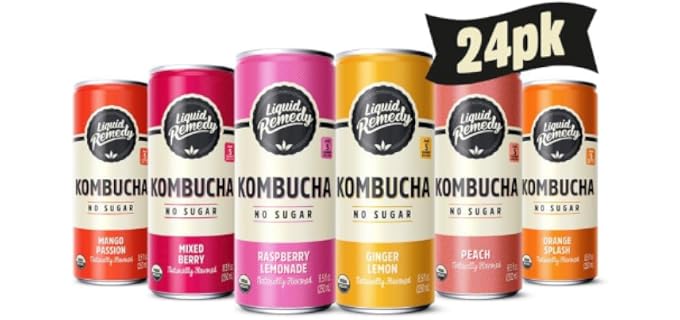
- Liquid Remedy Kombucha Sugar Free Organic Drink is a 24-pack of 8.5 fl oz cans in a six-flavor sampler.
- The flavors are mango passion, mixed berry, raspberry lemonade, ginger lemon, peach and orange splash.
- It is brewed for 30 days and sold raw, never filtered or pasteurized.
- The sugar is fermented out and plant-based sweeteners are used, so the cans do not need refrigeration.
- The ingredients are certified organic, and the drinks are gluten-free.
Index Table: Organic Kombucha Picks Compared
| No. | Product | Image | Features | Brand |
|---|---|---|---|---|
| 1 | The Kombucha Shop Original Tea Blend - USDA Certified Organic Ceylon black and oolong loose leaf tea, 84 g |  | The Kombucha Shop | |
| 2 | Fermentaholics Organic Kombucha SCOBY - Live SCOBY with 12oz starter tea |  |
| Fermentaholics |
| 3 | Remedy Sugar-Free Kombucha - Organic sugar-free kombucha drink sampler pack |  |
| Remedy |
Sources
- Alcohol and Tobacco Tax and Trade Bureau. Kombucha. Accessed October 25, 2026.
- Cleveland Clinic. Kombucha: What Is It and 7 Benefits. Accessed October 25, 2026.
- National Capital Poison Center (Poison Control). Kombucha tea: Health tonic or dangerous?. Accessed October 25, 2026.
- USDA Agricultural Marketing Service. Organic Labeling Standards. Accessed October 25, 2026.
- U.S. Food and Drug Administration. Spilling the Beans: How Much Caffeine Is Too Much?. Accessed October 25, 2026.
Update History
- Oct 2026: Rewrote the guide text and product notes, removed the unsupported brewing and vinegar-use claims, added caffeine, pregnancy and alcohol guidance with sources, corrected the tea blend and Remedy details, set the Key Specs to form, size and certification, and replaced the sources (TTB, Mayo Clinic, Poison Control, USDA AMS, FDA)
- Nov 2021: First published