As an Amazon Associate I earn from qualifying purchases. Product links on this page are affiliate links, at no extra cost to you; see our Affiliate Disclosure.
If you have been trying face creams, and none seem to work, you should consider switching to organic face cream. I’d like you to please read further for more information on the best organic face creams and why they work so well.Disclaimer: This article is general information, not medical advice. Patch-test new skin and hair products, and see a dermatologist for persistent skin problems.

Key Specs Compared
Numbers match the reviews below (tap to jump).
| # | Form | Size |
|---|---|---|
| 1 | Cream | 1.7 Ounce |
| 2 | Cream | 2 Ounce |
| 3 | Cream | 2 Ounce |
| 4 | Oil | 3.4 Fl Oz |
| 5 | Oil | 2 Ounce |
– = not stated on the Amazon listing · Specs and certifications as stated by the listing, not tested or verified by us; check the listing before you buy
Skin product safety
What is Your Skin Type?
Before you can choose what facial cream you need, understanding your skin type is a good idea.- Oily Skin – overly oily skin is caused by over-functioning pores and can be due to an allergic reaction or eating an unbalanced diet. Those with oily skin need rehydrating organic substances, such as vitamin C or citrus, that strip the excess oils without disturbing the skin.
- Combination Skin – combination skin is the result of having both of the above two skin types. A combination solution will be required for combination skin.
- Normal or “Perfect” Skin – those with normal skin have skin that does not have acne, is not too dry, and is not too oily. These individuals can still benefit from maintaining their complexions with organic ingredients.
What Organic Ingredients Promote Radiant Skin?
The ingredients below are full of natural compounds that penetrate deeply into the skin, protecting and repairing it by supplying it with the building blocks it needs to function properly.- Argan Oil – When applied in skin cream, it makes the skin more radiant and glossy and repairs any damages.
Some ingredient warnings online go further than the evidence. Here’s what regulators say:
- Fragrance: Fragrance mixes are a common cause of skin allergies and irritation; choose fragrance-free if you have sensitive skin.[3]
- Parabens: The FDA says it has no evidence that parabens as used in cosmetics are harmful to health.[4]
- Phthalates: The FDA continues to review phthalates; most cosmetics no longer contain them except in some fragrances.[5]
- Formaldehyde releasers and certain preservatives: These can cause allergic reactions in some people.[6]
- Sulfates (SLS, SLES): Effective cleansers that can be drying or irritating for some skin types; they are not considered carcinogens.[6]
- Lead and contaminants: The FDA monitors contaminants in cosmetics, and measured levels in products like lipstick have been low.[7]
What the Research Says
Daily moisturizer and broad-spectrum sunscreen are the foundation of skin care, according to dermatologists.[2][8] The FDA doesn’t define “organic” or “natural” for cosmetics; a product can carry the USDA Organic seal only if its agricultural ingredients meet USDA standards.[9][1] Plant ingredients can still cause allergic reactions, and fragrance is a common cause of skin irritation.[3] Cosmetics can’t legally claim to treat or cure skin conditions; products that do are regulated as drugs.[10]How We Chose These Products
We don’t test products hands-on. We compared labels and listings: ingredients and fragrance, what any organic claim covers (USDA seal or third-party certification) [11], skin type, and price per ounce. We removed products that were out of stock, no longer listed or recalled, and we checked the brands we list against recent CPSC [12] recall notices in October 2026. Brands don’t pay to be included, though we may earn a commission from purchases.Our Picks: Organic Face Creams
Please look at our selection of face creams and take your pick!1
LilyAna Naturals® Face Neck Moisturizer Face neck moisturizer, 1.7 oz


- LilyAna Naturals’ face neck moisturizer comes in a 1.7 oz size.
- It is vegan.
- It is fragrance-free.
- Made in the USA.
- The package measures 4.2 x 2 x 2 inches and weighs 0.1 pounds.
2
Era Organics® Manuka Face Cream Manuka honey daily face moisturizer


- You get 2 oz of manuka honey daily face moisturizer.
- Key ingredients: calendula.
- It comes in a jar.
- Made in the USA.
- The package measures 4 x 4 x 4 inches.
3
BeeFriendly® Face Eye Cream USDA Organic face and eye cream


- BeeFriendly’s USDA Organic face and eye cream comes in a 2 oz size.
- It carries USDA Organic labeling and is also non-GMO.[11]
- Made with honey and vitamin E.
- It is paraben-free, fragrance-free and additive-free.
- It suits face, hands and feet.
4
Ancient Greek Remedy® Organic Face Moisturizer Organic face and body butter cream


- Ancient Greek Remedy Organic Face Moisturizer is an organic face and body butter cream, and it comes in a 3.4 fl oz size.
- This one is vegan and cruelty-free.
- Made with vitamin E, rosehip oil and lavender, and it is cold-pressed.
- It has a lavender scent.
- It suits face, body and bath time.
5
MTGBO® Tallow Honey Balm Grass-fed whipped beef tallow honey balm


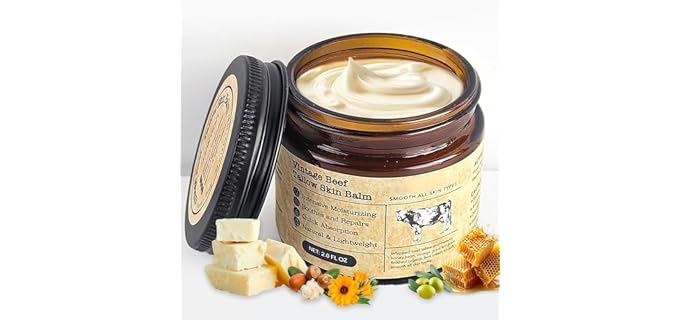
- This is a grass-fed whipped beef tallow honey balm from Mtgbo, in a 2 oz size.
- Made with olive oil, jojoba oil and vitamin E.
- It is fragrance-free.
- It suits face, body, hands and feet.
- Patch-test a small area first and check the ingredient list for anything you react to.
Index Table: Top-Rated Organic Face Creams
| No. | Product | Image | Features | Brand |
|---|---|---|---|---|
| 1 | LilyAna Naturals Face Neck Moisturizer - Face neck moisturizer, 1.7 oz |  |
| LilyAna Naturals |
| 2 | Era Organics Manuka Face Cream - Manuka honey daily face moisturizer |  |
| Era Organics |
| 3 | BeeFriendly Face Eye Cream - USDA Organic face and eye cream |  |
| BeeFriendly |
| 4 | Ancient Greek Remedy Organic Face Moisturizer - Organic face and body butter cream |  |
| Ancient Greek Remedy |
| 5 | MTGBO Tallow Honey Balm - Grass-fed whipped beef tallow honey balm |  | MTGBO |
Sources
- U.S. Food and Drug Administration. Cosmetics Labeling Claims. Accessed October 16, 2026.
- American Academy of Dermatology. How to wash your face. Accessed October 16, 2026.
- U.S. Food and Drug Administration. Fragrances in Cosmetics. Accessed October 16, 2026.
- U.S. Food and Drug Administration. Parabens in Cosmetics. Accessed October 16, 2026.
- U.S. Food and Drug Administration. Phthalates in Cosmetics. Accessed October 16, 2026.
- U.S. Food and Drug Administration. Cosmetics Safety Q&A: Prohibited and restricted ingredients. Accessed October 16, 2026.
- U.S. Food and Drug Administration. Lead in Food and Foodwares. Accessed October 16, 2026.
- U.S. Food and Drug Administration. Sunscreen: How to Help Protect Your Skin from the Sun. Accessed October 16, 2026.
- U.S. Food and Drug Administration. “Organic” Cosmetics. Accessed October 16, 2026.
- U.S. Food and Drug Administration. Is It a Cosmetic, a Drug, or Both? (Or Is It Soap?). Accessed October 16, 2026.
- USDA Agricultural Marketing Service. Organic Labeling Standards. Accessed October 16, 2026.
- U.S. Consumer Product Safety Commission. Recalls. Accessed October 16, 2026.
Update History
- Oct 2026: Product picks reviewed and updated; added Sources (FDA, AAD, USDA AMS, CPSC)
- Jun 2020: First published