As an Amazon Associate I earn from qualifying purchases. Product links on this page are affiliate links, at no extra cost to you; see our Affiliate Disclosure.
An organic face sunscreen still has to do the main job: block UV. Choose a broad-spectrum, water-resistant sunscreen with SPF 30 or higher, as dermatologists recommend.[1] In organic sunscreens, the organic part is the base (oils, butters, aloe); the UV protection comes from the active ingredients. Below: what the base oils do and don’t do, ingredients worth a closer look, and four organic picks.Disclaimer: This article is general information, not medical advice. Patch-test new skin and hair products, and see a dermatologist for persistent skin problems.

Key Specs Compared
Numbers match the reviews below (tap to jump).
| # | Form | Size | Stated certifications | Fragrance |
|---|---|---|---|---|
| 1 | Lotion (mineral) | 1.7 Fl Oz | 70% organic ingredients (per listing) | Fragrance-free |
| 2 | Lotion (mineral) | 3 Fl Oz | Organic ingredients (per listing) | Unscented |
| 3 | Lotion (chemical filters) | 1.5 Fl Oz | 70%+ certified organic ingredients | Fragrance-free |
| 4 | Cream (mineral) | 5 Ounce | Organic (per listing) | Contains vanilla oil |
– = not stated on the Amazon listing · Specs and certifications as stated by the listing, not tested or verified by us; check the listing before you buy
Sunscreen basics
Oils Found in Good Organic Sunscreen for Face
Every skincare product needs a good base, even sunscreen. These oils are common moisturizing bases in organic sunscreens. They soften skin but add no reliable sun protection on their own.- Coconut Oil A rich moisturizer, high in lauric acid. It can clog pores on acne-prone faces, so oily skin may do better with lighter oils. Coconut-derived ingredients such as coco glucoside are common mild emulsifiers and cleansers.
- Olive Oil Contains vitamin E and plant polyphenols and works as an emollient in creams.
- Sesame Oil Contains linoleic and palmitic acids. Unrefined sesame oil has a strong smell, so it’s usually used in small amounts.
- Jojoba Oil Historical records show that people have used jojoba oil as a skincare remedy since the 1800s. It’s a liquid wax that feels light on the skin. It doesn’t form a sun-protective barrier; any SPF comes from the sunscreen’s active ingredients.[3]
- Argan Oil A light, non-greasy moisturizing oil, often used in face products.
Ingredients To Avoid in Organic Natural Sunscreen
Some ingredient warnings online go further than the evidence. Here’s what regulators say:- Fragrance: Fragrance mixes are a common cause of skin allergies and irritation; choose fragrance-free if you have sensitive skin.[5]
- Parabens: The FDA says it has no evidence that parabens as used in cosmetics are harmful to health.[6]
- Phthalates: The FDA continues to review phthalates; most cosmetics no longer contain them except in some fragrances.[7]
- Formaldehyde releasers and certain preservatives: These can cause allergic reactions in some people.[8]
- Sulfates (SLS, SLES): Effective cleansers that can be drying or irritating for some skin types; they are not considered carcinogens.[8]
- Lead and contaminants: The FDA monitors contaminants in cosmetics, and measured levels in products like lipstick have been low.[9]
Choosing a Natural Sunscreen For Your Skin Type
Knowing your skin type will help you choose the right organic sunscreen for your face. Here’s what to look for by skin type. Essential oils add fragrance, and fragrance is a common cause of skin irritation, so choose fragrance-free if your skin reacts easily.[5]- Dry skin likes richer lotions or balms with butters and oils (shea, tallow, jojoba). Everyone needs the same amount of sunscreen, about a nickel-sized dollop for the face.
- Oily or acne-prone skin usually does better with a lightweight lotion labeled non-comedogenic, and without heavy coconut oil or tallow.
- Sensitive skin tends to tolerate mineral (zinc oxide or titanium dioxide) sunscreens without fragrance best. Botanicals like chamomile or rosehip may feel soothing, but they don’t form a UV-protective layer.[5][1]
What the Research Says
The FDA doesn’t define “organic” or “natural” for cosmetics; a product can carry the USDA Organic seal only if its agricultural ingredients meet USDA standards.[10][4] Plant ingredients can still cause allergic reactions, and fragrance is a common cause of skin irritation.[5] Cosmetics can’t legally claim to treat or cure skin conditions; products that do are regulated as drugs.[11]How We Chose These Products
We don’t test products hands-on. We compared labels and listings: ingredients and fragrance, what any organic claim covers (USDA seal or third-party certification) [12], skin type, and price per ounce. We removed one pick whose listing makes no organic claim. On October 18, 2026 we checked these brands against CPSC [13] recalls and FDA drug recall records (sunscreens are regulated as OTC drugs)[14] and found none. Brands don’t pay to be included, though we may earn a commission from purchases.Our Picks: Organic Sunscreen for the Face
Three picks are mineral (zinc oxide, with or without titanium dioxide) and one, COOLA, uses chemical UV filters.1
Babo Botanicals® Daily Sheer Sunscreen SPF 40 mineral face sunscreen lotion


- This is an SPF 40 mineral face sunscreen lotion from Babo Botanicals, in a 1.7 fl oz size.
- It carries Certified B Corporation labeling.
- Made with aloe vera, zinc oxide, avocado and titanium dioxide.
- It is fragrance-free and nut-free.
- Made in the USA.
2
Two Peas Organics® Mineral Sunscreen Lotion SPF 30 non-nano zinc sunscreen lotion


- You get 3 oz of SPF 30 non-nano zinc sunscreen lotion.
- Key ingredients: zinc oxide, shea butter and vitamin E.
- It is fragrance-free, and it comes in a squeeze tube.
- Use it for face and body.
- For babies under 6 months, ask a doctor before using any sunscreen.
3
COOLA® Face Sunscreen Lotion Fragrance-free SPF 50 face sunscreen, 1.5oz


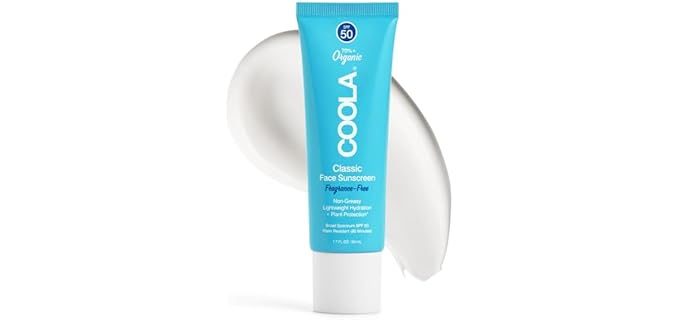
- Coola Face Sunscreen Lotion is a fragrance-free SPF 50 face sunscreen, and it comes in a 1.5 oz size.
- This one is certified organic, vegan and gluten-free.
- It is paraben-free.
- Use it for face and body.
- This is not a mineral sunscreen: its active ingredients are avobenzone, homosalate, octisalate and octocrylene.[15]
4
Terra Lotus® Tallow Mineral Sunscreen SPF 50 tallow zinc face sunscreen


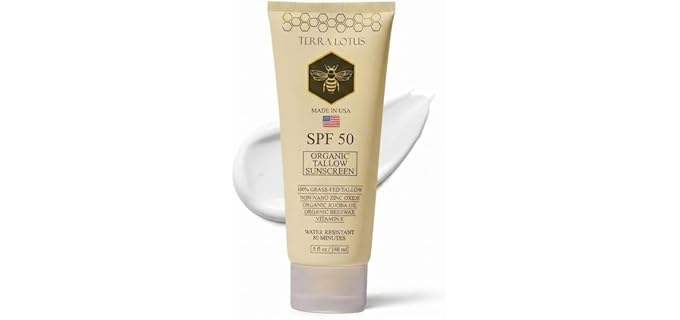
- Terra Lotus Tallow Mineral Sunscreen is an SPF 50 tallow zinc face sunscreen, and it comes in a 5 oz size.
- Key ingredients: zinc oxide.
- It is meant for face and body; the package measures 2 x 2 x 7 inches and weighs 0.3 pounds.
- It contains vanilla oil, so it isn’t fragrance-free.
- Tallow is heavy; skip it on acne-prone skin.[16]
Index Table: Organic Face Sunscreens Compared
| No. | Product | Image | Features | Brand |
|---|---|---|---|---|
| 1 | Babo Botanicals Daily Sheer Sunscreen - SPF 40 mineral face sunscreen lotion |  |
| Babo Botanicals |
| 2 | Two Peas Organics Mineral Sunscreen Lotion - SPF 30 non-nano zinc sunscreen lotion |  |
| Two Peas Organics |
| 3 | COOLA Face Sunscreen Lotion - Fragrance-free SPF 50 face sunscreen, 1.5oz |  | COOLA | |
| 4 | Terra Lotus Tallow Mineral Sunscreen - SPF 50 tallow zinc face sunscreen |  | Terra Lotus |
Sources
- American Academy of Dermatology. How to Select a Sunscreen. Accessed October 18, 2026.
- U.S. Food and Drug Administration. Sunscreen: How to Help Protect Your Skin from the Sun. Accessed October 16, 2026.
- U.S. Food and Drug Administration. Questions and Answers: FDA posts deemed final order and proposed order for over-the-counter sunscreen. Accessed October 18, 2026.
- U.S. Food and Drug Administration. Cosmetics Labeling Claims. Accessed October 16, 2026.
- U.S. Food and Drug Administration. Fragrances in Cosmetics. Accessed October 16, 2026.
- U.S. Food and Drug Administration. Parabens in Cosmetics. Accessed October 16, 2026.
- U.S. Food and Drug Administration. Phthalates in Cosmetics. Accessed October 16, 2026.
- U.S. Food and Drug Administration. Cosmetics Safety Q&A: Prohibited and restricted ingredients. Accessed October 16, 2026.
- U.S. Food and Drug Administration. Lead in Food and Foodwares. Accessed October 16, 2026.
- U.S. Food and Drug Administration. “Organic” Cosmetics. Accessed October 16, 2026.
- U.S. Food and Drug Administration. Is It a Cosmetic, a Drug, or Both? (Or Is It Soap?). Accessed October 16, 2026.
- USDA Agricultural Marketing Service. Organic Labeling Standards. Accessed October 16, 2026.
- U.S. Consumer Product Safety Commission. Recalls. Accessed October 16, 2026.
- U.S. Food and Drug Administration. openFDA Drug Recall Enforcement Reports. Accessed October 18, 2026.
- U.S. National Library of Medicine, DailyMed. COOLA Classic Face Sunscreen Fragrance-Free SPF 50 (drug label). Accessed October 18, 2026.
- U.S. National Library of Medicine, DailyMed. Terra Lotus SPF 50 Organic Tallow Sunscreen (drug label). Accessed October 18, 2026.
Update History
- Oct 2026: Removed Sages of the Ages Tallow Mineral Sunscreen SPF 50 (Amazon listing makes no organic claim; the maker’s own lab test was an in vitro screen, not the FDA in vivo SPF test); corrected the claims that jojoba and other plant oils form a sun-protective layer; replaced essential-oil lists with fragrance cautions; added AAD’s SPF 30+ advice; labeled COOLA as a chemical-filter sunscreen; Key Specs updated (forms, COOLA 1.5 oz); Sources (FDA, AAD, USDA AMS, CPSC, DailyMed, openFDA)
- Jun 2020: Added Two Peas Organics Mineral Sunscreen Lotion
- Dec 2016: First published


