We may earn a commission from qualifying purchases. Product links on this page are affiliate links, at no extra cost to you; see our Affiliate Disclosure.
Organic baby lotion and other baby products have been gaining increasing attention lately. Read further to learn why and what organic ingredients work best for your child’s infantile skin and our selection of organic baby lotions available.Disclaimer: This article is for general information and is not medical advice. Ask your pediatrician about rashes, skin problems or any product for a baby under 6 months.

Key Specs Compared
Numbers match the reviews below (tap to jump).
| # | Form | Size | Stated certifications | Fragrance |
|---|---|---|---|---|
| 1 | Lotion | 8 Fl Oz | NSF/ANSI 305 (Oregon Tilth), Leaping Bunny | Fragrance-free |
| 2 | Lotion | 13.5 Ounce | None stated | Not stated |
| 3 | Lotion | 14 Fl Oz | EWG Verified; certified organic herbal blend | Fragrance-free |
– = not stated by the maker · Specs and certifications as stated by the listing, not tested or verified by us; check the listing before you buy
Baby skin care basics
- Newborns often don’t need lotion. If skin is dry, use a fragrance-free moisturizer after bathing.[1]
- For eczema, thick fragrance-free creams or ointments applied at least twice a day work best; ask your pediatrician about flares.[2]
- Patch-test any new product on a small area first.[3]
- Avoid essential oils, mint and menthol on babies.[2]
Why Organic? The Story Behind Commercial Baby Lotion
More parents are looking for organic baby lotion and other baby products. Here’s what the label can and can’t tell you.- “Organic” on a lotion – The FDA doesn’t define “organic” for cosmetics.[4] If a product’s agricultural ingredients meet USDA standards it may carry the USDA Organic seal.[4]
- Skin absorption – Baby skin is thinner than adult skin, so it’s sensible to use fewer products and skip fragrance, but most of what you apply stays in the outer layers of the skin.[1]
- Ingredients people worry about – Parabens and phthalates get a lot of attention. The FDA says it has no evidence parabens as used in cosmetics harm health, and it keeps phthalates under review.[5][6] Fragrance is the more common cause of skin reactions.[7]
- SIDS – No lotion causes or prevents SIDS. Safe sleep practices, like placing your baby on their back on a firm, flat surface, lower the risk.[8]
Common Baby Skin Allergies & What Works Best
- Eczema (atopic dermatitis) – Gentle bathing and a thick, fragrance-free moisturizer applied often are the core of eczema care; your pediatrician may add a medicated cream for flares.[2]
- Contact dermatitis – A rash where a product touched the skin can be a reaction to fragrance, preservatives or plant extracts, including “natural” ones.[3][7]
- Infections and cold sores – These need medical care, not lotion. Call your pediatrician about blisters, crusting or a rash with fever.[2]
- Diaper rash – Regular lotion isn’t a diaper rash treatment. Keep the area clean and dry; a zinc oxide or petroleum jelly-based barrier cream helps keep moisture off the skin.[9]
Ingredients Found in Good Organic Baby Lotion
Common moisturizing ingredients in baby lotions include:- Plant butters and oils – Shea butter, sunflower, olive and coconut oil help soften dry skin.
- Calendula and chamomile – Popular plant extracts in baby products. They can still cause reactions in some babies, especially those allergic to plants in the daisy family.[3]
- Glycerin – A humectant that draws water into the skin.
- Fragrance-free – For babies with eczema or sensitive skin, fragrance-free lotions are the safest choice.[2]
What the Research Says
The American Academy of Pediatrics recommends keeping baby skin care simple: lukewarm water, a small amount of mild, fragrance-free cleanser, and a fragrance-free moisturizer for dry skin.[1][2] “Organic” and “natural” on a cosmetic are not FDA-defined terms, and plant ingredients can cause allergic reactions too.[4][3] Some ingredient concerns are real but often overstated: the FDA says it has no evidence that parabens as used in cosmetics are harmful, and it continues to review phthalates and fragrance ingredients.[5][6][7] No skin product prevents SIDS; safe sleep practices do.[8]How We Chose These Products
We don’t test products hands-on. We compared labels and listings: fragrance, the USDA Organic seal on ingredients [10], the main moisturizers, and size and price. We removed products that were out of stock, no longer listed or recalled, and we checked the brands we list against recent FDA [11] recall notices in October 2026. In our October 2026 review we removed Babo Botanicals Calming and Earth Mama Sweet Orange, which are scented (at odds with the fragrance-free advice above), and ATTITUDE, whose listing makes no organic claim. Brands don’t pay to be included, though we may earn a commission from purchases.Our Organic Baby Lotion Picks
Below are baby lotions whose listings make an organic claim, such as organic ingredients.1
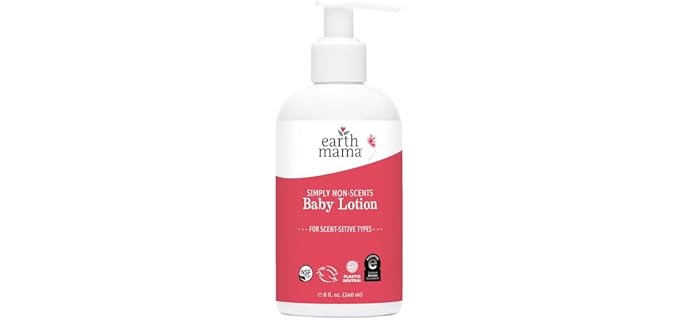
Earth Mama® Non-Scents Lotion Fragrance-free calendula lotion, 8 ounces


Currently unavailable
- You get 8 oz of fragrance-free calendula lotion.
- It carries Leaping Bunny and NSF labeling.
- Key ingredients: shea butter, rooibos and olive oil.
- It suits face, body and bath time; the package measures 5.7 x 2.4 x 2.3 inches and weighs 0.6 pounds.
2
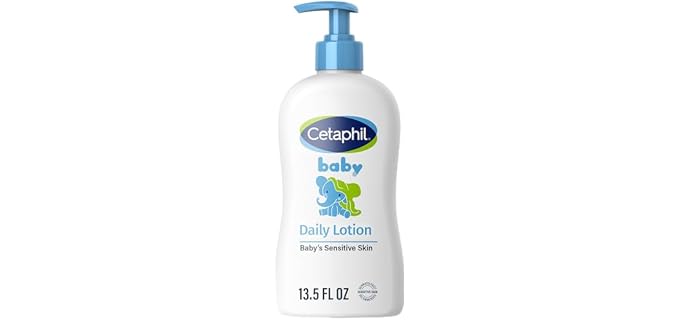
Cetaphil Baby® Daily Lotion Daily lotion with organic calendula extract


Currently unavailable
- This is a daily lotion with organic calendula extract from Cetaphil Baby, in a 13.5 oz size.
- Made with vitamin E, sweet almond oil and sunflower oil.
- It is paraben-free, mineral-oil-free and hypoallergenic.
- The package measures 2.4 x 3.5 x 7.5 inches.
- Organic calendula but does not say the lotion is fragrance-free, so check the label if your baby has sensitive skin.[12]
3
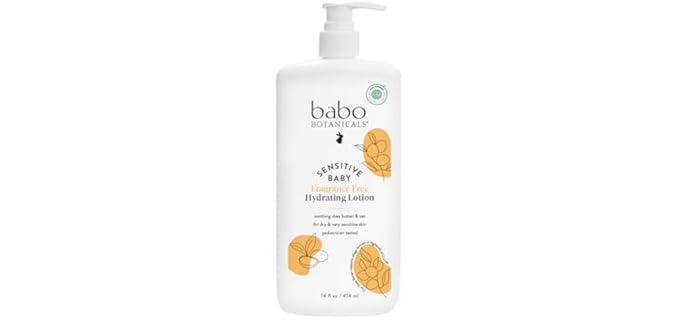
Babo Botanicals® Sensitive Baby Lotion Fragrance-free daily lotion for face, body


Currently unavailable
- Babo Botanicals’ fragrance-free daily lotion for face (body) comes in a 14 oz size.
- Certified organic and EWG Verified labeling is on the package, and it is vegan as well.
- Made with shea butter and jojoba oil.
- It is meant for face and body.
- It is made without fragrance or essential oils and includes a certified organic herbal blend.[13]
Index Table: Organic Baby Lotions
| No. | Product | Image | Features | Brand |
|---|---|---|---|---|
| 1 | Earth Mama Non-Scents Lotion - Fragrance-free calendula lotion, 8 ounces |  |
| Earth Mama |
| 2 | Cetaphil Baby Daily Lotion - Daily lotion with organic calendula extract |  |
| Cetaphil Baby |
| 3 | Babo Botanicals Sensitive Baby Lotion - Fragrance-free daily lotion for face, body |  |
| Babo Botanicals |
Sources
- HealthyChildren.org (AAP). Bathing Your Baby. Accessed October 16, 2026.
- HealthyChildren.org (AAP). Eczema in Babies and Children. Accessed October 16, 2026.
- U.S. Food and Drug Administration. Cosmetics Labeling Claims. Accessed October 16, 2026.
- U.S. Food and Drug Administration. “Organic” Cosmetics. Accessed October 16, 2026.
- U.S. Food and Drug Administration. Parabens in Cosmetics. Accessed October 16, 2026.
- U.S. Food and Drug Administration. Phthalates in Cosmetics. Accessed October 16, 2026.
- U.S. Food and Drug Administration. Fragrances in Cosmetics. Accessed October 16, 2026.
- HealthyChildren.org (AAP). How to Keep Your Sleeping Baby Safe: AAP Policy Explained. Accessed October 16, 2026.
- MedlinePlus (NIH). Diaper rash. Accessed October 17, 2026.
- USDA Agricultural Marketing Service. Organic Labeling Standards. Accessed October 16, 2026.
- U.S. Food and Drug Administration. Recalls, Market Withdrawals, & Safety Alerts. Accessed October 16, 2026.
- Online store. Cetaphil Baby Daily Lotion Organic Calendula, 13.5 oz (product listing). Accessed October 17, 2026.
- Online store. Babo Botanicals Sensitive Baby Fragrance-Free Daily Hydrating Lotion 14oz (product listing). Accessed October 17, 2026.
Update History
- Oct 2026: Removed Babo Botanicals Calming and Earth Mama Sweet Orange lotions (scented) and ATTITUDE lotion (no organic claim); removed nappy rash, burn and cold sore claims; added Sources (HealthyChildren.org (AAP), FDA, USDA AMS, MedlinePlus, product listings)
- Aug 2017: First published