As an Amazon Associate I earn from qualifying purchases. Product links on this page are affiliate links, at no extra cost to you; see our Affiliate Disclosure.
Deodorants cover or reduce odor; antiperspirants use aluminum salts to cut sweat and are regulated as drugs.[1] Organic deodorants are deodorants only, so expect to still sweat. Here’s what to look for, and three picks whose listings claim organic ingredients.Disclaimer: This article is general information, not medical advice. Patch-test new skin and hair products, and see a dermatologist for persistent skin problems.

Key Specs Compared
Numbers match the reviews below (tap to jump).
| # | Form | Size | Stated certifications | Fragrance |
|---|---|---|---|---|
| 1 | Liquid | 2.5 Fl Oz | Organic claim (not certified); Leaping Bunny | Scented |
| 2 | Stick | 3 Oz | Certified organic ingredients (maker) | Lavender oil |
| 3 | Cream | 2 Oz | Some organic ingredients (maker) | Essential oils |
– = not stated on the Amazon listing · Specs and certifications as stated by the listing, not tested or verified by us; check the listing before you buy
Skin product safety
Some ingredient warnings online go further than the evidence. Here’s what regulators say:
- Fragrance: Fragrance mixes are a common cause of skin allergies and irritation; choose fragrance-free if you have sensitive skin.[4]
- Parabens: The FDA says it has no evidence that parabens as used in cosmetics are harmful to health.[5]
- Phthalates: The FDA continues to review phthalates; most cosmetics no longer contain them except in some fragrances.[6]
- Formaldehyde releasers and certain preservatives: These can cause allergic reactions in some people.[7]
- Sulfates (SLS, SLES): Effective cleansers that can be drying or irritating for some skin types; they are not considered carcinogens.[7]
- Lead and contaminants: The FDA monitors contaminants in cosmetics, and measured levels in products like lipstick have been low.[8]
Benefits of Natural Organic Deodorant
Organic and natural personal care products use more plant-based ingredients, and some carry the USDA Organic seal for their agricultural ingredients.[9] Many people prefer them for sustainability or ingredient preferences. But “organic” doesn’t mean hypoallergenic or safer for every skin type, and the FDA doesn’t define “natural” for cosmetics.[2][10] Cosmetics can’t legally claim to treat skin conditions like acne or eczema; products that do are regulated as drugs.[1]Ingredients in a Good Natural Organic Deodorant
- Baking soda – Neutralizes odor. Baking soda (sodium bicarbonate) contains no aluminum, so there’s no need to look for an “aluminum-free” version; that label belongs on baking powder.[11] Baking soda is alkaline and irritates some people’s underarms, so try a baking-soda-free formula if you get a rash.
- Organic essential oils – They are the star ingredients of many organic deodorants available in the market. Common ones are bergamot, lavender, tea tree and rosemary. They add scent but don’t moisturize, and they can irritate sensitive skin.[4]
- Arrowroot, clays and plant butters – Arrowroot powder and clays absorb some moisture; shea butter and coconut oil help the product glide on.
- Alum – Some “natural” deodorants use potassium alum. It’s an aluminum salt (aluminum potassium sulfate), so these products aren’t aluminum-free.[12]
What the Research Says
The FDA doesn’t define “organic” or “natural” for cosmetics; a product can carry the USDA Organic seal only if its agricultural ingredients meet USDA standards.[9][2] Plant ingredients can still cause allergic reactions, and fragrance is a common cause of skin irritation.[4] Cosmetics can’t legally claim to treat or cure skin conditions; products that do are regulated as drugs.[1]How We Chose These Products
We don’t test products hands-on. We compared labels and listings: ingredients and fragrance, what any organic claim covers (USDA seal or third-party certification) [13], skin type, and price per ounce. We kept only products whose listings claim organic ingredients; none is certified organic as a whole. On October 18, 2026 we checked these brands against CPSC [14] recalls and openFDA enforcement records[15] and found none. Brands don’t pay to be included, though we may earn a commission from purchases.Our Picks: Organic Deodorants
Three deodorants made with organic ingredients. We may earn a commission on purchases made through these links.1
Bali Secrets® Natural Deodorant Aluminum-free deodorant for sensitive skin


- Bali Secrets Natural Deodorant is an aluminum-free deodorant for sensitive skin, and it comes in a 2.5 fl oz size.
- Leaping Bunny and PETA cruelty-free labeling is on the package, and it is vegan and cruelty-free as well.
- It is small-batch, made with baking soda.
- It is non-toxic.
- Alum is an aluminum salt, so this isn’t aluminum-free.[12]
2
Primal Life Organics® Stick Up Deodorant Bentonite clay and arrowroot deodorant, 3oz


- Primal Life Organics Stick Up Deodorant is a bentonite clay and arrowroot deodorant, and it comes in a 3 oz size.
- This one is certified organic, vegan and cruelty-free.
- Key ingredients: coconut oil, zinc oxide and lavender.
- It is biodegradable.
3
EcoRoots® Natural Deodorant Aluminum-free deodorant for sensitive skin


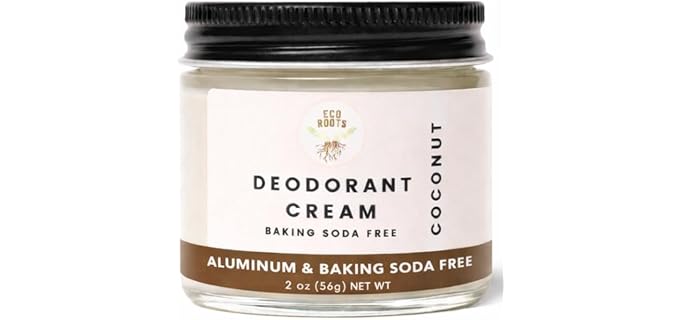
- This is an aluminum-free deodorant for sensitive skin from EcoRoots, in a 2 oz size.
- It is vegan.
- Made with coconut oil, shea butter and baking soda, and it is unrefined.
- It comes in a glass bottle.
- Patch-test a small area first and check the ingredient list for anything you react to.
Index Table: Top Rated Organic Deodorants
| No. | Product | Image | Features | Brand |
|---|---|---|---|---|
| 1 | Bali Secrets Natural Deodorant - Aluminum-free deodorant for sensitive skin |  |
| Bali Secrets |
| 2 | Primal Life Organics Stick Up Deodorant - Bentonite clay and arrowroot deodorant, 3oz |  |
| Primal Life Organics |
| 3 | EcoRoots Natural Deodorant - Aluminum-free deodorant for sensitive skin |  | EcoRoots |
Sources
- U.S. Food and Drug Administration. Is It a Cosmetic, a Drug, or Both? (Or Is It Soap?). Accessed October 16, 2026.
- U.S. Food and Drug Administration. Cosmetics Labeling Claims. Accessed October 16, 2026.
- American Academy of Dermatology. How to wash your face. Accessed October 16, 2026.
- U.S. Food and Drug Administration. Fragrances in Cosmetics. Accessed October 16, 2026.
- U.S. Food and Drug Administration. Parabens in Cosmetics. Accessed October 16, 2026.
- U.S. Food and Drug Administration. Phthalates in Cosmetics. Accessed October 16, 2026.
- U.S. Food and Drug Administration. Cosmetics Safety Q&A: Prohibited and restricted ingredients. Accessed October 16, 2026.
- U.S. Food and Drug Administration. Lead in Food and Foodwares. Accessed October 16, 2026.
- U.S. Food and Drug Administration. “Organic” Cosmetics. Accessed October 16, 2026.
- U.S. Food and Drug Administration. “Hypoallergenic” Cosmetics. Accessed October 16, 2026.
- National Library of Medicine, PubChem. Sodium Bicarbonate. Accessed October 18, 2026.
- National Library of Medicine, PubChem. Potassium alum. Accessed October 18, 2026.
- USDA Agricultural Marketing Service. Organic Labeling Standards. Accessed October 16, 2026.
- U.S. Consumer Product Safety Commission. Recalls. Accessed October 16, 2026.
- U.S. Food and Drug Administration, openFDA. Drug Recall Enforcement Reports (searched October 18, 2026). Accessed October 18, 2026.
Update History
- Oct 2026: Removed Sam’s Natural Unscented Deodorant and Schmidt’s Fresh Rain & Birch (listings don’t claim organic ingredients); corrected ‘aluminum-free baking soda’ (baking soda contains no aluminum) and noted that potassium alum in Bali Secrets is an aluminum salt; explained deodorant vs antiperspirant; corrected Key Specs; Sources (FDA, AAD, USDA AMS, CPSC, PubChem, openFDA)
- Jun 2020: Added Bali Secrets Natural Deodorant and Primal Life Organics Stick Up Deodorant
- Mar 2019: First published