As an Amazon Associate I earn from qualifying purchases. Product links on this page are affiliate links, at no extra cost to you; see our Affiliate Disclosure.
First, the basics: the vagina cleans itself with its own discharge and doesn’t need washing inside. Douches and feminine sprays aren’t recommended and can make problems worse. Gynecologists suggest washing only the vulva (the outer area) with plain, fragrance-free soap or just water.[1] An intimate wash is optional. If you like using one, pick a mild, unscented one and use it on the outside only. A strong odor, itching, burning or unusual discharge can mean bacterial vaginosis or a yeast infection, which need diagnosis and treatment, not a wash.[1]Disclaimer: This article is general information, not medical advice. Patch-test new skin and hair products, and see a dermatologist for persistent skin problems.

Key Specs Compared
Numbers match the reviews below (tap to jump).
| # | Form | Size | Stated certifications | Fragrance |
|---|---|---|---|---|
| 1 | Liquid | 4 Fl Oz | Certified organic ingredients (aloe, cucumber, green tea) | Fragrance-free |
| 2 | Liquid | 8.5 Fl Oz (250 ml) | ICEA/AIAB organic cosmetics | No synthetic fragrance (tea tree oil) |
– = not stated on the Amazon listing · Specs and certifications as stated by the listing, not tested or verified by us; check the listing before you buy
Skin product safety
Tips for Choosing the Right Organic Intimate Wash
Keeping the intimate area clean is a crucial part of the daily regime. To do so, you need to pick the right organic intimate wash available. While looking for it, you need to focus on a few aspects to pick the right one. Know what to avoid and what to look for.- pH balanced – Healthy vaginal pH is roughly 3.8 to 4.5. Many intimate washes are made mildly acidic so they’re less harsh than ordinary soap, but no external wash changes the pH inside the vagina.
- Plant-Based ingredients – To select the right feminine wash ensure it comprises plant-based and natural ingredients. Don’t fall for the word natural; instead, read the ingredients thoroughly.
- Short ingredient list – Fewer ingredients means fewer chances of irritation. A hard-to-pronounce name isn’t a sign of harm; check for fragrance and strong essential oils instead.[2]
- No fragrance – Skip perfumed products on the vulva.[4][1] Some people prone to yeast infections also avoid glycerin, though the evidence for that is limited.
Benefits of Organic Intimate Wash
Organic and natural personal care products use more plant-based ingredients, and some carry the USDA Organic seal for their agricultural ingredients.[5] Many people prefer them for sustainability or ingredient preferences. But “organic” doesn’t mean hypoallergenic or safer for every skin type, and the FDA doesn’t define “natural” for cosmetics.[2][6] Cosmetics can’t legally claim to treat skin conditions like acne or eczema; products that do are regulated as drugs.[7]Ingredients to Avoid
Some ingredient warnings online go further than the evidence. Here’s what regulators say:- Fragrance: Fragrance mixes are a common cause of skin allergies and irritation; choose fragrance-free if you have sensitive skin.[4]
- Parabens: The FDA says it has no evidence that parabens as used in cosmetics are harmful to health.[8]
- Phthalates: The FDA continues to review phthalates; most cosmetics no longer contain them except in some fragrances.[9]
- Formaldehyde releasers and certain preservatives: These can cause allergic reactions in some people.[10]
- Sulfates (SLS, SLES): Effective cleansers that can be drying or irritating for some skin types; they are not considered carcinogens.[10]
- Lead and contaminants: The FDA monitors contaminants in cosmetics, and measured levels in products like lipstick have been low.[11]
What the Research Says
The FDA doesn’t define “organic” or “natural” for cosmetics; a product can carry the USDA Organic seal only if its agricultural ingredients meet USDA standards.[5][2] Plant ingredients can still cause allergic reactions, and fragrance is a common cause of skin irritation.[4] Cosmetics can’t legally claim to treat or cure skin conditions; products that do are regulated as drugs.[7]How We Chose These Products
We don’t test products hands-on. We compared labels and listings: ingredients and fragrance, what any organic claim covers (USDA seal or third-party certification) [12], skin type, and price per ounce. We removed three picks whose listings make no organic claim. On October 18, 2026 we checked these brands against CPSC [13] recalls and FDA recall records[14] and found none. Brands don’t pay to be included, though we may earn a commission from purchases.Our Organic Intimate Wash Picks
Two external washes whose listings name organic ingredients. Use them on the vulva only, never inside the vagina. We may earn a commission on purchases made through these links.1
Healthy Hoohoo® Gentle Feminine Wash pH-balanced plant-based cleanser for sensitive skin


- Healthy Hoohoo’s pH-balanced plant-based cleanser for sensitive skin comes in a 4 fl oz size.
- Made with aloe vera and cucumber.
- It is paraben-free and fragrance-free.
- Made in the USA.
- The product as a whole isn’t certified organic.
2
Organyc® Feminine Intimate Wash Organic tea tree pH-balanced cleanser, 250ml


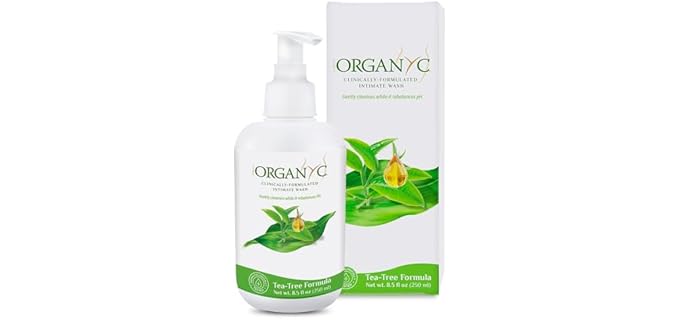
- Organyc Feminine Intimate Wash is an organic tea tree pH-balanced cleanser, and it comes in a 250 ml size.
- It comes with a pump.
- The package measures 2.4 x 2.4 x 7.1 inches and weighs 0.6 pounds.
- Tea tree oil is fragrant and can irritate sensitive skin; Organyc also sells chamomile and lavender versions.
Index Table: Organic Intimate Washes Compared
| No. | Product | Image | Features | Brand |
|---|---|---|---|---|
| 1 | Healthy Hoohoo Gentle Feminine Wash - pH-balanced plant-based cleanser for sensitive skin |  |
| Healthy Hoohoo |
| 2 | Organyc Feminine Intimate Wash - Organic tea tree pH-balanced cleanser, 250ml |  | Organyc |
Sources
- American College of Obstetricians and Gynecologists. Vulvovaginal Health (FAQ190). Accessed October 18, 2026.
- U.S. Food and Drug Administration. Cosmetics Labeling Claims. Accessed October 16, 2026.
- American Academy of Dermatology. How to wash your face. Accessed October 16, 2026.
- U.S. Food and Drug Administration. Fragrances in Cosmetics. Accessed October 16, 2026.
- U.S. Food and Drug Administration. “Organic” Cosmetics. Accessed October 16, 2026.
- U.S. Food and Drug Administration. “Hypoallergenic” Cosmetics. Accessed October 16, 2026.
- U.S. Food and Drug Administration. Is It a Cosmetic, a Drug, or Both? (Or Is It Soap?). Accessed October 16, 2026.
- U.S. Food and Drug Administration. Parabens in Cosmetics. Accessed October 16, 2026.
- U.S. Food and Drug Administration. Phthalates in Cosmetics. Accessed October 16, 2026.
- U.S. Food and Drug Administration. Cosmetics Safety Q&A: Prohibited and restricted ingredients. Accessed October 16, 2026.
- U.S. Food and Drug Administration. Lead in Food and Foodwares. Accessed October 16, 2026.
- USDA Agricultural Marketing Service. Organic Labeling Standards. Accessed October 16, 2026.
- U.S. Consumer Product Safety Commission. Recalls. Accessed October 16, 2026.
- U.S. Food and Drug Administration, openFDA. Food Recall Enforcement Reports (searched October 18, 2026). Accessed October 18, 2026.
Update History
- Oct 2026: Removed Rael Gentle Feminine Wash, Zerotaboos Feminine Wash and Medicine Mama’s VMagic (listings make no organic claim); added ACOG guidance (the vagina cleans itself; wash the vulva with water or fragrance-free soap; odor, itching or discharge can mean BV or yeast and need a clinician); softened the glycerin and ‘unpronounceable ingredients’ claims; corrected Key Specs (Healthy Hoohoo has certified-organic ingredients, not full certification; Organyc is the tea tree version, ICEA/AIAB certified); Sources (FDA, AAD, USDA AMS, CPSC, ACOG, openFDA)
- Feb 2021: First published


