As an Amazon Associate I earn from qualifying purchases. Product links on this page are affiliate links, at no extra cost to you; see our Affiliate Disclosure.
Skin ages with time no matter what we do, but sun exposure and smoking speed it up a lot. Here’s what dermatologists recommend, plus three moisturizers that claim organic ingredients.Disclaimer: This article is general information, not medical advice. Patch-test new skin and hair products, and see a dermatologist for persistent skin problems.

Key Specs Compared
Numbers match the reviews below (tap to jump).
| # | Form | Size | Stated certifications | Fragrance |
|---|---|---|---|---|
| 1 | Oil | 4 Fl Oz | 99.8% organic oils (maker claim) | Lavender oil |
| 2 | Balm | 2.1 Oz | Organic claim (not certified) | Not stated |
| 3 | Balm | 2 Oz | Organic honey (not certified) | Fragrance-free |
– = not stated on the Amazon listing · Specs and certifications as stated by the listing, not tested or verified by us; check the listing before you buy
Skin product safety
Why Does Our Skin Age?
Organic and natural personal care products use more plant-based ingredients, and some carry the USDA Organic seal for their agricultural ingredients.[3] Many people prefer them for sustainability or ingredient preferences. But “organic” doesn’t mean hypoallergenic or safer for every skin type, and the FDA doesn’t define “natural” for cosmetics.[1][4] Cosmetics can’t legally claim to treat skin conditions like acne or eczema; products that do are regulated as drugs.[5] The biggest causes of early skin aging you can control are sun and smoking. Dermatologists recommend broad-spectrum, water-resistant SPF 30 or higher sunscreen every day, shade and protective clothing, and quitting smoking.[6] For wrinkles and fine lines, retinoids have the strongest evidence; they speed up skin cell turnover and boost collagen. Retinol is a milder over-the-counter form.[7] A moisturizer, organic or not, makes skin look smoother but doesn’t reverse aging.The Role of Vitamin E in Skin Repair
Vitamin E is an antioxidant that helps protect cells from free-radical damage, including damage from UV light.[8] It’s common in skin oils and creams, but it doesn’t replace sunscreen. A balanced diet supports healthy skin, but no diet can stop skin aging. The best food sources of vitamin E are vegetable oils such as wheat germ, sunflower and safflower oils, along with nuts like almonds, hazelnuts and peanuts, and sunflower seeds. Spinach and broccoli provide some.[8]Organic Skin Care Ingredients For Radiant Youthful Skin
Other little-known phytonutrients for natural skincare are as follows.- Resveratrol – a polyphenol found naturally in grapes, red wine, peanuts and some berries.[9] Pomegranate seeds aren’t a main source. Most resveratrol research is lab and animal work, and it hasn’t been shown to reverse skin aging in people.
- Carotenoids – pigments like beta-carotene in orange and yellow foods such as sweet potatoes and carrots, and in leafy greens. They’re antioxidants, but eating them doesn’t replace sunscreen.
What the Research Says
The FDA doesn’t define “organic” or “natural” for cosmetics; a product can carry the USDA Organic seal only if its agricultural ingredients meet USDA standards.[3][1] Plant ingredients can still cause allergic reactions, and fragrance is a common cause of skin irritation.[10] Cosmetics can’t legally claim to treat or cure skin conditions; products that do are regulated as drugs.[5]How We Chose These Products
We don’t test products hands-on. We compared labels and listings: ingredients and fragrance, what any organic claim covers (USDA seal or third-party certification) [11], skin type, and price per ounce. We kept only products whose listings claim organic ingredients. On October 18, 2026 we checked these brands against CPSC [12] recalls and openFDA enforcement records[13] and found none. Brands don’t pay to be included, though we may earn a commission from purchases.Our Organic Anti Aging Skin Care Picks
1
Ancient Greek Remedy® Organic Body Oil Almond and jojoba face, body oil


- Ancient Greek Remedy Organic Body Oil is an almond and jojoba face (body oil), and it comes in a 4 oz size.
- It is cold-pressed.
- It has a lavender scent.
- It is meant for face, body, massage and bath time.
- The lavender gives it a scent that can irritate sensitive skin, and it contains almond oil, so skip it with a nut allergy.
2
URQT® Tallow Honey Balm Whipped grass-fed tallow and honey balm


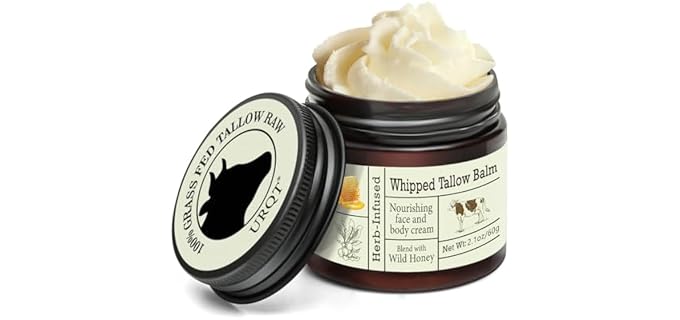
- This is a whipped grass-fed tallow and honey balm from Urqt, in a 2.1 oz size.
- It is meant for face, body and feet.
- Patch-test a small area first and check the ingredient list for anything you react to.
3
HealthyDerm® Tallow Honey Balm Whipped grass-fed tallow honey moisturizer


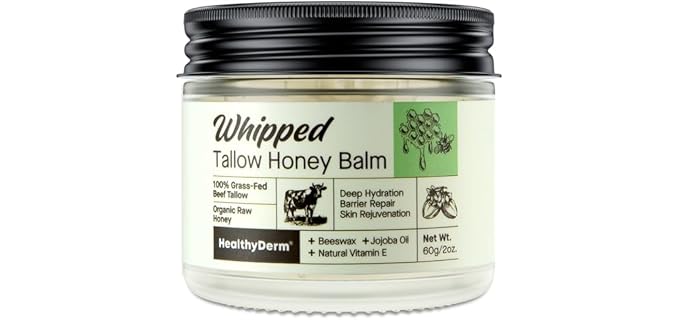
- HealthyDerm Tallow Honey Balm is a whipped grass-fed tallow honey moisturizer, and it comes in a 2 oz size.
- Made with jojoba oil and vitamin E, and it is cold-pressed and raw.
- Formulated in the USA.
- It suits face, body and hands.
Comparison Table: Top Organic Anti Aging Skin Care
| No. | Product | Image | Features | Brand |
|---|---|---|---|---|
| 1 | Ancient Greek Remedy Organic Body Oil - Almond and jojoba face, body oil |  |
| Ancient Greek Remedy |
| 2 | URQT Tallow Honey Balm - Whipped grass-fed tallow and honey balm |  | URQT | |
| 3 | HealthyDerm Tallow Honey Balm - Whipped grass-fed tallow honey moisturizer |  | HealthyDerm |
Sources
- U.S. Food and Drug Administration. Cosmetics Labeling Claims. Accessed October 16, 2026.
- American Academy of Dermatology. How to wash your face. Accessed October 16, 2026.
- U.S. Food and Drug Administration. “Organic” Cosmetics. Accessed October 16, 2026.
- U.S. Food and Drug Administration. “Hypoallergenic” Cosmetics. Accessed October 16, 2026.
- U.S. Food and Drug Administration. Is It a Cosmetic, a Drug, or Both? (Or Is It Soap?). Accessed October 16, 2026.
- American Academy of Dermatology. 11 ways to reduce premature skin aging. Accessed October 18, 2026.
- American Academy of Dermatology. Retinoid or retinol?. Accessed October 18, 2026.
- NIH Office of Dietary Supplements. Vitamin E: Fact Sheet for Consumers. Accessed October 18, 2026.
- Linus Pauling Institute, Oregon State University. Resveratrol. Accessed October 18, 2026.
- U.S. Food and Drug Administration. Fragrances in Cosmetics. Accessed October 16, 2026.
- USDA Agricultural Marketing Service. Organic Labeling Standards. Accessed October 16, 2026.
- U.S. Consumer Product Safety Commission. Recalls. Accessed October 16, 2026.
- U.S. Food and Drug Administration, openFDA. Drug Recall Enforcement Reports (searched October 18, 2026). Accessed October 18, 2026.
Update History
- Oct 2026: Removed OPO Pomegranate Seed Oil (listing doesn’t claim organic) and SeoulCeuticals Snail Mucin Cream (snail mucin can’t be organic); added dermatologist advice on sunscreen, smoking and retinoids; corrected resveratrol sources (grapes, peanuts, berries, not mainly pomegranate seeds) and vitamin E food sources; removed ‘no greasiness’ claims for tallow balms; corrected Key Specs; Sources (FDA, AAD, USDA AMS, CPSC, NIH ODS, Linus Pauling Institute, openFDA)
- Mar 2017: First published