We may earn a commission from qualifying purchases. Product links on this page are affiliate links, at no extra cost to you; see our Affiliate Disclosure.
Ashwagandha is one of the most popular herbal supplements in the United States, sold as capsules, tablets and powder. This guide covers what the plant is, what NIH researchers have found about stress and sleep, who should avoid it, and how seven organic ashwagandha products compare by form, count and certification.Disclaimer: This article is general information, not medical advice. Talk to your doctor or pharmacist before you start a supplement, especially if you are pregnant, nursing, have a medical condition, take medicine or are buying for a child.
Key Specs Compared
Numbers match the reviews below (tap to jump).
| # | Form | Size / count | Stated certifications | Vegan |
|---|---|---|---|---|
| 1 | Capsules | 90 Count | USDA Organic, Non-GMO, Kosher | Yes |
| 2 | Powder | 16 Ounce | USDA Organic, Fair Trade | Yes |
| 3 | Tablets | 120 Count | USDA Organic, Non-GMO | Yes |
| 4 | Capsules | 180 Count | Organic root, Non-GMO | Yes |
| 5 | Capsules | 90 Count | Organic root, 3rd-party tested | Not stated |
| 6 | Caplets | 60 Count | USDA Organic, Non-GMO Project Verified | Yes |
| 7 | Capsules | 90 Count | USDA Organic, Non-GMO | Not stated |
– = not stated by the maker · Specs and certifications as stated by the listing, not tested or verified by us; check the listing before you buy
Ashwagandha safety
- NIH says ashwagandha appears well tolerated for up to about 3 months, and that its long-term safety is not known.[1][2]
- Rare cases of liver injury have been linked to ashwagandha supplements. Stop and see a doctor if you notice yellow skin or eyes, dark urine or itching.[1][2]
- NCCIH says to avoid ashwagandha during pregnancy and not to use it while breastfeeding. It is also not recommended before surgery or for people with autoimmune or thyroid disorders.[2]
- Ashwagandha might interact with medicines for diabetes and high blood pressure, immunosuppressants, sedatives, anti-seizure medicines and thyroid hormone medicines.[1][2]
What Is Ashwagandha?
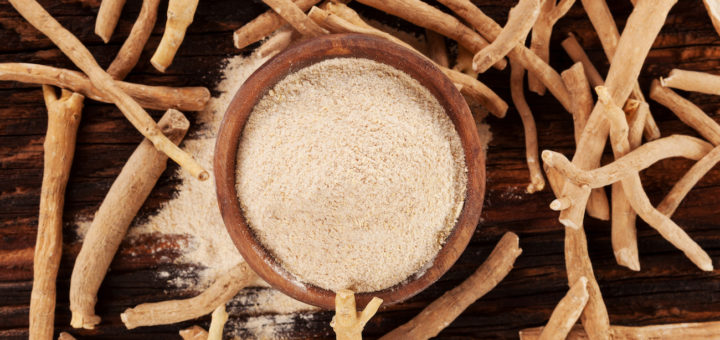
- The Plant – Ashwagandha (Withania somnifera) is an evergreen shrub, also called Indian ginseng or winter cherry, although it is not related to ginseng. The name comes from Sanskrit words for horse and smell, because the root is said to smell like a wet horse.[1]
- Traditional Use – The root has been used in Ayurvedic and Unani medicine in India as an adaptogen, a loose term for something that helps a person adapt to stressors.[1]
- Root or Leaf – Most commercial supplements use root extract, and some use root and leaf. The two parts differ in chemistry, so the product name and the supplement facts panel matter.[1][2]
- Not Medicine – Ashwagandha supplements are sold as dietary supplements, and the FDA does not approve them before they are sold.[2][3]
Forms and Doses
- Capsules and Tablets – The simplest option. Counts on this page run from 60 to 180, and stated doses run from 670 mg to 2100 mg, so compare the serving size as well as the bottle count.
- Powder – Ground root that you stir into smoothies, coffee or warm milk. It has an earthy, bitter taste and no capsule shell. Our organic turmeric powder picks follow the same stir-in idea.
- Extracts – Many studies use standardized root extracts, measured by withanolide content, rather than plain root powder. Doses and extracts differ widely from study to study.[1]
- Black Pepper – Four of the seven picks add black pepper or piperine to the formula. Check the label if you take medicine, and ask your pharmacist about interactions.
What to Check on an Ashwagandha Label
- Plant Part – Look for root on the supplement facts panel. NCCIH notes that supplements contain root, leaf, or root and leaf extracts.[2]
- Amount Per Serving – The supplement facts panel shows the active ingredient and the amount per serving. The serving can be one capsule or several.[3]
- Organic Seal – Look for the USDA Organic seal if you want a certified organic product.[4]
- Third-Party Seals – Independent groups such as NSF International and U.S. Pharmacopeia test supplements. Their seals show a product was made properly and holds what the label states, but they do not guarantee safety or effectiveness.[3]
- Count and Price – Divide the price by the number of servings, not capsules, to compare products fairly.
What the Research Says
The NIH Office of Dietary Supplements reviewed small, short randomized trials in which ashwagandha extracts lowered stress and anxiety scores and cortisol compared with placebo, and improved sleep, especially in people with insomnia.[1] NCCIH says some preparations may be effective for insomnia and stress, that the evidence on anxiety is unclear, and that there is not enough evidence for conditions such as athletic performance, cognitive function, diabetes or menopause.[2] Both agencies note that studies used many different preparations and doses, which makes it hard to name a recommended product or amount.[1][2]How We Chose These Products
We do not test products. We compare product details: form, amount per container, stated certifications, ingredients and availability.[3][4] Products that are out of stock stay as they are. Brands don’t pay to be included, though we may earn a commission from purchases.Our Organic Ashwagandha Picks
These seven organic ashwagandha products come as capsules, tablets, caplets and powder, from 60 to 180 count plus a 1 lb powder. With every purchase through the links on this page, we may earn a commission, at no extra cost to you.1
Organic India® Ashwagandha Capsules Organic root, 90 vegan capsules


Currently unavailable
- Organic India Ashwagandha Capsules are a 90-count bottle of vegan capsules made with organic ashwagandha root.
- The formula is 800 mg of organic root, and it is gluten-free, kosher and non-GMO.
- It is the simplest formula of the seven, with no added herbs.
2
Banyan Botanicals® Ashwagandha Root Powder Organic root powder, 1 lb bag


Currently unavailable
- Banyan Botanicals Ashwagandha Root Powder is a 1 lb bag of fine-ground organic root.
- It is USDA Organic and Fair for Life fair trade, and the powder is lab tested for purity.
- Stir it into a smoothie, coffee or warm milk, and measure it with a kitchen scale or spoon.
3
Healths Harmony® Organic Ashwagandha Organic root tablets with black pepper


Currently unavailable
- Healths Harmony Organic Ashwagandha is a 120-count bottle of tablets made from organic ashwagandha root.
- It adds organic black pepper, and it is USDA Organic, vegan and non-GMO.
- It is made in the USA.
4
NutriFlair® Organic Ashwagandha Extract Organic root extract with black pepper


Currently unavailable
- NutriFlair Organic Ashwagandha Extract is a 180-count bottle of vegan capsules, the largest count on this page.
- It contains 1600 mg of organic ashwagandha root with organic black pepper.
- The formula is non-GMO and free of gluten, soy and dairy, and each batch is third-party tested.
5
Physician's CHOICE® Ashwagandha Extract Organic root powder with black pepper extract


Currently unavailable
- Physician’s CHOICE Ashwagandha Extract is a 90-capsule bottle, a one-month supply at the label serving.
- It holds 1950 mg of organic root powder with black pepper extract, from root only with no leaves or stems.
- It is third-party tested and made in a cGMP facility in the USA.
6
Himalaya® Organic Ashwagandha Organic root powder and extract caplets


Currently unavailable
- Himalaya Organic Ashwagandha is a 60-caplet bottle with 670 mg of root powder and root extract per caplet.
- It is USDA Organic, Non-GMO Project Verified, vegan and gluten-free.
- It comes in an amber glass bottle, and each lot goes through more than 25 identity, purity and safety tests.
7
Happy Healthy Hippie® Organic Ashwagandha Capsules Organic root capsules with black pepper


Currently unavailable
- Happy Healthy Hippie Organic Ashwagandha is a 90-capsule bottle that gives 30 servings.
- Each serving holds 2100 mg of organic ashwagandha with black pepper.
- It is USDA Organic, non-GMO and vegetarian, and it has the highest dose per serving of the seven.
Index Table: Organic Ashwagandha
| No. | Product | Image | Features | Brand |
|---|---|---|---|---|
| 1 | Organic India Ashwagandha Capsules - Organic root, 90 vegan capsules |  |
| Organic India |
| 2 | Banyan Botanicals Ashwagandha Root Powder - Organic root powder, 1 lb bag |  |
| Banyan Botanicals |
| 3 | Healths Harmony Organic Ashwagandha - Organic root tablets with black pepper |  |
| Healths Harmony |
| 4 | NutriFlair Organic Ashwagandha Extract - Organic root extract with black pepper |  |
| NutriFlair |
| 5 | Physician's CHOICE Ashwagandha Extract - Organic root powder with black pepper extract |  |
| Physician's CHOICE |
| 6 | Himalaya Organic Ashwagandha - Organic root powder and extract caplets |  |
| Himalaya |
| 7 | Happy Healthy Hippie Organic Ashwagandha Capsules - Organic root capsules with black pepper |  |
| Happy Healthy Hippie |
Sources
- NIH Office of Dietary Supplements. Ashwagandha: Is It Helpful for Stress, Anxiety, or Sleep? Health Professional Fact Sheet. Accessed October 26, 2026.
- National Center for Complementary and Integrative Health. Ashwagandha: Usefulness and Safety. Accessed October 26, 2026.
- NIH Office of Dietary Supplements. Dietary Supplements: What You Need to Know. Accessed October 26, 2026.
- USDA Agricultural Marketing Service. Organic Labeling Standards. Accessed October 26, 2026.
Update History
- Oct 2026: Rewrote the guide text and product notes, removed the unsupported adaptogen, anthelmintic and aphrodisiac claims and the nutrient table, added NIH research, safety and label guidance with sources, set the Key Specs to form, count and certification, and replaced the sources (NIH ODS, NCCIH, USDA AMS)
- Oct 2026: Removed Nature’s Answer and NutraHerbals, which make no organic claim; corrected the Healths Harmony and NutriFlair details; added a breastfeeding caution
- Jun 2020: Added Healths Harmony Organic Ashwagandha and Physician’s CHOICE Ashwagandha Extract
- Apr 2019: First published