As an Amazon Associate I earn from qualifying purchases. Product links on this page are affiliate links, at no extra cost to you; see our Affiliate Disclosure.
Vitamin D is one of the few nutrients most people can’t get from food alone, and the supplement aisle offers it in chewables, gummies and softgels. This guide covers how much you need, the upper limits, who is more likely to run low, and how five vitamin D products with organic ingredients compare by form, count and certification.Disclaimer: This article is general information, not medical advice. Talk to your doctor or pharmacist before you start a supplement, especially if you are pregnant, nursing, have a medical condition, take medicine or are buying for a child.

Key Specs Compared
Numbers match the reviews below (tap to jump).
| # | Form | Size / count | Stated certifications | Vegan |
|---|---|---|---|---|
| 1 | Chewable tablets | 30 Count | USDA Organic, Non-GMO | Yes |
| 2 | Gummies | 60 Count | Organic in brand name (no seal stated), Non-GMO | Yes |
| 3 | Chewable tablets | 30 Count | USDA Organic, Non-GMO Project Verified | Yes |
| 4 | Gummies | 80 Count | Organic ingredients, Non-GMO | Vegetarian |
| 5 | Softgels | 360 Count | Organic olive oil base, Non-GMO, NSF Contents Certified | No (gelatin) |
– = not stated on the Amazon listing · Specs and certifications as stated by the listing, not tested or verified by us; check the listing before you buy
Vitamin D safety
- Most adults 19 to 70 need 15 mcg (600 IU) a day, and adults 71 and older need 20 mcg (800 IU). The upper limit for adults is 100 mcg (4,000 IU) a day from all sources.[1]
- High vitamin D levels almost always come from too much in supplements, and they can cause nausea, weakness, kidney stones and, at extreme levels, kidney failure.[1]
- Upper limits for children are lower: 63 mcg (2,500 IU) for ages 1 to 3 and 75 mcg (3,000 IU) for ages 4 to 8. Ask a pediatrician before giving a child a supplement.[1][2]
- Vitamin D can interact with orlistat, statins, steroids and thiazide diuretics, so tell your doctor or pharmacist what you take.[1]
How Much Vitamin D You Need
- Daily Amounts – Infants need 10 mcg (400 IU), ages 1 to 70 need 15 mcg (600 IU), and adults 71 and older need 20 mcg (800 IU). The same 15 mcg applies during pregnancy and breastfeeding.[1]
- Food – Very few foods have vitamin D naturally. Fortified milk and plant milks, fortified cereals, fatty fish and fish liver oils are the main sources.[1]
- Sun – Your skin makes vitamin D in sunlight, but clouds, smog, age and dark skin reduce it, and sunscreen limits production.[1]
- Blood Test – A 25-hydroxyvitamin D blood test is the way to know if you are getting enough. Levels of 50 nmol/L (20 ng/mL) or above are adequate for most people.[1]
Who Is More Likely to Run Low
- Breastfed Infants – Breast milk alone does not provide enough, so breastfed infants need a 10 mcg (400 IU) supplement each day.[1]
- Older Adults and Darker Skin – Skin makes less vitamin D with age and with more melanin.[1]
- Little Sun Exposure – People who stay indoors, cover their skin, or live where winter sun is weak make less.[1]
- Fat Absorption Conditions – Crohn’s disease, celiac disease, ulcerative colitis, obesity and gastric bypass can all affect vitamin D, so ask your doctor about testing.[1]
What to Check on a Vitamin D Label
- D2 or D3 – Both forms raise vitamin D in your blood, but D3 might raise it higher and for longer. Ora Organic and Garden of Life make vegan D3 from lichen.[1]
- Amount – The label shows mcg and IU per serving. Add it to what you get from food and a multivitamin so you stay below the upper limit.[1]
- Take It With Food – Vitamin D is fat soluble, so it is absorbed best with a meal or snack that includes some fat.[1]
- Organic Seal – Look for the USDA Organic seal for certified organic ingredients, and note when the label only says organic ingredients.[3]
- Other Ingredients – Gummies and chewables add sugar and flavor. For more nutrients in one product, see our organic multivitamin picks.
What the Research Says
The NIH Office of Dietary Supplements says vitamin D helps your body absorb calcium and supports bones, muscles, nerves and the immune system, and that vitamin D and calcium supplements slightly increase bone strength in older adults.[1] Clinical trials do not show that vitamin D supplements prevent heart disease, depression, type 2 diabetes or most cancers, or help with weight loss.[1] Fortified foods supply most of the vitamin D in U.S. diets, and supplements fill the gap when food and sun are not enough.[1]How We Chose These Products
We do not test products. We compare product details: form, amount per container, stated certifications, ingredients and availability.[2][3] Products that are out of stock stay as they are. Brands don’t pay to be included, though we may earn a commission from purchases.Our Organic Vitamin D Picks
These five vitamin D supplements come as chewables, gummies and softgels, at doses from 1,000 to 2,000 IU. Only the Ora Organic and Garden of Life picks carry the USDA Organic seal; the others use organic ingredients or an organic brand name, as the Key Specs show. With every purchase through the links on this page, we may earn a commission, at no extra cost to you.1
Ora Organic® Vegan D3 Chewables Lichen vitamin D3 chewables, 2000 IU


- Ora Organic Vegan D3 Chewables are a 30-count bottle of vanilla chewables with 2,000 IU of vitamin D3 from lichen.
- They are USDA Organic, vegan and non-GMO, with no artificial flavors or fillers.
- One chewable a day gives about a month, and it is more than three times the 600 IU most adults need, so count your other sources.
2
MaryRuth's® D3 K2 Gummies Vitamin D3, K2 and calcium gummies


- MaryRuth’s D3 K2 Gummies are a 60-count bottle of pectin-based gummies in peach, mango and apricot flavors.
- They combine vitamins D3 and K2 with calcium, and they are vegan, non-GMO and gelatin-free.
- The bottle gives a 2-month supply at one gummy a day for ages 2 and up, and the brand name has organic in it, but the product shows no organic seal.
3
Garden of Life® Vegan D3 Chewables D3 chewables with 11 organic mushrooms


- Garden of Life Vegan D3 Chewables are a 30-count bottle of raspberry lemon chewables with 2,000 IU (50 mcg) of vitamin D3 from lichen.
- They add a blend of 11 organic mushrooms, and they are USDA Organic, Non-GMO Project Verified, gluten-free and vegan.
- Adults chew one a day, with no artificial colors, added sugar or stevia.
4
Amazon Basics® Kids D3 Gummies Organic-ingredient kids vitamin D3 gummies


- Amazon Basics Kids Vitamin D3 Gummies are an 80-count bottle in strawberry, lemon and orange, with 1,000 IU (25 mcg) per serving.
- They are made with organic ingredients, including organic tapioca syrup and organic cane sugar, and they are non-GMO, gluten-free and vegetarian.
- They are for children 2 and older, they contain sugar, and they were sold before as Mama Bear.
5
NatureWise® Vitamin D3 1000IU D3 mini softgels in organic olive oil


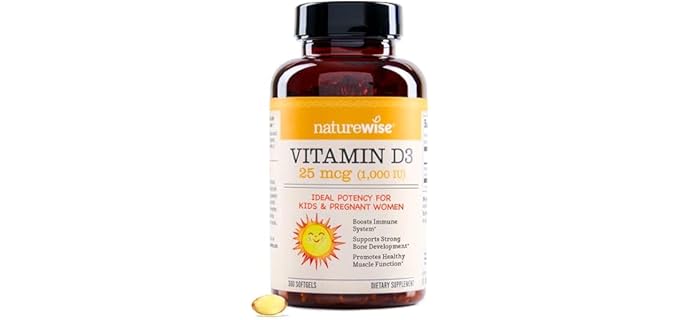
- NatureWise Vitamin D3 1000 IU is a 360-count bottle of mini softgels, a 1-year supply at one a day.
- The D3 is in organic, cold-pressed extra virgin olive oil, and the contents are NSF certified.
- The softgel contains gelatin, so it is not vegan, and it is non-GMO, gluten-free and made in the USA.
Index Table: Organic Vitamin D Supplements
| No. | Product | Image | Features | Brand |
|---|---|---|---|---|
| 1 | Ora Organic Vegan D3 Chewables - Lichen vitamin D3 chewables, 2000 IU |  |
| Ora Organic |
| 2 | MaryRuth's D3 K2 Gummies - Vitamin D3, K2 and calcium gummies |  |
| MaryRuth's |
| 3 | Garden of Life Vegan D3 Chewables - D3 chewables with 11 organic mushrooms |  |
| Garden of Life |
| 4 | Amazon Basics Kids D3 Gummies - Organic-ingredient kids vitamin D3 gummies |  |
| Amazon Basics |
| 5 | NatureWise Vitamin D3 1000IU - D3 mini softgels in organic olive oil |  |
| NatureWise |
Sources
- NIH Office of Dietary Supplements. Vitamin D: Fact Sheet for Consumers. Accessed October 26, 2026.
- NIH Office of Dietary Supplements. Dietary Supplements: What You Need to Know. Accessed October 26, 2026.
- USDA Agricultural Marketing Service. Organic Labeling Standards. Accessed October 26, 2026.
Update History
- Oct 2026: Rewrote the guide text and product notes, replaced the generic benefit and risk-factor sections with NIH guidance on daily amounts, upper limits, who runs low and D2 versus D3, corrected the MaryRuth’s, Amazon Basics and NatureWise organic wording, set the Key Specs to form, count and certification, and updated the sources (NIH ODS, USDA AMS)
- Mar 2021: First published