We may earn a commission from qualifying purchases. Product links on this page are affiliate links, at no extra cost to you; see our Affiliate Disclosure.
Fiber is the part of plant foods your body cannot digest, and it helps digestion, fullness and regular bowel movements. Most Americans eat well under the recommended amount, so some people add a fiber supplement. This guide covers the two kinds of fiber, how much you need, how to take a fiber supplement safely, and how five organic fiber products compare.General information, not medical advice. Talk to your doctor or pharmacist before you start a supplement, especially if you are pregnant, take medicine or are buying for a child.

Key Specs Compared
Numbers match the reviews below (tap to jump).
| # | Form | Size / count | Stated certifications | Vegan |
|---|---|---|---|---|
| 1 | Capsules | 300 Count | Organic ingredients, Non-GMO | Yes |
| 2 | Powder | 6.67 Ounce | Organic ingredients, Non-GMO | Yes |
| 3 | Powder | 2 Pound | USDA Organic, Non-GMO | Yes |
| 4 | Powder | 10.2 Ounce | USDA Organic, Non-GMO | Yes |
| 5 | Capsules | 100 Count | USDA Organic | Yes |
– = not stated by the maker · Specs and certifications as stated by the listing, not tested or verified by us; check the listing before you buy
Fiber supplement safety
- MedlinePlus recommends 21 to 38 grams of fiber a day for older children, teens and adults, and says Americans eat about 16 grams on average.[1]
- Add fiber slowly over a few weeks, since a large amount in a short time can cause gas, bloating and cramps.[1]
- Take psyllium with at least 8 ounces (240 mL) of liquid, and do not take it if you have trouble swallowing or an intestinal blockage. Call a doctor for stomach pain, vomiting or trouble swallowing.[2]
- Do not take digoxin, aspirin or nitrofurantoin within 3 hours of psyllium, and ask your pharmacist about other medicines.[2]
Types of Fiber
- Soluble Fiber – Soluble fiber attracts water and turns to gel during digestion, which slows digestion. It is found in oat bran, barley, nuts, seeds, beans, lentils and peas, and research shows it lowers cholesterol.[1]
- Insoluble Fiber – Insoluble fiber does not dissolve in water. It is found in wheat bran, vegetables and whole grains, and it adds bulk to stool and helps food move through the stomach and intestines.[1]
- Mixed Foods – Most high-fiber foods contain both types, so eat a variety of vegetables, fruits, whole grains, beans and legumes.[1]
- Prebiotic Fibers – Inulin and acacia fiber are soluble fibers sold as prebiotic powders. They dissolve easily and are different from psyllium, which forms a thick gel.
Why People Take Fiber
- Regularity – Fiber adds bulk to the diet and helps prevent constipation.[1]
- Fullness – Fiber makes you feel full faster, which can help with weight control.[1]
- Cholesterol – Soluble fiber has been shown to lower cholesterol, which may help prevent heart disease.[1]
- Food First – Whole foods are the best source of fiber, because they also give you vitamins and minerals, and a supplement can fill the gap.[1]
What to Check on a Fiber Supplement Label
- Fiber Source – Check whether the fiber is psyllium, acacia, inulin or a blend, since each acts differently.[1][2]
- Amount Per Serving – The supplement facts panel gives the fiber per serving. It ranges from a few capsules for a gram or two to a scoop that gives several grams.[3]
- Organic Seal – Look for the USDA Organic seal if you want a certified organic product.[4]
- Form – Capsules need no mixing but you swallow several, and powders mix into a drink but need at least a full glass of liquid when they contain psyllium.
- Count and Price – Divide the price by the grams of fiber you actually take each day to compare products fairly.
What the Research Says
MedlinePlus says dietary fiber adds bulk, helps prevent constipation and can aid weight control, and that soluble fiber lowers cholesterol.[1] It also notes that too much fiber can interfere with the absorption of iron, zinc, magnesium and calcium, which usually does not matter for people who eat mineral-rich high-fiber foods.[1] The psyllium drug page says to drink at least 8 ounces of liquid with each dose and not to use psyllium for longer than 1 week unless a doctor says so.[2]How We Chose These Products
We do not test products. We compare product details: form, amount per container, stated certifications, ingredients and availability.[3][4] Brands don’t pay to be included, though we may earn a commission from purchases.Our Organic Fiber Supplement Picks
These five organic fiber products come as capsules and powders, from acacia and inulin blends to psyllium husk. With every purchase through the links on this page, we may earn a commission, at no extra cost to you.1
SuperDosing® Acacia Fiber Capsules Organic acacia senegal fiber capsules, 300 count


Currently unavailable
- SuperDosing Acacia Fiber Capsules are a 300-capsule bottle of organic acacia senegal fiber, also called gum arabic, a soluble fiber.
- The capsules are flavorless and need no mixing, and they are vegan and free of soy, lactose and gluten.
- It has the largest count of the five, which suits a long supply.
2
GOBIOTIX® Prebiotic Fiber Powder Prebiotic soluble fiber powder, 35 servings


Currently unavailable
- Gobiotix Prebiotic Fiber Powder is a 6.67 oz tub of unflavored soluble fiber powder with 35 servings.
- It is made with sprouted, organic-grown ingredients and is vegan, keto-friendly, gluten-free and free of added sugar.
- It dissolves into water, smoothies or coffee without forming the thick gel that psyllium does.
3
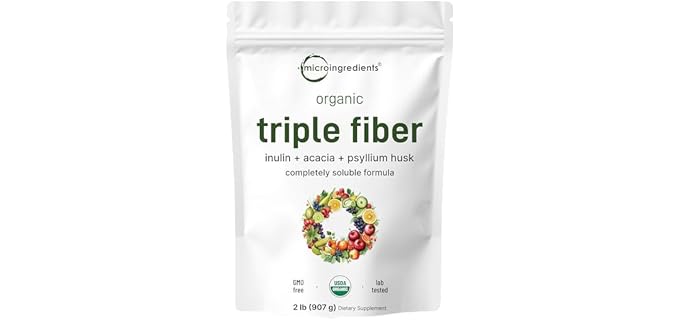
Micro Ingredients® Triple Fiber Powder Organic triple fiber powder with inulin, acacia and psyllium, 2 pounds


Currently unavailable
- Micro Ingredients Organic Triple Fiber is a 2 lb bag of unflavored powder that blends chicory root inulin, acacia fiber and psyllium husk.
- It is USDA Organic, non-GMO and vegan, with no soy, dairy, gluten or fillers.
- Because it contains psyllium, mix it well in a full glass of liquid and drink it right away.
4
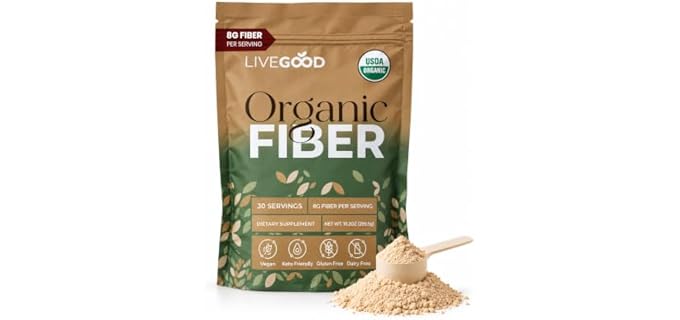
LiveGood® Organic Fiber Powder Organic fiber powder with psyllium husk and 10 plant sources, 30 servings


Currently unavailable
- LiveGood Organic Fiber Powder is a 10.2 oz tub with 30 servings and 8 grams of fiber per scoop.
- It combines psyllium husk, agave inulin and pea fiber with baobab, chia seed, apple cider vinegar, Ceylon cinnamon, lemon, ginger and turmeric.
- It is USDA Organic and non-GMO, and it mixes into water, smoothies or juice.
5
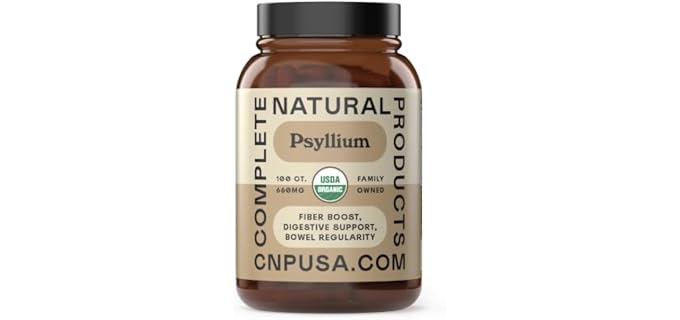
CNP® Psyllium Husk Capsules Organic psyllium husk capsules, 660 mg, 100 count


Currently unavailable
- CNP Organic Psyllium Husk Capsules are a 100-count bottle of 660 mg capsules made from whole organic psyllium husk and nothing else.
- It is unflavored, vegetarian and gluten-free, and it removes the need to mix psyllium into a drink.
- Swallow the capsules with plenty of water, one at a time, and follow the label directions.
Index Table: Organic Fiber Supplements
| No. | Product | Image | Features | Brand |
|---|---|---|---|---|
| 1 | SuperDosing Acacia Fiber Capsules - Organic acacia senegal fiber capsules, 300 count |  |
| SuperDosing |
| 2 | GOBIOTIX Prebiotic Fiber Powder - Prebiotic soluble fiber powder, 35 servings |  |
| GOBIOTIX |
| 3 | Micro Ingredients Triple Fiber Powder - Organic triple fiber powder with inulin, acacia and psyllium, 2 pounds |  |
| Micro Ingredients |
| 4 | LiveGood Organic Fiber Powder - Organic fiber powder with psyllium husk and 10 plant sources, 30 servings |  |
| LiveGood |
| 5 | CNP Psyllium Husk Capsules - Organic psyllium husk capsules, 660 mg, 100 count |  |
| CNP |
Sources
- MedlinePlus. Fiber. Accessed October 27, 2026.
- MedlinePlus. Psyllium. Accessed October 27, 2026.
- NIH Office of Dietary Supplements. Dietary Supplements: What You Need to Know. Accessed October 27, 2026.
- USDA Agricultural Marketing Service. Organic Labeling Standards. Accessed October 27, 2026.
Update History
- Oct 2026: Rewrote the guide text and product notes around MedlinePlus fiber and psyllium information, added fiber amounts, soluble and insoluble fiber, psyllium safety and medicine timing, removed unsupported claims, and replaced the sources (MedlinePlus, NIH, USDA)
- Mar 2021: First published