We may earn a commission from qualifying purchases. Product links on this page are affiliate links, at no extra cost to you; see our Affiliate Disclosure.
Vitamin C gummies are an easy option for people who dislike pills, but they vary a lot in dose, sugar, age range and how much of the product is organic. Vitamin C is a nutrient your body uses to make collagen, absorb iron from plant foods and keep the immune system working normally.[1] This guide covers how much you need, what to check on the label, and how four organic vitamin C gummies compare.Disclaimer: This article is general information, not medical advice. Talk to your doctor or pharmacist before you start a supplement, especially if you are pregnant, nursing, have a medical condition, take medicine or are buying for a child.

Key Specs Compared
Numbers match the reviews below (tap to jump).
| # | Form | Size / count | Stated certifications | Vegan |
|---|---|---|---|---|
| 1 | Gummies | 120 Count | USDA Organic, Non-GMO Project Verified | Yes |
| 2 | Gummies | 120 Count | USDA Organic, Non-GMO, third-party tested | Yes |
| 3 | Gummies | 60 Count | USDA Organic, Non-GMO, Clean Label Project Certified | Yes |
| 4 | Gummies | 70 Count | Made with organic ingredients (no USDA seal), Non-GMO Project Verified | Yes |
– = not stated by the maker · Specs and certifications as stated by the listing, not tested or verified by us; check the listing before you buy
Vitamin C gummy safety
- Adults need 75 mg (women) to 90 mg (men) a day. The adult upper limit is 2,000 mg, and too much can cause diarrhea, nausea and stomach cramps.[1]
- Upper limits for children are much lower: 400 mg at ages 1 to 3 and 650 mg at ages 4 to 8. Keep gummies out of reach, because they look like candy.[2]
- Gummies contain sugar. The Daily Value for added sugars is 50 g a day.[3]
- Little is known about elderberry safety during pregnancy or breastfeeding, and raw or unripe elderberries are unsafe to eat.[5]
How Much Vitamin C You Need
- Adults – Women need 75 mg and men 90 mg a day. People who smoke need 35 mg more.[1]
- Children – Children ages 1 to 13 need 15 to 45 mg a day, depending on age.[1]
- Food First – Citrus, peppers, strawberries, broccoli and many other fruits and vegetables supply vitamin C, and most people who eat them regularly get enough.[1]
- Not a Medicine – Gummies are dietary supplements, which the FDA does not approve before they are sold.[7]
What the Research Says About Vitamin C
- Colds – Taking vitamin C regularly does not lower the number of colds for most people, though it may make them slightly shorter.[2]
- Heart Health – There is no good evidence that vitamin C supplements prevent heart disease.[2]
- Iron – Vitamin C helps your body absorb nonheme iron from plant foods.[1]
- Elderberry – Two of the picks add elderberry. NCCIH says preliminary research suggests it may ease cold and flu symptoms, but there is not enough information for other uses.[5]
What to Check on a Vitamin C Gummy Label
- Dose – Pick a serving close to your daily need. MegaFood gives 180 mg per serving and Viva Naturals 45 mg, so the range is wide.[6]
- Sugar – Check the Total Sugars and Added Sugars lines, especially for children who also eat other sweets.[3]
- Age Range – Garden of Life and MegaFood are for ages 4 and up, MaryRuth’s is for ages 14 and up, and Viva Naturals is for adults.
- Organic Seal – USDA Organic means at least 95 percent organic ingredients. MegaFood explains that its added vitamin C weighs too much for the product to reach that level.[4][6]
- Other Ingredients – Elderberry, zinc and herbs add their own cautions. For tablets and powders instead of gummies, see our organic vitamin C guide.
What the Research Says
The NIH Office of Dietary Supplements says most people who eat fruits and vegetables get enough vitamin C, and that regular supplements do not prevent colds for most people but may shorten them slightly.[1][2] Doses well above the daily need offer no proven extra benefit, and the upper limits for young children are far below the adult limit.[1][2] Sugar is the main trade-off with gummies, so read the label.[3]How We Chose These Products
We do not test products. We compare product details: form, amount per container, stated certifications, ingredients and availability.[4][7] Products that are out of stock stay as they are. Brands don’t pay to be included, though we may earn a commission from purchases.Our Organic Vitamin C Gummy Picks
These four vitamin C gummies include two plain vitamin C gummies and two elderberry gummies with vitamin C and zinc. Three carry the USDA Organic seal, and MegaFood is made with organic ingredients. With every purchase through the links on this page, we may earn a commission, at no extra cost to you.1
Garden of Life® Elderberry Immune Gummies Elderberry gummies with vitamin C and zinc


Currently unavailable
- Garden of Life Elderberry Immune Gummies are a 120-count bottle, with 3 gummies per serving for adults and kids 4 and up.
- The vitamin C comes from organic amla berry and the zinc from organic guava, with organic aronia berry and rosemary.
- They are USDA Organic, Non-GMO Project Verified, vegan and gluten-free, with no artificial dyes, and the elderberry cautions on this page apply.
2
Viva Naturals® Elderberry Zinc Gummies Elderberry, vitamin C and zinc for adults


Currently unavailable
- Viva Naturals Elderberry Zinc Gummies are a 120-count bottle of raspberry pectin gummies for adults.
- Each serving has 150 mg of black elderberry, 45 mg of vitamin C and 5 mg of zinc, and adults take 2 a day for a 2-month supply.
- They are USDA Organic, non-GMO, vegan, gluten-free, dairy-free and third-party tested.
3
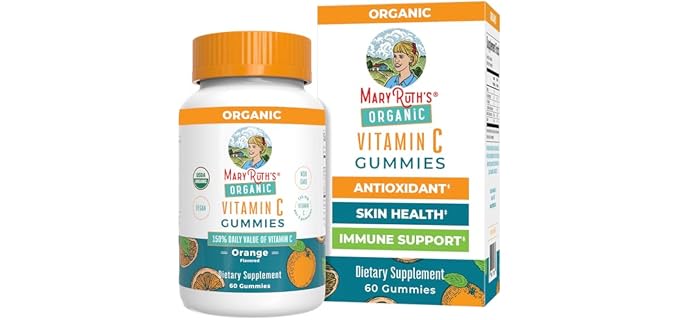
MaryRuth's® Organic C Gummies USDA Organic orange vitamin C gummies


Currently unavailable
- MaryRuth’s Organic C Gummies are a 60-count bottle of orange pectin gummies for ages 14 and up.
- The serving is up to 3 gummies a day, so the bottle lasts about 20 days.
- They are USDA Organic, non-GMO, vegan and free of gelatin, dairy, gluten and nuts.
4
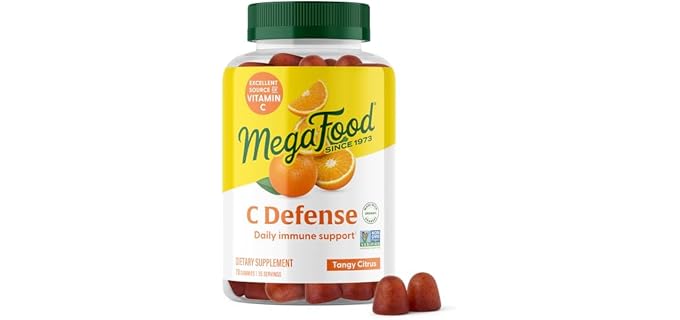
MegaFood® C Defense Gummies Tangy citrus vitamin C gummies, 180 mg


Currently unavailable
- MegaFood C Defense Gummies are a 70-count bottle in tangy citrus flavor, giving 35 servings of 2 gummies.
- Each serving has 180 mg of vitamin C with orange, cranberry, blueberry and ginger root, for adults, teens and children 4 and up.
- They are vegan, gluten-free and Non-GMO Project Verified. They carry no USDA Organic seal because of the weight of the added vitamin C.
Index Table: Organic Vitamin C Gummies
| No. | Product | Image | Features | Brand |
|---|---|---|---|---|
| 1 | Garden of Life Elderberry Immune Gummies - Elderberry gummies with vitamin C and zinc |  |
| Garden of Life |
| 2 | Viva Naturals Elderberry Zinc Gummies - Elderberry, vitamin C and zinc for adults |  |
| Viva Naturals |
| 3 | MaryRuth's Organic C Gummies - USDA Organic orange vitamin C gummies |  |
| MaryRuth's |
| 4 | MegaFood C Defense Gummies - Tangy citrus vitamin C gummies, 180 mg |  |
| MegaFood |
Sources
- NIH Office of Dietary Supplements. Vitamin C: Fact Sheet for Consumers. Accessed October 26, 2026.
- NIH Office of Dietary Supplements. Vitamin C: Fact Sheet for Health Professionals. Accessed October 26, 2026.
- U.S. Food and Drug Administration. Added Sugars on the Nutrition Facts Label. Accessed October 26, 2026.
- USDA Agricultural Marketing Service. Organic Labeling Standards. Accessed October 26, 2026.
- National Center for Complementary and Integrative Health. Elderberry: Usefulness and Safety. Accessed October 26, 2026.
- MegaFood. Gummy FAQ. Accessed October 26, 2026.
- NIH Office of Dietary Supplements. Dietary Supplements: What You Need to Know. Accessed October 26, 2026.
Update History
- Oct 2026: Rewrote the guide text and product notes, removed the template package details, added the daily needs, children’s upper limits, sugar and age-range guidance with sources, corrected the Garden of Life, Viva Naturals, MaryRuth’s and MegaFood dose and serving details, set the Key Specs to form, count and certification, renamed the index table, and updated the sources (NIH ODS, FDA, USDA AMS, NCCIH, MegaFood)
- Oct 2026: Removed MaryRuth’s Vitamin C Gummies (Orange) and Lunakai Vitamin C Gummies, whose only organic ingredients were the sweeteners
- Nov 2021: First published