We may earn a commission from qualifying purchases. Product links on this page are affiliate links, at no extra cost to you; see our Affiliate Disclosure.
Iodine is a mineral the body needs to make thyroid hormones. Most people in the United States get enough from food and iodized salt, but some groups fall short, and too much causes its own problems. This guide covers how much iodine adults need, the upper limit, which medicines interact with iodine supplements, and how two kelp iodine supplements compare.General information, not medical advice. Talk to your doctor or pharmacist before you start a supplement, especially if you are pregnant, take medicine or are buying for a child.
Key Specs Compared
Numbers match the reviews below (tap to jump).
| # | Form | Size / count | Stated certifications | Vegan |
|---|---|---|---|---|
| 1 | Capsules | 60 Count | Non-GMO | Vegetarian (vegan not stated) |
| 2 | Capsules | 250 Count | Non-GMO, Kosher | Yes |
– = not stated by the maker · Specs and certifications as stated by the listing, not tested or verified by us; check the listing before you buy
Iodine safety
- Adults need 150 mcg a day, and the upper limit for adults is 1,100 mcg from food, drinks and supplements together.[1]
- High iodine intake can cause goiter, thyroid gland inflammation and thyroid cancer.[1]
- Iodine supplements can interact with antithyroid medicines such as methimazole, ACE inhibitors and potassium-sparing diuretics.[1]
- Pregnant women need 220 mcg a day and breastfeeding women need 290 mcg.[1]
What Iodine Does
- Thyroid Hormones – The body needs iodine to make thyroid hormones, which control metabolism and many other functions.[1]
- Development – Thyroid hormones are needed for proper bone and brain development during pregnancy and infancy.[1]
- Food Sources – Fish, seaweed, shrimp, dairy products, eggs and iodized salt provide iodine. Sea salt, kosher salt and Himalayan salt are not usually iodized.[1]
Who Is More Likely to Fall Short
- No Iodized Salt – People who do not use iodized salt have a harder time getting enough.[1]
- Pregnancy – Pregnant women need about 50 percent more iodine than other women.[1]
- Vegan Diets – People who eat few or no dairy products, seafood or eggs might not get enough.[1]
- Prenatal Vitamins – Only about half of the prenatal multivitamins sold in the United States contain iodine, so check the label.[1]
Iodine and Medicines
- Antithyroid Medicines – High doses of iodine with antithyroid medicines such as methimazole could cause the body to make too little thyroid hormone.[1]
- ACE Inhibitors – Potassium iodide with ACE inhibitors such as lisinopril could raise blood potassium to an unsafe level.[1]
- Potassium-Sparing Diuretics – Potassium iodide with spironolactone or amiloride can also push blood potassium too high.[1]
Too Much Iodine
- Upper Limit – The adult upper limit is 1,100 mcg a day from all sources, and it does not apply to people taking iodine for medical reasons under a doctor’s care.[1]
- Symptoms – High intakes can cause some of the same symptoms as deficiency, including goiter.[1]
- Kelp – Iodine-containing kelp supplements are sold, so add up the iodine from kelp, a multivitamin and iodized salt before you take another product.[1]
What to Check on an Iodine Label
- Organic Claim – A product can carry the USDA organic seal only if it is certified, and a product that is not certified can name only its certified organic ingredients as organic on the information panel.[2]
- Amount per Capsule – Check the Supplement Facts panel for mcg of iodine per capsule and compare it with the 150 mcg adult amount and the 1,100 mcg upper limit.
- Form and Count – Both picks are kelp capsules, in packs of 60 and 250. Divide the price by the count to compare.
What the Research Says
The NIH Office of Dietary Supplements says most people in the United States get enough iodine from food and drinks, and that the American Thyroid Association recommends a daily supplement with 150 mcg of iodine as potassium iodide for women who are pregnant, planning to become pregnant or breastfeeding.[1] It also says too much iodine is harmful.[1]How We Chose These Products
We do not test products. We compare product details: form, amount per container, stated certifications, ingredients and availability.[2] Brands don’t pay to be included, though we may earn a commission from purchases.Our Organic Iodine Supplement Picks
We found two kelp iodine supplements, so this guide has two picks. With every purchase through the links on this page, we may earn a commission, at no extra cost to you.1
Life Extension® Sea-Iodine Capsules Iodine from kelp and bladderwrack, 60 capsules


Currently unavailable
- Life Extension Sea-Iodine is a 60-capsule bottle of iodine from kelp and bladderwrack.
- It is non-GMO, gluten-free and vegetarian.
- Check the Supplement Facts panel for the iodine amount per capsule against the 1,100 mcg adult upper limit, and talk to your doctor first if you have a thyroid condition.
2
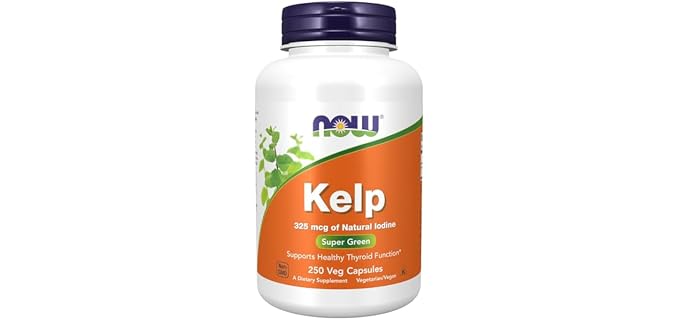
NOW® Kelp Iodine Kelp with 325 mcg iodine, 250 vegetarian capsules


Currently unavailable
- NOW Kelp is a 250-count bottle of vegetarian kelp capsules with 325 mcg of iodine, and the directions call for 1 capsule daily with a meal.
- It is non-GMO, kosher and vegan, and it is free of dairy, eggs, nuts and soy.
- Each capsule holds 325 mcg, more than twice the 150 mcg adult amount.
Index Table: Organic Iodine Supplements
| No. | Product | Image | Features | Brand |
|---|---|---|---|---|
| 1 | Life Extension Sea-Iodine Capsules - Iodine from kelp and bladderwrack, 60 capsules |  |
| Life Extension |
| 2 | NOW Kelp Iodine - Kelp with 325 mcg iodine, 250 vegetarian capsules |  |
| NOW |
Sources
- NIH Office of Dietary Supplements. Iodine Fact Sheet for Consumers. Accessed October 27, 2026.
- USDA Agricultural Marketing Service. Organic Labeling Standards. Accessed October 27, 2026.
Update History
- Oct 2026: Rewrote the guide text and product notes around the NIH iodine fact sheet, added who falls short, the medicine cautions and what too much iodine does, removed unsupported claims and the dead Life Extension source, and replaced the sources (NIH Office of Dietary Supplements, USDA)
- Oct 2026: Removed Pure Horizon IOPlus (dose far above the upper limit), Horbäach Iodine Liquid Drops and Life-flo Liquid Iodine Plus (no organic claim); added dose caution for Life Extension; added Sources (NIH Office of Dietary Supplements, MedlinePlus, USDA, FDA, Life Extension, product pages)
- Aug 2021: Added Horbäach Iodine Liquid Drops
- Jul 2020: Added Life-flo Liquid Iodine Plus
- May 2020: First published