As an Amazon Associate I earn from qualifying purchases. Product links on this page are affiliate links, at no extra cost to you; see our Affiliate Disclosure.
Good organic jams and jellies are the ones that are made from whole fruit that is grown very close to the production area; this way, they don’t lose their nutritional values and their essence. The process of finding these organic jams and jellies can be really tough because of the lack of manufacturers in this market. We have gathered some relevant information to make an informed decision before opting for the product that is right for your health.Disclaimer: This article is general information, not medical or nutrition advice.

Key Specs Compared
Numbers match the reviews below (tap to jump).
| # | Size | Stated certifications |
|---|---|---|
| 1 | 2.62 Pound | Not stated |
| 2 | 8.5 Ounce | Not stated |
| 3 | Not stated | Non-GMO |
| 4 | 17 Ounce | USDA Organic, Non-GMO |
| 5 | 1.09 Pound | USDA Organic, Non-GMO |
– = not stated on the Amazon listing · Specs and certifications as stated by the listing, not tested or verified by us; check the listing before you buy
Jams Jellies label basics
Organic foods are grown and processed under USDA rules that limit synthetic pesticides and fertilizers and prohibit GMOs and irradiation.[2] Research hasn’t shown that organic foods are significantly more nutritious than conventional foods, though they tend to have lower pesticide residues.[2][4] Health claims on food labels are regulated by the FDA, and only a few are authorized.[5]
Why Buy Organic Jams and Jellies?
- Affordable – It is a general misconception that organic items are more expensive, which is not true in the case of jams and jellies. They sure may not be readily available in the market as demand for them is not that high yet, but they don’t cost extra.
- Better Taste – Texture and taste of organic differs vastly from inorganic. Locally grown fruit has a pure taste with the least chemicals, so it tastes way better. Jams made from these have chunks of fruits, which is a delight for your taste buds.
Uses of Organic Jams and Jellies:
- Refreshments – Jam smoothies are the perfect refreshment for hot summer evenings. blend some jam, milk with yogurt, and you’re good to go!
- Deserts – Jams go well with desserts; if you’re baking a cake, add a layer of blueberry jam, making rice pudding for dinner? Add a bit of strawberry jam to sweeten it.
- Breakfasts – Breakfasts are incomplete without jams; spread it over on bread for a light yet filling morning snack that keeps you full throughout the day.
- With Ice Cream – Jam tarts are easy to make and tastes wonderful. All you have to do is fill pastries with jams and serve with a scoop of ice-cream.
What the Research Says
Dietary guidelines recommend a healthy eating pattern built on vegetables, fruits, whole grains, lean proteins and healthy oils, with limits on added sugar, sodium and saturated fat.[4] Organic certification covers how food is grown and processed, not its nutrition.[2]How We Chose These Products
We don’t test products hands-on. We compared labels and listings: the USDA Organic seal [2], ingredients and added sugar, size, and price per ounce. We removed products that were out of stock, no longer listed or recalled, and we checked the brands we list against recent FDA [6] recall notices in October 2026. Brands don’t pay to be included, though we may earn a commission from purchases.Our Picks: Organic Jams and Jellies
1
Kirkland Signature® Organic Strawberry Spread Organic strawberry fruit spread, 42oz jar


- This is an organic strawberry fruit spread from Kirkland Signature, in a 42 oz size.
- Made with strawberries.
- It comes in a jar.
- The package measures 6.5 x 3.4 x 6.5 inches and weighs 2.6 pounds.
- Check the package label for the full ingredient list and allergen information before you buy.
2
Stonewall Kitchen® Classic Fig Jam Organic classic fig jam, 8.5oz


- This is an organic classic fig jam from Stonewall Kitchen, in an 8.5 oz size.
- Certifications and seals include USDA Organic.
- It is meant for coffee, desserts and breakfast; the package measures 2.6 x 2.6 x 3.1 inches and weighs 0.5 pounds.
- Check the package label for the full ingredient list and allergen information before you buy.
3
Smash Foods® Chia Jam Variety No-sugar-added chia jam, three-jar pack


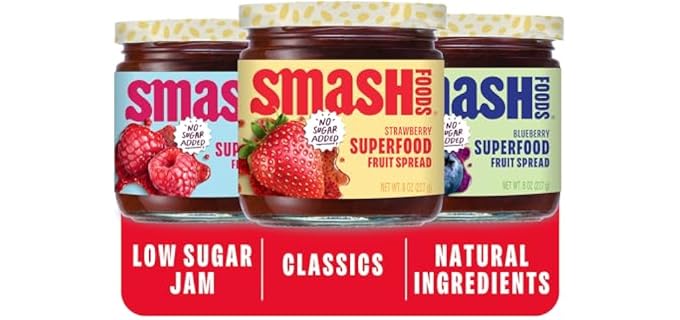
- Smash Foods Chia Jam Variety is a no-sugar-added chia jam (three-jar pack), and it comes in size Classics.
- It is non-GMO, vegan, paleo-friendly and keto-friendly.
- Made with chia seeds.
- It comes in a jar.
- It is meant for salad dressings, smoothies and sweetening.
4
365 Whole Foods® Organic Strawberry Spread Organic strawberry fruit spread, 17oz jar


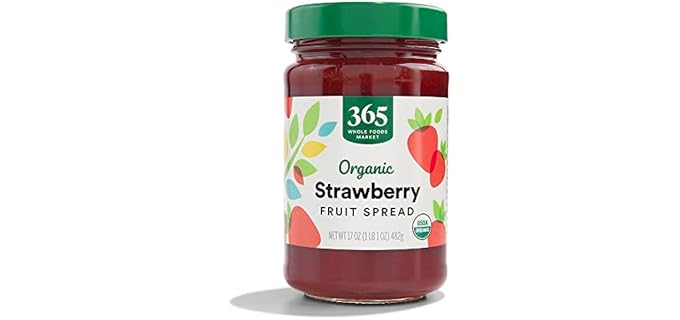
- 365 Whole Foods’ organic strawberry fruit spread comes in a 17 oz size.
- Certifications include USDA Organic, and it is also non-GMO.
- Made with strawberries and cane sugar.
- It is dye-free, and it comes in a jar.
- Check the package label for the full ingredient list and allergen information before you buy.
5
365 Whole Foods® Concord Grape Jelly Organic Concord grape jelly, 17.5oz jar


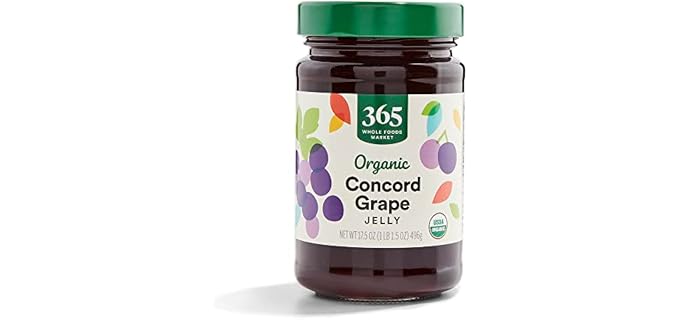
- You get 17.5 oz of organic Concord grape jelly.
- USDA Organic labeling is on the package, and it is non-GMO as well.
- Key ingredients: cane sugar.
- It is dye-free, and it comes in a jar.
- Check the package label for the full ingredient list and allergen information before you buy.
Index Table: Top-Rated Organic Jams and Jellies
| No. | Product | Image | Features | Brand |
|---|---|---|---|---|
| 1 | Kirkland Signature Organic Strawberry Spread - Organic strawberry fruit spread, 42oz jar |  |
| Kirkland Signature |
| 2 | Stonewall Kitchen Classic Fig Jam - Organic classic fig jam, 8.5oz |  |
| Stonewall Kitchen |
| 3 | Smash Foods Chia Jam Variety - No-sugar-added chia jam, three-jar pack |  | Smash Foods | |
| 4 | 365 Whole Foods Organic Strawberry Spread - Organic strawberry fruit spread, 17oz jar |  | 365 Whole Foods | |
| 5 | 365 Whole Foods Concord Grape Jelly - Organic Concord grape jelly, 17.5oz jar |  | 365 Whole Foods |
Sources
- U.S. Food and Drug Administration. How to Understand and Use the Nutrition Facts Label. Accessed October 16, 2026.
- USDA Agricultural Marketing Service. Organic Labeling Standards. Accessed October 16, 2026.
- U.S. Food and Drug Administration. Food Allergies: What You Need to Know. Accessed October 16, 2026.
- Dietary Guidelines for Americans, 2020-2025. Dietary Guidelines for Americans, 2020-2025. Accessed October 16, 2026.
- U.S. Food and Drug Administration. Label Claims for Conventional Foods and Dietary Supplements. Accessed October 16, 2026.
- U.S. Food and Drug Administration. Recalls, Market Withdrawals, & Safety Alerts. Accessed October 16, 2026.
Update History
- Oct 2026: Product picks reviewed and updated; added Sources (FDA, USDA AMS, Dietary Guidelines for Americans)
- Mar 2021: First published
Views: 0


