As an Amazon Associate I earn from qualifying purchases. Product links on this page are affiliate links, at no extra cost to you; see our Affiliate Disclosure.
Organic food is often more nutritious to the body and is free from chemicals and pesticides. One such whole food is red and white wheat berries. Consider choosing from the Best Organic Wheat Berries for wholesome meal options such as stews, soups, bread, and salads. Keep reading to learn about the benefits of whole food and some products to consider.Disclaimer: This article is general information, not medical or nutrition advice.

Key Specs Compared
Numbers match the reviews below (tap to jump).
| # | Form | Size | Stated certifications |
|---|---|---|---|
| 1 | Flour | 400 Ounce | USDA Organic, Non-GMO, Kosher |
| 2 | Whole | 92.8 Ounce | USDA Organic, Non-GMO |
| 3 | Not stated | 400 Ounce | Certified organic, Kosher |
| 4 | Not stated | 5 lb | Non-GMO Project Verified, Kosher |
| 5 | Not stated | 20 Pound Bucket | Certified organic, Non-GMO Project Verified |
– = not stated on the Amazon listing · Specs and certifications as stated by the listing, not tested or verified by us; check the listing before you buy
Wheat Berries label basics
Buying Considerations For Organic Wheat Berries
Store whole wheat berries in a cool and dry place to keep them fresh. Read along to find things to consider while purchasing them.- Packaging – You can choose from different weight bags as per your consumption. Pick a resealable packaging to keep the grain fresh, or you may transfer it into an airtight container.
- Type – You may choose from red spring, white, and Kamut Khorasan type of wheat berries.
- Grain Size – See that the pack has a uniform grain size. Technologies such as lasers are helpful in determining this in the sorting process.
- Purpose – Some grains are for making, flour, stews, and soups. Moreover, you may use them for sprouting too. Therefore, pick a pack that has similar processing instructions to your purpose.
Benefits Of Organic Wheat Berries
Organic foods are grown and processed under USDA rules that limit synthetic pesticides and fertilizers and prohibit GMOs and irradiation.[2] Research hasn’t shown that organic foods are significantly more nutritious than conventional foods, though they tend to have lower pesticide residues.[2][4] Health claims on food labels are regulated by the FDA, and only a few are authorized.[5]Features Of Organic Wheat Berries
Consider these features to find good wheat berries for effortless cooking. Here are some vital things to look at when picking a bag.- Kosher – A kosher pack will ensure everyone can consume the wheat as per their food preferences and restrictions.
- Certified Organic – A food product to be certified organic has to go through several quality checks. Make sure the wheat berries are certified organic and tested.
- Sorted – An ideal grain pack will consider equal-sized grains so that they cook uniformly. This will also be easier to grind at home to make flour.
What the Research Says
Dietary guidelines recommend a healthy eating pattern built on vegetables, fruits, whole grains, lean proteins and healthy oils, with limits on added sugar, sodium and saturated fat.[4] Organic certification covers how food is grown and processed, not its nutrition.[2]How We Chose These Products
We don’t test products hands-on. We compared labels and listings: the USDA Organic seal [2], ingredients and added sugar, size, and price per ounce. We removed products that were out of stock, no longer listed or recalled, and we checked the brands we list against recent FDA [6] recall notices in October 2026. Brands don’t pay to be included, though we may earn a commission from purchases.Our Picks: Organic Wheat Berries
We have listed some organic wheat berries with their multiple benefits for you to choose from. Also, we would like to inform you we shall earn a small commission with every purchase made through the links in the article.1
Great River Milling® Red Wheat Berries Organic hard red spring wheat, 25lb


- You get 25 lb of organic hard red spring wheat.
- It carries USDA Organic labeling and is also non-GMO.
- The package measures 20 x 12 x 6 inches and weighs 25 pounds.
- Check the package label for the full ingredient list and allergen information before you buy.
2
Be Still Farms® White Wheat Berries Organic hard white wheat berries, 5.8lb


- Be Still Farms’ organic hard white wheat berries come in a 5.8 lb size.
- Certifications include USDA Organic, and it is also non-GMO, vegan and vegetarian.
- It is whole grain.
- A product of USA.
- Use it for cooking and salad dressings.
3
Central Milling® White Wheat Berries Organic hard white wheat berries, 25lb


- Central Milling’s organic hard white wheat berries come in a 25 lb size.
- It is certified organic and non-GMO.
- It is additive-free.
- Use it for salad dressings and oatmeal.
- Check the package label for the full ingredient list and allergen information before you buy.
4
Palouse Brand® White Wheat Berries Glyphosate-residue-free hard white wheat, 5lb


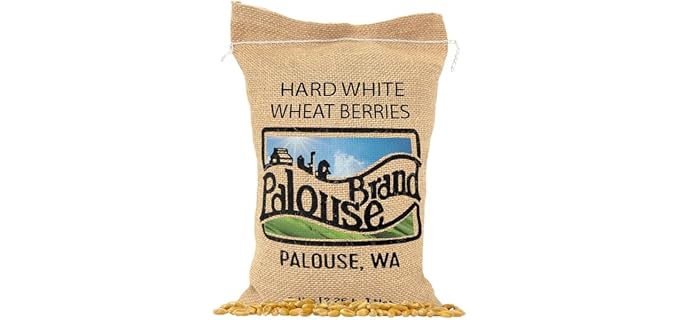
- You get 5 lb of glyphosate-residue-free hard white wheat.
- Look for Non-GMO Project Verified on the package.
- The package measures 10 x 3 x 8 inches and weighs 5 pounds.
- Check the package label for the full ingredient list and allergen information before you buy.
5
Wheatland® Organic Hard Red Organic hard red wheat, 20lb bucket


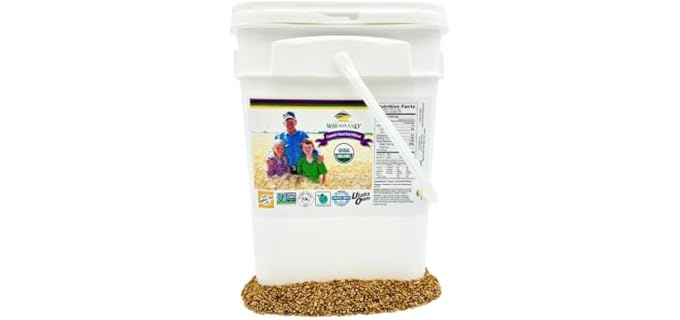
- This is an organic hard red wheat from Wheatland, in a 20 lb size.
- It carries certified organic and Non-GMO Project Verified labeling.
- Made with lentils.
- It is additive-free and single-ingredient.
- Check the package label for the full ingredient list and allergen information before you buy.
Index Table: Top-Rated Organic Wheat Berries
| No. | Product | Image | Features | Brand |
|---|---|---|---|---|
| 1 | Great River Milling Red Wheat Berries - Organic hard red spring wheat, 25lb |  |
| Great River Milling |
| 2 | Be Still Farms White Wheat Berries - Organic hard white wheat berries, 5.8lb |  |
| Be Still Farms |
| 3 | Central Milling White Wheat Berries - Organic hard white wheat berries, 25lb |  |
| Central Milling |
| 4 | Palouse Brand White Wheat Berries - Glyphosate-residue-free hard white wheat, 5lb |  | Palouse Brand | |
| 5 | Wheatland Organic Hard Red - Organic hard red wheat, 20lb bucket |  | Wheatland |
Sources
- U.S. Food and Drug Administration. How to Understand and Use the Nutrition Facts Label. Accessed October 16, 2026.
- USDA Agricultural Marketing Service. Organic Labeling Standards. Accessed October 16, 2026.
- U.S. Food and Drug Administration. Food Allergies: What You Need to Know. Accessed October 16, 2026.
- Dietary Guidelines for Americans, 2020-2025. Dietary Guidelines for Americans, 2020-2025. Accessed October 16, 2026.
- U.S. Food and Drug Administration. Label Claims for Conventional Foods and Dietary Supplements. Accessed October 16, 2026.
- U.S. Food and Drug Administration. Recalls, Market Withdrawals, & Safety Alerts. Accessed October 16, 2026.
Update History
- Oct 2026: Product picks reviewed and updated; added Sources (FDA, USDA AMS, Dietary Guidelines for Americans)
- Apr 2021: First published


