As an Amazon Associate I earn from qualifying purchases. Product links on this page are affiliate links, at no extra cost to you; see our Affiliate Disclosure.
Almonds supply vitamin E, magnesium, fiber and healthy fats, and a small handful makes an easy snack. Before you buy “raw” almonds, it helps to know what the label means in the U.S. This guide covers that, a few ways to use almonds, and three picks whose listings say they’re certified organic.Disclaimer: This article is general information, not medical or nutrition advice.

Key Specs Compared
Numbers match the reviews below (tap to jump).
| # | Form | Size | Stated certifications | Gluten-free |
|---|---|---|---|---|
| 1 | Whole raw (unpasteurized) | 2 Pound | USDA Organic, Non-GMO, Kosher | Yes |
| 2 | Whole raw (unpasteurized) | 5 Pound | USDA Organic (per listing), Non-GMO, Kosher | Yes |
| 3 | Whole raw (pasteurized) | 3 Pound | USDA Organic, Regenerative Organic Certified, Non-GMO | Yes |
– = not stated on the Amazon listing · Specs and certifications as stated by the listing, not tested or verified by us; check the listing before you buy
Raw Almonds label basics
Organic foods are grown and processed under USDA rules that limit synthetic pesticides and fertilizers and prohibit GMOs and irradiation.[2] Research hasn’t shown that organic foods are significantly more nutritious than conventional foods, though they tend to have lower pesticide residues.[2][4] Health claims on food labels are regulated by the FDA, and only a few are authorized.[5]
What “Raw” Means for Almonds
Almonds grown in California and sold in the U.S. must go through an approved treatment, such as pasteurization, that cuts Salmonella by at least 99.99% (a 4-log reduction). This applies even when the bag says “raw”.[6] Truly unpasteurized almonds sold here are usually imported, as with two of our picks. They skip that kill step, so they carry more risk. Young children, pregnant people, older adults and anyone with a weakened immune system may want to choose pasteurized almonds or roast them first.Different Ways to use Raw Organic Almonds
Let us learn the different ways to use raw organic almonds in our daily diet!- As Snacks – Whether you are a kid or adult, everyone needs something for munching while studying or working.
- As an ingredient in dishes – You can cook a variety of dishes with organic almonds. Almonds are best to make almond cream sauce or raw almond sauce, which may be further used in pasta and veggies.
- Almond Butter – Another way to add these healthy raw organic almonds to your diet is by making almond butter. You can use the almond butter to spread over the bread and toasts. Moreover, you can also add almond butter to smoothies.
- In a Trail Mix – Trail mix is an ideal snack for hikes and travels. You can mix these almonds with organic chia seeds, raisins, and roasted chickpeas to make a healthy and energy-rich trail mix.
Various Nutrients in Raw Organic Almonds
The raw almonds are rich in various nutrients, which make them a must to have ingredient. So, we have mentioned below a few nutrients and their benefits.- Vitamin E – Almonds are one of the best food sources of vitamin E, an antioxidant. An ounce of dry-roasted almonds has about 6.8 mg, close to half the daily value.[7]
- Biotin – Almonds provide a small amount of biotin, a B vitamin that helps the body use carbohydrates, fats and protein.[8]
What the Research Says
Dietary guidelines recommend a healthy eating pattern built on vegetables, fruits, whole grains, lean proteins and healthy oils, with limits on added sugar, sodium and saturated fat.[4] Organic certification covers how food is grown and processed, not its nutrition.[2]How We Chose These Products
We don’t test products hands-on. We compared labels and listings: the USDA Organic seal [2], whether the almonds are pasteurized, size, and price per ounce. We removed two almonds whose listings make no certified organic claim. We removed products that were out of stock, no longer listed or recalled, and we checked the brands we list against recent FDA [9] recall notices in October 2026. Brands don’t pay to be included, though we may earn a commission from purchases.Our Picks: Raw Organic Almonds
All three picks are USDA Organic per their listings. We may earn a small commission on purchases made through the links in this article.1
Terrasoul Superfoods® Raw Organic Almonds Unpasteurized sproutable organic almonds, 2lb


- You get unpasteurized sproutable organic almonds from Terrasoul Superfoods, in a 2 lb size.
- USDA Organic labeling is on the package, and it is non-GMO, vegan, gluten-free and kosher as well.
- It comes in a resealable pouch.
- Check the package label for the full ingredient list and allergen information before you buy.
2
Food to Live® Raw Organic Almonds Imported unpasteurized organic almonds, 5lb


- You get imported unpasteurized organic almonds from Food to Live, in a 5 lb size.
- Certifications include USDA Organic, and it is also non-GMO, vegan and gluten-free.
- It comes in a resealable pouch.
- Check the package label for the full ingredient list and allergen information before you buy.
3
Burroughs Family Farms® Organic Raw Almonds Regenerative Organic Certified almonds, 3lb


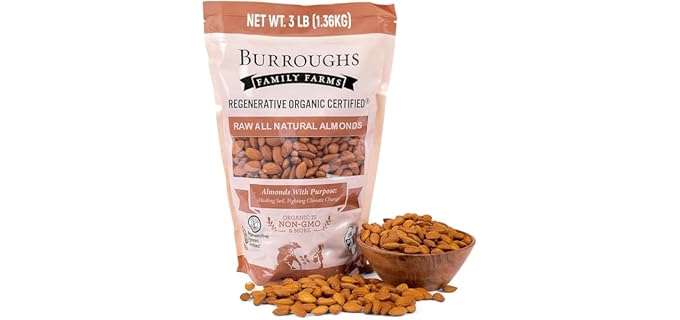
- Burroughs Family Farms’ regenerative Organic Certified almonds come in a 3 lb size.
- USDA Organic labeling is on the package, and it is non-GMO, vegan, gluten-free and paleo-friendly as well.
- It is meant for baking and snacking; the package measures 4.2 x 8 x 12.5 inches and weighs 3 pounds.
- Check the package label for the full ingredient list and allergen information before you buy.
Index Table: Raw Organic Almonds Compared
| No. | Product | Image | Features | Brand |
|---|---|---|---|---|
| 1 | Terrasoul Superfoods Raw Organic Almonds - Unpasteurized sproutable organic almonds, 2lb |  |
| Terrasoul Superfoods |
| 2 | Food to Live Raw Organic Almonds - Imported unpasteurized organic almonds, 5lb |  |
| Food to Live |
| 3 | Burroughs Family Farms Organic Raw Almonds - Regenerative Organic Certified almonds, 3lb |  | Burroughs Family Farms |
Sources
- U.S. Food and Drug Administration. How to Understand and Use the Nutrition Facts Label. Accessed October 16, 2026.
- USDA Agricultural Marketing Service. Organic Labeling Standards. Accessed October 16, 2026.
- U.S. Food and Drug Administration. Food Allergies: What You Need to Know. Accessed October 16, 2026.
- Dietary Guidelines for Americans, 2020-2025. Dietary Guidelines for Americans, 2020-2025. Accessed October 16, 2026.
- U.S. Food and Drug Administration. Label Claims for Conventional Foods and Dietary Supplements. Accessed October 16, 2026.
- Electronic Code of Federal Regulations. 7 CFR 981.442, Quality control (almond treatment requirement). Accessed October 18, 2026.
- NIH Office of Dietary Supplements. Vitamin E: Fact Sheet for Health Professionals. Accessed October 18, 2026.
- NIH Office of Dietary Supplements. Biotin: Fact Sheet for Health Professionals. Accessed October 18, 2026.
- U.S. Food and Drug Administration. Recalls, Market Withdrawals, & Safety Alerts. Accessed October 16, 2026.
Update History
- Oct 2026: Removed Wild Soil Terra Preta Almonds (“beyond organic”, not certified organic) and I’m A Nut Raw California Almonds (no organic claim); explained that U.S.-grown “raw” almonds must be pasteurized and added a caution for unpasteurized imports; replaced the “organic almonds have no toxic chemicals” claim; corrected Key Specs forms (whole almonds, not paste or liquid); Sources (FDA, USDA AMS, Dietary Guidelines for Americans, eCFR 7 CFR 981.442, NIH ODS)
- Apr 2021: First published


