As an Amazon Associate I earn from qualifying purchases. Product links on this page are affiliate links, at no extra cost to you; see our Affiliate Disclosure.
Are you on the hunt for the right organic bread on the market? To help others like you, we have compiled this buyer’s guide for those looking for the right quality organic bread. Please find out more about what the best organic bread is made from, what makes it so healthy apart from ordinary bread, and have a look at our premium selection below.Disclaimer: This article is general information, not medical or nutrition advice.

Key Specs Compared
Numbers match the reviews below (tap to jump).
| # | Form | Size | Stated certifications |
|---|---|---|---|
| 1 | Whole | 1.1 Pound (Pack of 12) | Kosher |
| 2 | Flour | 25 LB | USDA Organic, Non-GMO, Kosher |
| 3 | Not stated | 15 Ounce | Not stated |
| 4 | Not stated | Not stated | USDA Organic |
| 5 | Whole | 27 Ounce | USDA Organic, Non-GMO Project Verified |
– = not stated on the Amazon listing · Specs and certifications as stated by the listing, not tested or verified by us; check the listing before you buy
Bread label basics
Why is Organic Bread Better than Ordinary Bread?
This raises an old (yet still pertinent) question of why organic food is better than regular food in the first place. Rinsing the crops will not wash all of that away; however, as the harvest has been sprayed multiple times throughout production, and all these chemicals have been absorbed through water straight into the plant’s tissues. Organic crops have been grown without these chemicals and usually in a better environment. Organic crops also have a better chance of being GMO-free, as GMO crops almost require sprays to function correctly. In bread, organic bread tends to have far less gluten and far fewer metals inside of it. The health market for this has been expanding, and people prefer to use fewer metal additives in their bread and become more experimental with healthy sources of starch and protein.Ingredients to Avoid in your Bread
Organic bread aside, all bread is made up of flour (starches and proteins), fat, water, a raising agent, and a binding agent. These raising agents and binding agents are usually made from unhealthy by-products of industry like heavy metals.- Baking Powder – baking powder is usually a string of heavy metals and E-numbers on its own.
- Yeast – not all yeasts are bad for you; however, instant yeasts often have additional things added to them. The yeast source is also imperative, as the environment it’s grown in will dictate if it has anything else present inside it (e.g., yeast grown in an aluminum vat will likely contain aluminum residue). Fresh yeast is better than instant yeast regarding health as well.
- Bleach – that’s right, many ordinary bread brands use BLEACH, mainly to give the white bread a white color. Ingesting bleach is a disaster; however, millions do it every day in small quantities in their bread! Avoid bread like this at all costs.
- E-numbers – these are little strings of numbers that frequently appear in the ingredients lists of artificially manufactured products. E-numbers are not healthy for us, and they make up additives such as flavoring, food colorants, and more. E-numbers have been shown to correlate to outbreaks of autistic and ADHD behavioral patterns directly.
- High Fructose Corn Syrup – If you think ordinary sugar is bad, you will walk away from this knowing that it’s not the worst for you! Don’t buy products with this dangerous sweetener anymore; the benefits are not worth it.
- Soya – many people are allergic to soya, and yet it shows up in many loaves of bread in the form of lecithin or vegetable fat.
- Mono- and Di-glycerides – these are processed fats that are not very healthy for us at all. Scientists and people say that they are alright for us because they only appear in small amounts in our daily bread for binding purposes. So after ten years of eating your favorite ordinary bread brand, you wonder why you have a few health problems. It’s time to switch to organic!
On the other end of the line, organic enthusiasts have been experimenting with incredibly healthful ingredients to add to bread to give it a great taste and help it combine better. Here are some great ingredients you can look out for when looking for organic bread:
- Organic Rye – rye as grain has considerably less gluten in it and clogs up the stomach less. Those of you who are sensitive to ordinary bread could try switching over to rye, but remember that it’s not gluten-free.
- Gluten-free Grains – some very healthy gluten-free grains have been experimented with in bread, like quinoa, spelled, amaranth, millet, sorghum, teff, rice, and buckwheat. If your bread has any of these in it, it will have a heightened nutritional content on top of being organic and gluten-free.
- Seeds, Nuts, and Sprouts – the tastiest, healthful breads use nuts and seeds in them. Essene bread is an ancient form of bread that uses sprouts in combination with seeds and nuts, creating an energy bomb of note!
What the Research Says
Dietary guidelines recommend a healthy eating pattern built on vegetables, fruits, whole grains, lean proteins and healthy oils, with limits on added sugar, sodium and saturated fat.[4] Organic certification covers how food is grown and processed, not its nutrition.[2]How We Chose These Products
We don’t test products hands-on. We compared labels and listings: the USDA Organic seal [2], ingredients and added sugar, size, and price per ounce. We removed products that were out of stock, no longer listed or recalled, and we checked the brands we list against recent FDA [5] recall notices in October 2026. Brands don’t pay to be included, though we may earn a commission from purchases.Our Picks: Organic Breads
For the best organic bread results, it’s recommended you bake your bread to suit your needs or find someone who is local that can make it for you fresh. If you are limited and can’t do that, then you may want to look at our selection of organic bread we could find to order online.1
Mestemacher® Organic Whole Rye Organic whole rye bread, twelve packages


- Mestemacher Organic Whole Rye Bread comes as a 12-pack of 17.6 oz packages, 211.2 oz in all.
- The loaves are baked with organically grown ingredients, grown without artificial fertilizers or pesticides, and the product is USDA certified organic.
- There are no preservatives; the bread keeps through pasteurization, which gives it a long shelf life.
- It is wheat-free and cholesterol-free, and it is certified kosher (K-Parve).
- The bread is low in fat and high in fiber.
- Rye bread contains gluten, so it does not suit a gluten-free diet.
- The case measures 15.2 x 6.7 x 7.3 inches.
2
Great River Milling® Lily White Flour Organic all-purpose flour, 25lb bag


- Great River Milling Organic Lily White All-Purpose Flour comes in a 25 lb bag.
- It is USDA Organic, non-GMO, kosher, unbleached and unbromated.
- The flour is made for cookies, cakes, muffins, biscuits, breads, pizza dough and pie crust.
- It has a fine texture and a balanced structure that gives a tender crumb.
- The 25 lb size suits bakeries, restaurants and anyone who bakes in bulk.
- Store the bag in a cool, dry place.
3
Sami's Bakery® Locarb 7-Grain Bread Low-carb seven-grain fiber bread loaf


- Sami’s Locarb 7-Grain Fiber Bread is a 15 oz loaf sold as a low-carb, keto bread with 2 g net carbs.
- The loaf is a seven-grain bread with a high fiber content.
- Sami’s Bakery makes the bread.
- Check the package for the full ingredient list, since it contains wheat grains.
4
Bread of Heaven® Rustic Sourdough Bread USDA Organic rustic sourdough, two loaves


- Organic Bread of Heaven Rustic Sourdough comes as two loaves, 1.56 pounds in all.
- It carries USDA Organic labeling and is also vegan.[2]
- The loaves are baked fresh in a small family bakery and are never frozen.
- The bread has no GMOs, pesticides or chemicals, and no added vital wheat gluten.
- It is free of eight of the nine top allergens, and it contains wheat.
- The loaves are vegan.
5
Dave's Killer Bread® 21 Whole Grains Organic whole grain seeded bread, 27oz


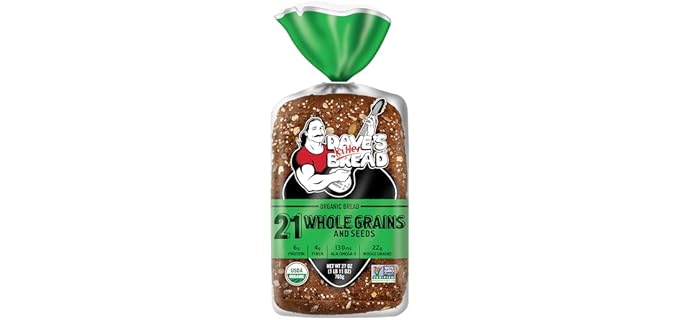
- Dave’s Killer Bread 21 Whole Grains and Seeds is a 27 oz loaf of organic whole grain bread.
- It is USDA Organic and Non-GMO Project Verified, with no high-fructose corn syrup and no artificial preservatives or ingredients.
- Each slice has 6 g of protein, 4 g of fiber, 130 mg of ALA omega-3 and 22 g of whole grains.
- The texture is hearty with a subtle sweetness and a seed-coated crust.
- It contains wheat.
- The loaf measures 11 x 5.9 x 4.6 inches and weighs about 1.7 pounds.
Comparison Table: Top Organic Breads
| No. | Product | Image | Features | Brand |
|---|---|---|---|---|
| 1 | Mestemacher Organic Whole Rye - Organic whole rye bread, twelve packages |  |
| Mestemacher |
| 2 | Great River Milling Lily White Flour - Organic all-purpose flour, 25lb bag |  |
| Great River Milling |
| 3 | Sami's Bakery Locarb 7-Grain Bread - Low-carb seven-grain fiber bread loaf |  |
| Sami's Bakery |
| 4 | Bread of Heaven Rustic Sourdough Bread - USDA Organic rustic sourdough, two loaves |  |
| Bread of Heaven |
| 5 | Dave's Killer Bread 21 Whole Grains - Organic whole grain seeded bread, 27oz |  | Dave's Killer Bread |
Sources
- U.S. Food and Drug Administration. How to Understand and Use the Nutrition Facts Label. Accessed October 16, 2026.
- USDA Agricultural Marketing Service. Organic Labeling Standards. Accessed October 16, 2026.
- U.S. Food and Drug Administration. Food Allergies: What You Need to Know. Accessed October 16, 2026.
- Dietary Guidelines for Americans, 2020-2025. Dietary Guidelines for Americans, 2020-2025. Accessed October 16, 2026.
- U.S. Food and Drug Administration. Recalls, Market Withdrawals, & Safety Alerts. Accessed October 16, 2026.
Update History
- Oct 2026: Product picks reviewed and updated; added Sources (FDA, USDA AMS, Dietary Guidelines for Americans)
- Mar 2021: First published
Views: 0


