We may earn a commission from qualifying purchases. Product links on this page are affiliate links, at no extra cost to you; see our Affiliate Disclosure.
This buyer’s guide explains what organic certification does and doesn’t mean for whey protein, and compares three whey powders whose listings carry the USDA Organic claim.Disclaimer: This article is for general information and is not medical advice. Talk to your doctor or pharmacist before starting a supplement, especially if you are pregnant, nursing, take medicines or are buying for a child.

Key Specs Compared
Numbers match the reviews below (tap to jump).
| # | Form | Size | Stated certifications | Gluten-free |
|---|---|---|---|---|
| 1 | Powder | 1 Pound | USDA Organic, Non-GMO, Kosher | Yes (maker lab tested) |
| 2 | Powder | 1 Pound | USDA Organic, Kosher | Not stated |
| 3 | Powder | 2 Pound | USDA Organic, Non-GMO Project Verified, Kosher | Yes |
– = not stated by the maker · Specs and certifications as stated by the listing, not tested or verified by us; check the listing before you buy
Supplement safety
Why Choose an Organic Whey Protein Powder?
Organic whey isn’t more nutritious than conventional whey, but certification does set rules for how the dairy cows are raised. Here’s what it covers.- When you choose organic whey protein, you get them all. An example of a product related to this is organic protein bars.
- Organic dairy rules: USDA organic dairy cows must graze on pasture during the grazing season and eat organic feed[3], and they can’t be given antibiotics or growth hormones.[4] Good Manufacturing Practice (GMP) is a separate FDA requirement that applies to every supplement maker, organic or not.[5]
How To Choose the Right Organic Whey Protein Powders?
There are many whey brands, and the labels can be confusing. Here are some key points to consider before buying your next tub.- Is the whey organic protein brand certified organic? A USDA Organic seal means a certifier checked the product against the organic standards[6], including the no-antibiotics, no-hormones rule for the cows.
- Are the cows treated well? “Grass-fed” isn’t the same as organic. If it matters to you, look for a certified grass-fed or organic claim rather than a picture of a pasture.
- Cold-processed or “undenatured”? All whey is pasteurized. Some brands advertise gentler processing, but there’s little evidence this matters for building muscle, so treat it as a preference.
- No bleaching – Some whey from colored cheeses is bleached to remove the color. If you’d rather avoid that, look for “no bleach” on the label.
- Isolate or concentrate? Whey isolate is at least 90% protein and is made by membrane filtration or ion exchange, not “acid treatment.” It has very little lactose, so it may suit people with mild lactose intolerance.[7] Concentrate has more lactose and fat.[8] Anyone with a milk allergy should avoid all whey.[9]
- Short ingredient list – If you want a plain powder, look for one ingredient. All three picks below are single-ingredient, unflavored whey.
Benefits Of Organic Whey Protein Powders
Here’s what whey can and can’t do.- Helps build muscle – Combined with resistance training, getting enough protein helps build and keep muscle, and whey is a convenient, complete protein.[10] Whey concentrate can range from 25% to 89% protein, so check grams of protein per scoop.[8]
- Not a fat burner – Whey doesn’t burn fat. When you’re eating fewer calories, a higher-protein diet can help you keep muscle while you lose fat.[10]
- Fullness – Protein is filling, which may help some people manage hunger, but studies on whey and appetite hormones are small and mixed.
- Glutathione – Some brands promote whey for raising glutathione, an antioxidant the body makes. The research is limited, so treat this as unproven.
What the Research Says
The FDA doesn’t approve supplements for safety or effectiveness before they’re sold, and supplement quality varies.[1] Most people can meet their nutrient needs from food.[2] Be wary of ads that promise fast or dramatic results.[11]How We Chose These Products
We don’t test products hands-on. We compared labels and listings: the form and dose per serving, third-party testing (USP, NSF or similar), whether ingredients carry the USDA Organic seal [6], and price per serving. We removed four powders whose listings make no organic claim. On October 18, 2026 we searched FDA recall records for these brands [12][13] and found no recalls. Brands don’t pay to be included, though we may earn a commission from purchases.Our Picks: Organic Whey Protein Powders
1
Natural Force® Organic Whey Protein Grass-fed organic whey protein powder


Currently unavailable
- Natural Force’s grass-fed organic whey protein powder comes in a 16 oz size.
- It carries USDA Organic labeling and is also non-GMO, gluten-free, paleo-friendly and keto-friendly.
- It is BPA-free and single-ingredient, and it comes in recyclable packaging.
- The package measures 5 x 5 x 7 inches and weighs 0.9 pounds.
2
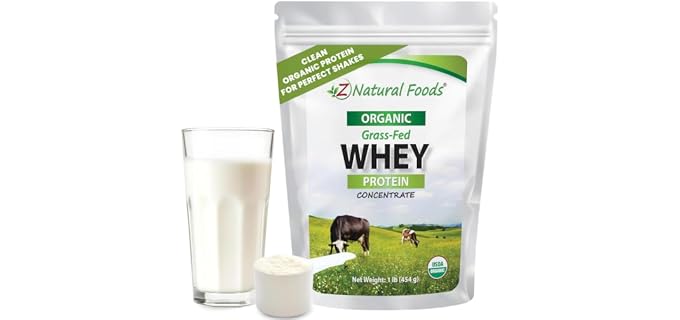
Z Natural Foods® Organic Whey Concentrate Grass-fed single-ingredient whey protein, 1lb


Currently unavailable
- You get 1 lb of grass-fed single-ingredient whey protein.
- Certifications and seals include USDA Organic.
- It is raw and unsweetened.
- It has 28 g of protein.
- It is meant for smoothies, drinks and sweetening.
3
NorCal Organic® Grass-Fed Classic Whey Unflavored lecithin-free whey protein, 2lb


Currently unavailable
- NorCal Organic Grass-Fed Classic Whey is an unflavored lecithin-free whey protein, and it comes in a 2 lb size.
- Certifications include USDA Organic and Non-GMO Project Verified, and it is also gluten-free.
- It is soy-free and single-ingredient.
- It has 21 g of protein.
Index Table: Organic Whey Protein Powder
| No. | Product | Image | Features | Brand |
|---|---|---|---|---|
| 1 | Natural Force Organic Whey Protein - Grass-fed organic whey protein powder |  |
| Natural Force |
| 2 | Z Natural Foods Organic Whey Concentrate - Grass-fed single-ingredient whey protein, 1lb |  |
| Z Natural Foods |
| 3 | NorCal Organic Grass-Fed Classic Whey - Unflavored lecithin-free whey protein, 2lb |  |
| NorCal Organic |
Sources
- U.S. Food and Drug Administration. Dietary Supplements. Accessed October 16, 2026.
- NIH Office of Dietary Supplements. Dietary Supplements: What You Need to Know. Accessed October 16, 2026.
- Electronic Code of Federal Regulations. 7 CFR 205.237, Livestock feed (organic grazing requirements). Accessed October 18, 2026.
- Electronic Code of Federal Regulations. 7 CFR 205.238, Livestock health care practice standard. Accessed October 18, 2026.
- Electronic Code of Federal Regulations. 21 CFR Part 111, Current Good Manufacturing Practice for Dietary Supplements. Accessed October 18, 2026.
- USDA Agricultural Marketing Service. Organic Labeling Standards. Accessed October 16, 2026.
- American Dairy Products Institute. Whey Protein Isolate (product standard). Accessed October 18, 2026.
- American Dairy Products Institute. Whey Protein Concentrate (product standard). Accessed October 18, 2026.
- American College of Allergy, Asthma and Immunology. Milk & Dairy Allergy. Accessed October 18, 2026.
- Jäger R, et al. Journal of the International Society of Sports Nutrition, 2017. International Society of Sports Nutrition Position Stand: protein and exercise. Accessed October 18, 2026.
- Federal Trade Commission. Health Products Compliance Guidance. Accessed October 16, 2026.
- U.S. Food and Drug Administration. Recalls, Market Withdrawals, & Safety Alerts. Accessed October 16, 2026.
- U.S. Food and Drug Administration, openFDA. Food Recall Enforcement Reports (searched October 18, 2026). Accessed October 18, 2026.
Update History
- Oct 2026: Removed Naked Grass Fed Whey, NOW Whey Protein Concentrate, ProMix Unflavored Whey and Raw Grass Fed Whey (no organic claim on their listings); corrected the claims that organic certification requires GMP, that isolate is acid-treated, and that whey is a fat burner; softened appetite and glutathione claims; Key Specs updated; Sources (FDA, NIH ODS, FTC, USDA AMS, eCFR, ADPI, ACAAI, ISSN, openFDA)
- Dec 2020: Added Natural Force Organic Whey Protein and NOW Whey Protein Concentrate
- Mar 2020: Added Z Natural Foods Organic Whey Concentrate
- Dec 2019: Added NorCal Organic Grass-Fed Classic Whey
- Mar 2019: First published