As an Amazon Associate I earn from qualifying purchases. Product links on this page are affiliate links, at no extra cost to you; see our Affiliate Disclosure.
Kale can be grown as quick jar sprouts or as small microgreens on soil or a mat. Most kale seed sold in bulk for sprouting isn’t organic, so this guide covers how to grow kale sprouts more safely and the one pick we found whose listing says it’s certified organic.Disclaimer: This article is general information, not medical or nutrition advice.
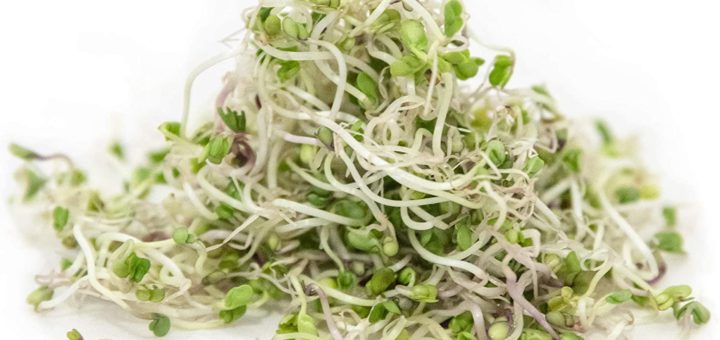
Sprout safety
- Raw sprouts have been linked to Salmonella and E. coli outbreaks; children, older adults, pregnant women and people with weak immune systems should eat only cooked sprouts.[1]
- Rinse sprouts and keep them refrigerated.[1]
- Buy seeds sold for sprouting, not garden seeds that may be treated.[1]
- “Organic” doesn’t mean germ-free. Sanitize your jar or tray, and you can lower the germ load by heating seeds for 5 minutes in 3% hydrogen peroxide held at 140°F (60°C), then rinsing. This helps but doesn’t remove the risk.[2]
Buying Considerations For Organic Kale Sprouting Seeds
- Packaging – You can choose from various sizes of cardboard packets and resealable packaging. Could you consider resealable bags that keep the seeds fresh and are easy to use for a long time?
- Germination – Look for a stated germination rate, and try a small amount before buying in bulk.
- Organic Claim – Look for “certified organic” or the USDA Organic seal .[3] “Non-GMO” or “heirloom” alone isn’t the same thing.
- Amount – A jar of sprouts takes a couple of tablespoons of seed, so small garden packets of a few hundred seeds suit microgreens or the garden better than regular sprouting.
- Varieties – Different varieties of kale seeds are available in the market, such as curly Kale, premier kale, and Chinese Kale, among others.
Benefits Of Organic Kale Sprouting Seeds
Organic foods are grown and processed under USDA rules that limit synthetic pesticides and fertilizers and prohibit GMOs and irradiation.[3] Research hasn’t shown that organic foods are significantly more nutritious than conventional foods, though they tend to have lower pesticide residues.[3][4] Health claims on food labels are regulated by the FDA, and only a few are authorized.[5]How To Grow Organic Kale Seeds
Kale sprouts are quick to grow in a clean jar. Here are the basic steps.[6]- Soaking – These seeds should be soaked in cool water for 6 to 12 hours. Soaking is the first step in the process.
- Draining – After soaking, rinse the water thoroughly and drain as much water as possible. It should be done 2-3 times a day.
- Harvesting – Kale sprouts are usually ready in 3 to 6 days. Taste them as they grow and harvest when you like the flavor.
- Storage – Dry the sprouts well, refrigerate them at 40°F or below and eat them within about 4 to 6 days. Throw out any that smell musty or look slimy.[7] How much a batch makes depends on the seed and how long you grow it.
What the Research Says
The FDA warns that the warm, humid conditions used to grow sprouts are ideal for bacteria, so raw and lightly cooked sprouts carry a food poisoning risk.[1] Dietary guidelines recommend a healthy eating pattern built on vegetables, fruits, whole grains, lean proteins and healthy oils, with limits on added sugar, sodium and saturated fat.[4] Organic certification covers how food is grown and processed, not its nutrition or whether seed is free of germs.[3][2]How We Chose These Products
We don’t test products hands-on. We compared labels and listings: a certified organic claim [3], whether the seed suits sprouting, size, and price. We removed four kale and microgreen seeds whose listings make no organic claim (non-GMO or heirloom only). We removed products that were out of stock, no longer listed or recalled, and we checked the brands we list against recent FDA [8] recall notices in October 2026. Brands don’t pay to be included, though we may earn a commission from purchases.Our Pick: Organic Kale Seed
Only one kale seed we reviewed says it’s certified organic. It’s a garden packet, best for a small tray of microgreens or your garden. We may earn a small commission on purchases made through the links in this article.1
Seedz® Organic Kale Seeds Certified organic lacinato kale seeds, heirloom


- You get certified organic lacinato kale seeds (heirloom) from Seedz, in size About 550 seeds.
- Grown in the USA.
- The package measures 6 x 0.5 x 4 inches.
- It isn’t sold as sprouting seed and no microbe testing is stated, so follow the sanitizing tips above.
Index Table: Organic Kale Seed
| No. | Product | Image | Features | Brand |
|---|---|---|---|---|
| 1 | Seedz Organic Kale Seeds - Certified organic lacinato kale seeds, heirloom |  |
| Seedz |
Sources
- U.S. Food and Drug Administration. Selecting and Serving Produce Safely (sprouts). Accessed October 16, 2026.
- Suslow TV, Harris LJ. Growing Seed Sprouts at Home (Publication 8151). University of California Agriculture and Natural Resources. Accessed October 18, 2026.
- USDA Agricultural Marketing Service. Organic Labeling Standards. Accessed October 16, 2026.
- Dietary Guidelines for Americans, 2020-2025. Dietary Guidelines for Americans, 2020-2025. Accessed October 16, 2026.
- U.S. Food and Drug Administration. Label Claims for Conventional Foods and Dietary Supplements. Accessed October 16, 2026.
- University of Vermont Extension. Sprouts: The Superfood to Grow at Home. Accessed October 18, 2026.
- Shiroodi S, Strawn LK, et al. Sprout Safety (FST-344). Virginia Cooperative Extension, Virginia Tech. Accessed October 18, 2026.
- U.S. Food and Drug Administration. Recalls, Market Withdrawals, & Safety Alerts. Accessed October 16, 2026.
Update History
- Oct 2026: Removed Rainbow Heirloom Kale Trio Mix, Mountain Valley Seed Spicy Micro Salad Mix, Mountain Valley Seed Red Russian Kale and Country Creek Acres Vates Blue Curled Scotch Kale (no organic claim on their listings); kept the Seedz certified organic packet as a microgreen/garden pick; removed the unsupported sprout yield claim; added seed-sanitizing, storage and organic-isn’t-germ-free notes; Key Specs updated; Sources (FDA, USDA AMS, Dietary Guidelines for Americans, UC ANR, University of Vermont Extension, Virginia Cooperative Extension)
- Sep 2020: First published