As an Amazon Associate I earn from qualifying purchases. Product links on this page are affiliate links, at no extra cost to you; see our Affiliate Disclosure.
Are you searching for the right quality cotton sheets on the market? Organic cotton sheets are the cream of the crop when it comes to superior quality. Read on for more info on why organic cotton is better for you, what thread count does to cotton sheets and what key features should cotton sheets contain to live up to being ‘the best.’Disclaimer: This article is general information, not medical or safety advice.

Key Specs Compared
Numbers match the reviews below (tap to jump).
| # | Material | Stated certifications |
|---|---|---|
| 1 | Linen | OEKO-TEX |
| 2 | Bamboo viscose | OEKO-TEX |
| 3 | 100% organic cotton | Certified organic, GOTS |
| 4 | 100% organic cotton | GOTS, OEKO-TEX |
| 5 | 100% organic cotton | GOTS |
– = not stated on the Amazon listing · Specs and certifications as stated by the listing, not tested or verified by us; check the listing before you buy
Label tips
Benefits Of Using Organic Cotton Sheets
Yes, organic does make a difference even when looking at cotton sheets! Here is the low down on why:- No Allergic Reactions – A lot of people have proven to be allergic to non-organic cotton. When using cotton organic sheets, these symptoms do not occur (that is, unless the person consumes a non-organic diet too!).
- Eco Sustainability – Organic cotton is far more sustainable for our environment. Making organic cotton uses much less water than the usual in-organic cotton. It also affects the environment positively by not degrading soil quality or destroying whole ecosystems with chemical spraying. The skin is not an impenetrable membrane, and it will absorb what you touch. Try organic cotton instead; it really is worth it!
- Cheaper To Produce – Contrary to popular belief, the production cost on making organic cotton is far cheaper than in-organic cotton! Aside from using less water, farmers spend less by not using pesticides and chemical adjuvants. It also gets better the longer one uses organic farming practice, as increasing the fertility of the soil increases organic cotton yields, allowing it to become less expensive over time!
- Saves Medical Bill Money – As you can imagine, going organic will save on your medical bills in the long run. Instead of spending money on taking pills, rather spend it on organic cotton sheets (as well as other organic products) and reduce your immediate health risks. While organic is seen as more expensive, it is by far still cheaper than paying for pharmaceuticals and doctor’s appointments for extended periods of time!
What Is Thread Count and Why Is It Important?
When looking at organic cotton sheets (or ANY cotton sheets), thread count is important to filter in. Thread count refers to the number of horizontal and vertical cotton threads used per square inch of fabric. The higher the thread count, the finer and smoother the end product will be. Cotton sheets typically fall in a thread count range of between 200 and 800. For the best results, opt for a cotton sheet that has a 300-600 thread count. Even though thread count ordinarily makes a cotton sheet softer, be warned that appearances can equally be deceiving. When manufacturing a cotton sheet, manufacturers have a choice between short and long strands of cotton fibers. The longer the fibers, the better the quality – which is also why Egyptian cotton gets its highly esteemed reputation as it is made only using longer fibers. A cotton sheet can be made of many short fibers, giving it a much higher than usual thread count, but this will diminish the quality drastically.Features Of a Good Organic Cotton Sheet
Here are some features that will make all the difference in your organic cotton sheets!- A Fitted Skirting – Bed sheets with a fitted skirting or elastic lining hold better on your bed and shift around less. They’re also easier to take off or put on and last a long time without fraying at the edges.
- Combed cotton – Combed cotton is a term given to cotton in which the short threads have been combed out, and the long threads remain. This makes the cotton far softer and also enhances the quality of the cotton as it ages.
- Machine Washable – Being able to wash your cotton sheets in the washing machine without the colors running is convenient and less time-consuming. Keep an eye out for machine washable cotton that is healthy for you and your family.
- Certified Organic – To ensure that the cotton is truly organic, a certification is necessary. Many fake brands get away with marketing ‘natural’ cotton, which is deceiving as all cotton is technically natural, but not all of it is organic!
What the Research Says
Environmental and health claims on bedding and textiles should be backed by certifications such as GOTS or OEKO-TEX.[1][3][4]How We Chose These Products
We don’t test products hands-on. We compared labels and listings: EPA registration where it applies, the ingredient list, scent or fragrance-free options, and price per use. We removed products that were out of stock, no longer listed or recalled, and we checked the brands we list against recent FDA [5] recall notices in October 2026. Brands don’t pay to be included, though we may earn a commission from purchases.Our Picks: Organic Cotton Sheets
Here below, we have reviewed some organic cotton sheets, all of which are certified organic and healthy for you!1
Mayfair Linen® Egyptian Cotton Sheets 500-series queen sheet set, four piece


- Mayfair Linen’s 500-series queen sheet set comes in size Queen.
- It carries OEKO-TEX labeling.
- Materials: cotton and linen.
- It is hypoallergenic.
- It has a thread count of 500 and includes 4 pieces.
2
BAMPURE® Bamboo Sheets Rayon-from-bamboo cooling queen sheets, 4pc


- Bampure’s rayon-from-bamboo cooling queen sheets (4pc) comes in size Queen.
- It carries OEKO-TEX labeling.
- Materials: bamboo viscose.
- It is machine washable.
- It includes 4 pieces.
3
Lane Linen® Organic Percale Sheets GOTS organic cotton queen percale, 4pc


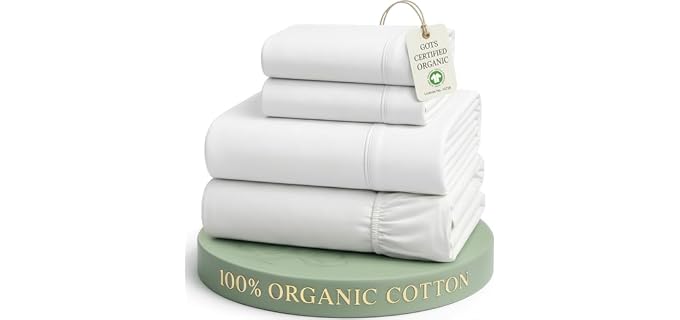
- This is a GOTS organic cotton queen percale (4pc) from Lane Linen, in size Queen.
- Look for certified organic and GOTS on the package.[1]
- Materials: organic cotton, linen and percale weave.
- It has a thread count of 160 and includes 4 pieces.
- It measures 13 x 11 x 2 inches and weighs 4.2 pounds.
4
Texas Linen Co.® Organic Cotton Sheets Organic cotton queen percale sheet set


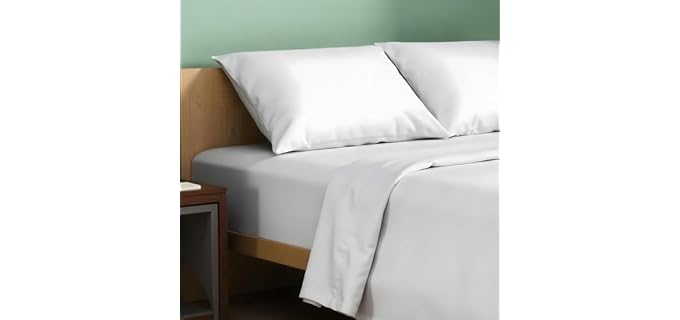
- Texas Linen Co.’s organic cotton queen percale sheet set comes in size Queen.
- It carries GOTS and OEKO-TEX labeling.
- Made from organic cotton, linen and percale weave.
- It includes 4 pieces.
- Check the care label before the first wash, since fabrics can shrink or fade.
5
California Design Den® Organic Cotton Sheets GOTS king sheet set, olive green


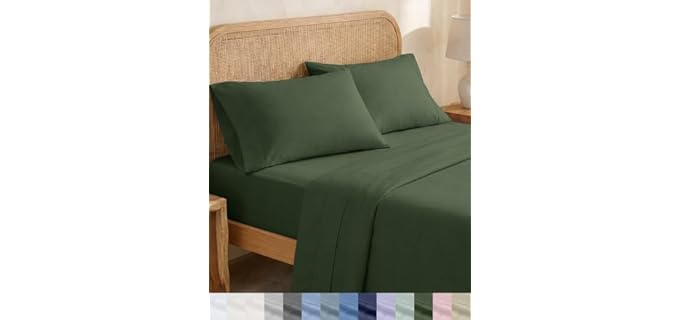
- California Design Den’s GOTS king sheet set (olive green) comes in size King.
- It carries GOTS labeling.[1]
- Materials: organic cotton and percale weave.
- It has a thread count of 300 and includes 4 pieces.
- It measures 11.2 x 9.2 x 4.5 inches and weighs 5.1 pounds.
Index Table: Top Rated Organic Cotton Sheets
| No. | Product | Image | Features | Brand |
|---|---|---|---|---|
| 1 | Mayfair Linen Egyptian Cotton Sheets - 500-series queen sheet set, four piece |  |
| Mayfair Linen |
| 2 | BAMPURE Bamboo Sheets - Rayon-from-bamboo cooling queen sheets, 4pc |  |
| BAMPURE |
| 3 | Lane Linen Organic Percale Sheets - GOTS organic cotton queen percale, 4pc |  | Lane Linen | |
| 4 | Texas Linen Co. Organic Cotton Sheets - Organic cotton queen percale sheet set |  | Texas Linen Co. | |
| 5 | California Design Den Organic Cotton Sheets - GOTS king sheet set, olive green |  | California Design Den |
Sources
- Global Organic Textile Standard (GOTS). How the system works. Accessed October 16, 2026.
- Federal Trade Commission. Threading Your Way Through the Labeling Requirements Under the Textile and Wool Acts. Accessed October 16, 2026.
- OEKO-TEX. STANDARD 100. Accessed October 16, 2026.
- Federal Trade Commission. Green Guides. Accessed October 16, 2026.
- U.S. Food and Drug Administration. Recalls, Market Withdrawals, & Safety Alerts. Accessed October 16, 2026.
Update History
- Oct 2026: Product picks reviewed and updated; added Sources (GOTS, FTC, OEKO-TEX, FDA)
- Sep 2021: First published


