As an Amazon Associate I earn from qualifying purchases. Product links on this page are affiliate links, at no extra cost to you; see our Affiliate Disclosure.
Alfalfa sprouts are one of the easiest sprouts to grow at home: a couple of tablespoons of seed and a jar give you a crunchy, mild topping for salads and sandwiches in about a week. Organic alfalfa seed is grown without most synthetic pesticides and fertilizers and without genetic engineering.[1] Below we explain what that does and doesn’t mean for nutrition and safety, and compare organic alfalfa sprouting seeds.Disclaimer: This article is general information, not medical or nutrition advice.

Key Specs Compared
Numbers match the reviews below (tap to jump).
| # | Form | Size | Stated certifications | Gluten-free |
|---|---|---|---|---|
| 1 | Sprouting seeds | 4 Ounce | USDA Organic | Not stated |
| 2 | Sprouting seeds | 5 Pound | Organic, Non-GMO, Kosher | Not stated |
| 3 | Sprouting seed mix | 1 Pound | USDA Organic, Non-GMO, Kosher | Yes |
| 4 | Sprouting seeds | 12 Ounce | Organic, Non-GMO, Kosher | Made without gluten |
– = not stated on the Amazon listing · Specs and certifications as stated by the listing, not tested or verified by us; check the listing before you buy
Sprout safety
- Raw and lightly cooked sprouts have been linked to Salmonella and E. coli outbreaks.[2]
- Children, older adults, pregnant people and anyone with a weakened immune system should eat sprouts only cooked.[2]
- “Organic” doesn’t mean the seed is free of germs. Organic and conventional sprouting seed can both carry Salmonella or E. coli.[3]
- In August and September 2026, a recalled alfalfa seed lot (SAL2-24JB) was linked to an E. coli and Salmonella outbreak, and some retail sprouting seed brands recalled packs made from it. Check the FDA recalls page before you sprout a new bag.[4]
Benefits of Organic Alfalfa Sprouting Seeds
Organic foods are grown and processed under USDA rules that limit synthetic pesticides and fertilizers and prohibit GMOs and irradiation.[1] Research hasn’t shown that organic foods are significantly more nutritious than conventional foods, though they tend to have lower pesticide residues.[1][5] Health claims on food labels are regulated by the FDA, and only a few are authorized.[6]Nutrients found in Organic Alfalfa Sprouting Seeds
Alfalfa sprouts are very low in calories (about 8 calories a cup) and add small amounts of several vitamins. Per cup (33 g) of raw sprouts:[7]- Vitamin K – About 10 mcg, or roughly 8% of the Daily Value. If you take warfarin, you don’t need to avoid sprouts, but keep your vitamin K intake about the same from day to day and talk to your doctor before big diet changes.[8]
- Vitamin C – About 2.7 mg, roughly 3% of the Daily Value. Your body uses vitamin C to make collagen and absorb iron from plant foods.
- Riboflavin and Folate – About 0.04 mg of riboflavin (vitamin B2, which helps turn food into energy) and 12 mcg of folate, each about 3% of the Daily Value.
Organic vs. Conventional Alfalfa Seeds
- No Genetic Engineering – USDA organic rules don’t allow genetically engineered seed, so certified organic alfalfa is non-GMO by definition. “Non-GMO” on its own isn’t the same as organic, since non-GMO seed can still be grown with synthetic pesticides.[1]
- Not Safer from Germs – Organic certification doesn’t test seed for Salmonella or E. coli. Look for a seller that tests its lots, and sanitize seeds at home: heat them for 5 minutes in 3% hydrogen peroxide held at 140°F (60°C), then rinse under running water. This lowers the risk but doesn’t remove it.[3]
- Storage – Dry seed keeps for months in a sealed bag. Grown sprouts don’t: dry them, refrigerate them at 40°F or below and eat them within 4 to 6 days.[9]
What the Research Says
Dietary guidelines recommend a healthy eating pattern built on vegetables, fruits, whole grains, lean proteins and healthy oils, with limits on added sugar, sodium and saturated fat.[5] Organic certification covers how food is grown and processed, not its nutrition or its safety from germs.[1][3] Raw sprouts, alfalfa included, have been linked to foodborne illness outbreaks, because the warm, humid conditions that sprout seeds also let bacteria grow.[2]How We Chose These Products
We don’t test products hands-on. We compared labels and listings: a certified organic claim [1], whether the seed is sold for sprouting, size, and price per ounce. We removed seeds whose listings don’t claim to be organic. We removed products that were out of stock, no longer listed or recalled, and we checked the brands we list against recent FDA [10] recall notices in October 2026. Brands don’t pay to be included, though we may earn a commission from purchases.Our Picks: Organic Alfalfa Sprouting Seeds
All four picks below are organic alfalfa sprouting seeds. We may earn a small commission on purchases made through the links, at no extra cost to you.1
Starwest Botanicals® Alfalfa Sprouting Seeds Organic alfalfa seeds for sprouting jars


- You get organic alfalfa seeds for sprouting jars from Starwest Botanicals, in a 4 oz size.
- It carries USDA Organic labeling.
- Check the package label for the full ingredient list and allergen information before you buy.
2
Food to Live® Alfalfa Sprouting Seeds Organic alfalfa seeds for sprouting, 5lb


- Food to Live’s organic alfalfa seeds for sprouting come in a 5 lb size.
- It is non-GMO and vegan.
- The package measures 2 x 4 x 6 inches and weighs 5 pounds.
- Check the package label for the full ingredient list and allergen information before you buy.
3
Food to Live® Sprouting Seed Mix Organic broccoli, alfalfa and clover mix


- This is an organic broccoli, alfalfa and clover mix from Food to Live, in a 1 lb size.
- USDA Organic labeling is on the package, and it is non-GMO, vegan and vegetarian as well.
- It is sprouted.
- It comes in a glass bottle.
- It is meant for salad dressings and smoothies.
4
NOW® Alfalfa Sprouting Seeds Organic alfalfa seeds for sprouting, 12oz


- You get organic alfalfa seeds for sprouting from Now, in a 12 oz size.
- This one is non-GMO and vegan.
- It is soy-free and sugar-free.
- Grown in the USA.
- The package measures 2.5 x 2.5 x 4.4 inches and weighs 0.8 pounds.
Index Table: Organic Alfalfa Sprouting Seeds Compared
| No. | Product | Image | Features | Brand |
|---|---|---|---|---|
| 1 | Starwest Botanicals Alfalfa Sprouting Seeds - Organic alfalfa seeds for sprouting jars |  |
| Starwest Botanicals |
| 2 | Food to Live Alfalfa Sprouting Seeds - Organic alfalfa seeds for sprouting, 5lb |  |
| Food to Live |
| 3 | Food to Live Sprouting Seed Mix - Organic broccoli, alfalfa and clover mix | 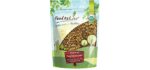 |
| Food to Live |
| 4 | NOW Alfalfa Sprouting Seeds - Organic alfalfa seeds for sprouting, 12oz |  |
| NOW |
Sources
- USDA Agricultural Marketing Service. Organic Labeling Standards. Accessed October 16, 2026.
- U.S. Food and Drug Administration. Selecting and Serving Produce Safely (sprouts). Accessed October 16, 2026.
- Suslow TV, Harris LJ. Growing Seed Sprouts at Home (Publication 8151). University of California Agriculture and Natural Resources. Accessed October 18, 2026.
- U.S. Food and Drug Administration. Outbreak Investigation of Shiga Toxin-producing E. coli & Salmonella: Sprouts (August 2026). Accessed October 18, 2026.
- Dietary Guidelines for Americans, 2020-2025. Dietary Guidelines for Americans, 2020-2025. Accessed October 16, 2026.
- U.S. Food and Drug Administration. Label Claims for Conventional Foods and Dietary Supplements. Accessed October 16, 2026.
- USDA FoodData Central. Alfalfa seeds, sprouted, raw. Accessed October 18, 2026.
- NIH Office of Dietary Supplements. Vitamin K: Fact Sheet for Consumers. Accessed October 18, 2026.
- Shiroodi S, Strawn LK, et al. Sprout Safety (FST-344). Virginia Cooperative Extension, Virginia Tech. Accessed October 18, 2026.
- U.S. Food and Drug Administration. Recalls, Market Withdrawals, & Safety Alerts. Accessed October 16, 2026.
Update History
- Oct 2026: Removed Country Creek Acres Alfalfa Sprouting Seed, Garden Naturals Alfalfa Seeds and Mountain Valley Seed Alfalfa Seeds (no organic claim on their listings); rewrote the intro and the organic comparison; corrected the nutrient amounts with USDA data; added seed-sanitizing and storage steps, the 2026 alfalfa seed recall note and a vitamin K note for warfarin users; Key Specs updated; Sources (FDA, USDA AMS, Dietary Guidelines for Americans, UC ANR, Virginia Cooperative Extension, USDA FoodData Central, NIH ODS)
- Sep 2020: Added Food to Live Sprouting Seed Mix
- Jul 2020: First published
Views: 0


